


 By
Getting a puppy for Christmas can work, as long as the plan is built around the puppy and not the holiday. The ASPCA supports giving pets as gifts to people who have shown a lasting interest in having one and can care for one, and it says the new home’s schedule should be free enough for an easy transition, which it calls especially important during the holidays. Many breeders who spoke to the AKC go further and prefer to send puppies home once the holiday rush is over. Age matters as much as the date, so check when puppies can leave their mom.
This guide covers when to bring your puppy home, how to puppy proof a Christmas house, a 7 day plan for the first week, and how to get through Christmas Day itself. It’s based on advice from the ASPCA, the American Veterinary Medical Association (AVMA), the American Animal Hospital Association (AAHA), VCA and the AKC.
Table of Contents
- Should You Get a Puppy for Christmas?
- Before or After Christmas? 3 Ways to Time It
- Puppy Proof a Christmas House Before Day 1
- Bringing Home a Puppy at Christmas: Your 7 Day First Week Plan
- Your Puppy’s First Christmas Day
- If the Puppy Is a Surprise Gift
- Puppy for Christmas FAQ
- Puppy for Christmas: The Short Version
Should You Get a Puppy for Christmas?
The gift itself isn’t the problem. When the ASPCA surveyed people who had received pets as gifts, 96% said it either increased or had no effect on their love for the pet, 86% of those pets were still in the home, and it made no difference whether the gift was a surprise or known in advance (ASPCA position statement).
Timing is the harder part. The AKC puts it plainly: the holidays bring travel, visitors, decorations and gifts, and a new puppy needs a lot of attention and work in its first days home. A Christmas puppy is a good fit when:
- The person has wanted a dog for a long time, not just since seeing a cute photo, and can care for one (ASPCA).
- Someone can be home for the first days, with a schedule free enough to help the puppy settle (ASPCA).
- If the puppy is for a child under 12, the parents are ready and eager to take on the care themselves (ASPCA).
- The puppy comes from a source you can check: a shelter, rescue, friends, family or a responsible breeder (ASPCA).
Before or After Christmas? 3 Ways to Time It
The breeders the AKC asked about holiday litters mostly avoid sending puppies home right at Christmas. Here’s how the options compare:
| Option | How it works | Best for | Source |
|---|---|---|---|
| Bring the puppy home about a week early | One AKC breeder places puppies seven days before Christmas Eve with families who have older children | Homes with older kids and a quiet holiday planned | AKC |
| Wrap the reveal, bring the puppy home after | Put a photo of the puppy under the tree, wrap the supplies, then pick up the puppy once the excitement is over | Homes with young children, guests or travel plans | AKC |
| Bring the puppy home a few days after Christmas | The same breeder places puppies four days after Christmas with families who have little kids | Families who want the puppy at the start of a calm week | AKC |
| Bring the puppy home on Christmas Day | The puppy arrives in the middle of the travel, visitors, decorations and gifts | Rarely the best choice; the breeders AKC asked mostly avoid it | AKC |
If you’re traveling or hosting big parties, wait until those are done. One AKC breeder only bends her holiday rule for couples with no children or without big party or travel plans.
Puppy Proof a Christmas House Before Day 1
Do this before the puppy arrives. AAHA lists toxic plants, small objects that could be swallowed, electrical cords and household chemicals as everyday hazards to secure or remove from puppy areas. A decorated house adds a few more:
| Hazard | Why it’s risky | What to do | Source |
|---|---|---|---|
| Christmas tree | Can tip over if a pet climbs it or plays with the lights and ornaments | Secure it well; the AVMA suggests tying it to the ceiling or a doorframe with fishing line | ASPCA, AVMA |
| Tree water | Bacteria in it can cause nausea, diarrhea or stomach upset, and additives can be hazardous if swallowed | Cover the stand and skip water additives | ASPCA, AVMA |
| Tinsel, ribbon and wrapping | Can cause choking or a blocked digestive tract, sometimes needing surgery | Skip tinsel and clear wrapping and ribbon right away | ASPCA, AVMA |
| Lights, cords and batteries | A chewed cord can burn or shock, and a punctured battery can burn the mouth and esophagus | Keep cords out of reach and batteries put away | ASPCA, AVMA |
| Ornaments | Broken ones can injure the mouth and gut, swallowed ones can block the intestines, and salt dough ornaments can cause dangerous electrolyte imbalances | Hang breakables high or leave them off this year | ASPCA, AVMA |
| Holiday plants | Mistletoe and holly can cause stomach upset and heart problems; poinsettias can cause mild to moderate stomach irritation | Keep plants out of reach or use fake ones | ASPCA |
| Wrapped food and candy | Pets can smell what’s inside a wrapped present | Keep food gifts off the floor and out from under the tree | ASPCA |
| Candles | Paws and wagging tails can knock them over | Never leave a lit candle where the puppy can reach it | ASPCA, AVMA |
| Snow globes | Made with ethylene glycol, the same toxic chemical used in antifreeze | Keep them out of reach and clean up any break right away | ASPCA |
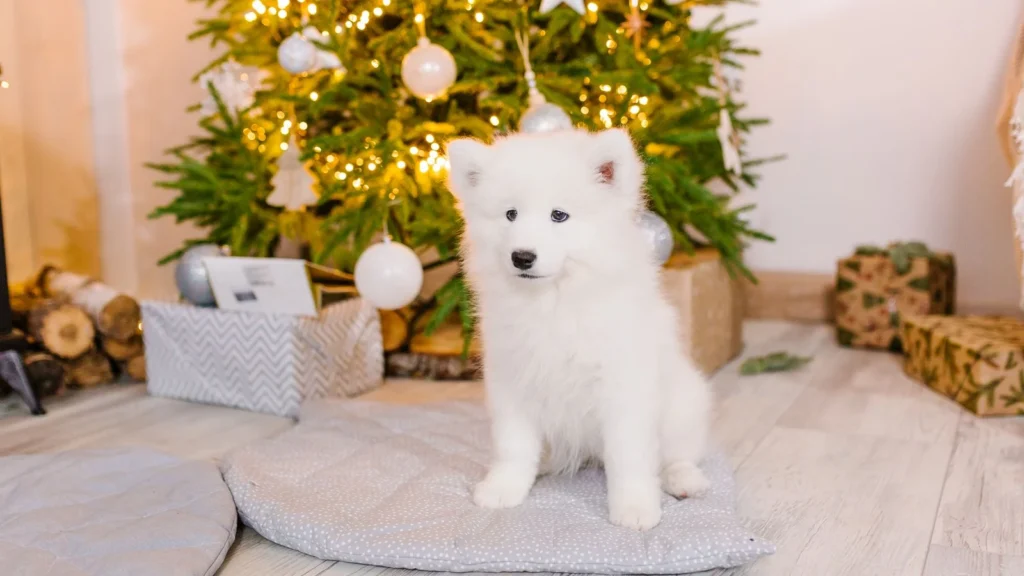
Then set up the basics. The AKC list includes a crate big enough for the puppy to stand up and turn around in, baby gates, a collar and leash, food and water bowls, a bed, grooming supplies, cleanup supplies and safe toys. Ask your breeder, shelter or vet what to feed. Our new puppy checklist has the full list, and the dog crate size chart helps you pick the right crate.
Two more jobs for before Day 1:
- Book the first vet visit now. The AKC notes that good vets have busy schedules, so call as soon as you know your pickup date. Ask about the clinic’s after hours setup too.
- Agree on the house rules. The AKC says the whole household should decide together, then stay consistent: who feeds the puppy, who does the last potty trip at night, who cleans up accidents, and whether the puppy is allowed on the couch.
For the full list of foods, plants and decorations to keep out of reach, see Christmas dangers for dogs.
Bringing Home a Puppy at Christmas: Your 7 Day First Week Plan
Day 1 is the day your puppy comes home, whether that’s December 18 or December 28. The plan stays the same. Save the chart, then use the notes for each day below.

Day 1: A Quiet Arrival
Start slowly. The AKC suggests introducing family members one at a time if you can, and giving the puppy time to explore. Show your puppy the sleeping spot, the outdoor potty place, the crate, the bowls and the toys. For the first days and weeks, keep your puppy supervised or at least in view.
At night, AAHA says to put the crate close to your bed if you use one, so your puppy can feel you nearby and you can hear when they need a potty break. Puppies are social animals and feel safer with company. If the crying keeps you up, our guide to puppy crying in the crate can help. Expect lots of naps in the first week too; here’s how much puppies sleep.
Day 2: Start the Routine
AAHA says housetraining depends on supervision, management and routine. Feed at the same times each day and plan regular play and rest. Puppies usually need to go after eating, sleeping and playing, so take your puppy out at each of those times. VCA suggests going out every 2 hours at 6 to 8 weeks of age, adding about an hour for each month.
When your puppy goes in the right spot, praise gently and give a treat. Accidents will happen, and AAHA says they are not the puppy’s fault: punishment can make a puppy anxious about going and make housetraining harder. Plan for night trips as well. AAHA warns that sleep deprivation is real in the first month, so share the night shift if you can. For the full method, see how to potty train a puppy. For an hour by hour day, use our 8 week puppy schedule, and the puppy feeding chart covers how much to feed.

Day 3: The First Vet Visit
The AKC says breeders generally require a vet exam, usually within three days, in their contracts. For a puppy from a shelter or rescue, where the background is unknown, an exam soon after pickup is even more important. VCA says most puppies should see a vet at 6 to 8 weeks for a health exam and to begin vaccinations and parasite prevention.
Bring the records from your breeder or rescue and a fresh stool sample, which the AKC says the vet will check for worms. Ask about the next vaccine dates and write them down. Our puppy shot schedule shows the full series.
Day 4: Make the Crate a Good Place
AAHA says to teach your puppy that the crate is a good place through positive association, never by forcing them inside or leaving them to cry it out. Keep the crate where your puppy can see everyone, leave the door open, add comfortable bedding and drop treats inside throughout the day. Don’t close the door until your puppy is happy to choose to rest in there. This matters more at Christmas: the crate becomes your puppy’s safe spot when the house fills up.
Day 5: New Sounds and Sights at Home
AAHA suggests introducing something new at home every day, like turning on the hairdryer, making popcorn or moving a dining chair into the kitchen, and pairing each one with treats and play. Holiday sounds such as crinkling wrapping paper and the doorbell work the same way. If your puppy seems unsure, let them come back to you, and keep sessions short.
Outside, AAHA suggests carrying your puppy or using a stroller where unvaccinated dogs may have been, so they can watch the world safely. The American Veterinary Society of Animal Behavior says socializing puppies before they’re fully vaccinated, done safely, should be the standard of care. Our puppy socialization plan and the guide to when puppies can go outside explain how.
Day 6: Meet Guests, Calmly
Holiday visitors can upset pets. The AVMA says every pet should have a quiet place indoors, such as a crate or a room away from the commotion where guests won’t follow. Tell guests ahead of time that there’s a new puppy, and introduce people one at a time. The ASPCA also asks houseguests to keep their medications in a closed cabinet instead of a bag or suitcase.
With children, AAHA is firm: never leave them alone with the puppy, have them play with toys instead of hands, and teach them to see when the puppy needs space. If those sharp little teeth are already a problem, see how to get a puppy to stop biting.

Day 7: Review and Adjust
Look back at the week. Is everyone sticking to the same house rules? Is the potty schedule working, or does it need more trips? The AKC also suggests a quick daily health check: run your hands over the coat for fleas or ticks, check the ears, paws and eyes, and look at the stool. Call your vet about diarrhea, vomiting, unusual tiredness, discharge from the eyes or nose, fever, or a big change in appetite.
AAHA’s advice for the flood of puppy tips online: pick three sources you trust and stick to them. If you’d rather keep it all on your phone, The First 30 Days Puppy OS has one tap buttons for feeding, potty, naps and training on its dashboard, plus a vaccination timeline and a vet visit manager.
Your Puppy’s First Christmas Day
Keep the day as normal as possible for your puppy. The ASPCA recommends keeping your pet’s diet the same as any other day, and the AVMA says to keep people food away from pets and ask everyone else to do the same. The foods to watch most closely:
- Chocolate, which is toxic to dogs (AVMA).
- Sweets and baked goods, which may contain xylitol, an artificial sweetener linked to liver failure and death in dogs (AVMA).
- Table scraps like gravy, poultry skin and fat, which are hard to digest and can cause pancreatitis (AVMA).
- Bones, which can cause choking or a blocked intestine (AVMA).
- Onions, grapes and raisins, which are poisonous to pets (AVMA).
- Unbaked yeast dough, which can cause painful gas and dangerous bloating (AVMA).
- Drinks left unattended and trash cans without a secure lid (ASPCA).
Stick to the potty and nap schedule from the week, and give your puppy crate breaks in a quiet room while you open presents and eat. The ASPCA notes that loud music, poppers and noisemakers can scare pets, so a safe space like an interior room helps. Pick up ribbon and wrapping paper as you go.
Keep These Numbers Handy
The AVMA suggests knowing the way to your nearest 24/7 emergency vet before you need it, and posting these numbers somewhere easy to find:
- Your vet’s phone number, and your 24/7 emergency clinic if it’s different.
- ASPCA Animal Poison Control: (888) 426-4435.
- Pet Poison Helpline: 855-764-7661. A fee may apply for both poison lines.
Call your vet or emergency clinic right away if your puppy shows sudden behavior changes, depression, pain, loss of appetite, vomiting or diarrhea, which the AVMA lists as signs a pet may have eaten something they shouldn’t.
If the Puppy Is a Surprise Gift
The ASPCA says a surprise works only if the giver knows the person’s lifestyle and schedule well enough to be sure they have the time and means to care for a dog. If you’re not sure, let them choose. If you would rather give something useful, here are 14 new puppy gifts that puppy parents actually use.
A gentler way to surprise someone comes from the AKC breeders: put a photo of the puppy under the tree, wrap a few supplies such as a blanket, toys, a food kit and a care and training book, and bring the puppy home after the holidays. A printed plan for the first weeks fits nicely under the tree too:
Puppy for Christmas FAQ
-
Is it a good idea to get a puppy for Christmas?
It can be, if the person has wanted a dog for a long time and someone can be home to help the puppy settle. The ASPCA supports pets as gifts in that case, and its survey found 86% of gifted pets were still in their homes. The harder part is timing: many AKC breeders prefer to send puppies home after the holiday rush.
-
Should you bring a puppy home before or after Christmas?
After is usually calmer, once guests and travel are done. One AKC breeder places puppies seven days before Christmas Eve with families who have older children, and four days after Christmas with families who have young kids. Avoid Christmas Day itself if you can.
-
How do I keep a puppy safe around the Christmas tree?
Secure the tree so it can’t tip, cover the tree water and skip water additives, leave off tinsel, and keep cords, batteries, breakable or salt dough ornaments and wrapped food out of reach. Supervise every minute your puppy spends near the tree. These tips come from the ASPCA and the AVMA.
-
What should a puppy’s first night home look like?
Keep it calm. If you use a crate, AAHA suggests putting it close to your bed so your puppy can sense you nearby and you can hear when they need a potty break. Expect to get up at night: AAHA says nighttime potty breaks are part of housetraining, especially in the first month.
-
When should a new puppy see the vet?
Within the first few days. The AKC says breeders generally require a vet exam, usually within three days, and an exam is even more important for puppies from a shelter or rescue. VCA says most puppies should see a vet at 6 to 8 weeks to begin vaccines and parasite prevention. Book as soon as you know your pickup date.
-
Can a new puppy meet holiday guests?
Yes, calmly and in short visits. Give your puppy a crate or a room away from the party where guests won’t follow (AVMA), introduce people one at a time (AKC), always supervise children (AAHA), and ask guests to keep their medications in a closed cabinet (ASPCA).
-
What Christmas foods are dangerous for puppies?
Chocolate, sweets that may contain xylitol, grapes and raisins, onions, unbaked yeast dough, bones, and fatty scraps like gravy and poultry skin, which can cause pancreatitis (AVMA). Keep drinks out of reach too (ASPCA). If your puppy eats something risky, call your vet or ASPCA Animal Poison Control at (888) 426-4435.
Puppy for Christmas: The Short Version
- Give a puppy only to someone who truly wants a dog and has time at home.
- Bring the puppy home a few days after Christmas, or about a week before. Skip the day itself.
- Puppy proof the tree, plants, cords and food gifts before Day 1.
- Follow the 7 day plan: arrival, routine, vet, crate, new sounds, guests, review.
- On Christmas Day, keep meals, naps and potty breaks the same as any other day.
Over to you: is your puppy coming home before or after Christmas? Tell us in the comments.
