

 By
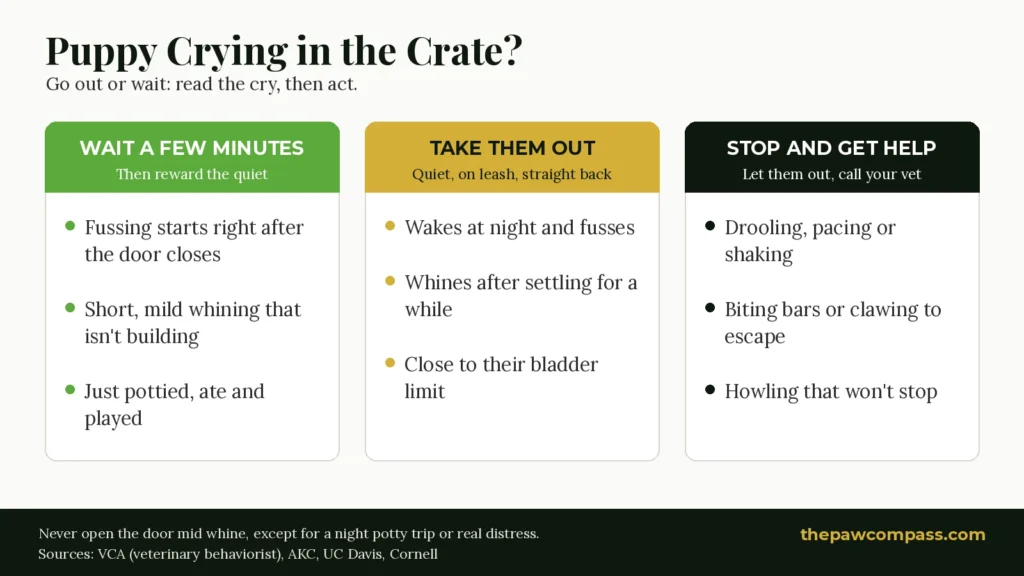
Puppy crying in crate? If your puppy just went in and the fussing is short and mild, wait a few minutes for quiet, then reward the quiet. If your puppy wakes up at night and fusses, assume they need to potty and take them out. If the crying turns to panic, like drooling, clawing at the door or howling that won’t stop, let them out and stop crate training for now. That’s the short version of the advice from VCA’s board certified veterinary behaviorist, the American Kennel Club and the UC Davis veterinary school.
It’s 2 a.m., the house is dark, and a small voice is protesting from the crate. Every instinct says go to them. Every forum says don’t. The real answer depends on why your puppy is crying, and you can usually work that out in a few seconds.
Table of Contents
- Why Puppies Cry in the Crate
- Go Out or Wait? A Quick Decision Table
- How Long to Let a Puppy Cry in the Crate
- Puppy Crying in Crate at Night: A Night Plan
- How to Stop a Puppy From Crying in the Crate
- Signs the Crying Is Distress, Not Protest
- What Not to Do
- Spot the Pattern
- Puppy Crate Crying FAQ
- Puppy Crying in Crate: The Short Version
Why Puppies Cry in the Crate
Every puppy cries in crate training at some point. These are the usual reasons, and each one has a different fix:
- Being shut in alone is new. The AKC says whining that starts within minutes of going in is likely stress or anxiety, especially in puppies who haven’t yet learned to be alone. That’s why VCA suggests putting the crate where the family spends time.
- They need to potty. The AKC says a puppy crated overnight who whines or fusses most likely needs the bathroom. UC Davis adds that puppies need to go often and can’t be expected to hold it overnight or all day. Here’s how long a puppy can hold its pee, by age.
- They’re bored, hungry or full of energy. According to the AKC, whining that starts after your puppy has been settled for a while is more likely boredom, hunger or a bathroom need. Both the AKC and VCA say to meet exercise and potty needs before crate time.
- The crate is set up wrong. UC Davis says a crate that’s too small is uncomfortable, so crating feels unpleasant, while one that’s too big leaves room for a separate potty corner. Use the dog crate size chart to get it right, or a crate divider so a big crate fits a small puppy. The AKC also warns that a door that bangs or bumps your puppy can undo all your positive work.
- Training moved too fast. “Whining means you’ve asked for too much too soon,” says the AKC’s step by step guide. UC Davis agrees: a puppy who whines every time is being closed in for too long, so go back to a length of time they handle well.
- Real distress. Less common, but important. More on the signs below.

Go Out or Wait? A Quick Decision Table
| What’s happening | Most likely reason | What to do |
|---|---|---|
| Fussing starts right after the door closes, short and mild | Protest at something new | Wait a few minutes. Open the door only after a few seconds of quiet, and reward the quiet |
| Wakes at night after sleeping and starts to fuss | Needs to potty | Take them out on leash, keep it boring, then back to the crate with a small treat |
| Whines after being settled for a while in the day | Bored, hungry or needs to potty | Potty break first, then a food stuffed toy in the crate |
| Has been crated close to their bladder limit | Needs to potty | Take them out now and shorten crate time |
| Cries every time you close the door or walk away | Training moved too fast | Go back a step to what they handle well, then build up more slowly |
| Drooling, shaking, biting the bars, clawing to get out, howling that won’t stop | Real distress | Let them out, end the session and call your vet or a veterinary behaviorist |
How Long to Let a Puppy Cry in the Crate
There’s no magic number of minutes, and the experts put it a little differently:
- VCA: if the crying is brief and doesn’t escalate, give your puppy a few minutes to see if they settle. You don’t want them to learn the door always opens when they cry. But if your puppy is very distressed, it doesn’t help them learn. Let them out and end the session.
- AKC: never let your puppy out while they’re whining, because that teaches them crying is the ticket out. Wait for a few seconds of quiet, then reward and open the door. The AKC also says never leave a dog to cry it out.
- UC Davis: give whining no attention, good or bad. Letting your puppy out teaches them crying works, and scolding can feel like a reward, since attention is what they want.
Put together: a few minutes of mild fussing is fine to wait out. Long crying that keeps building is not something to sit through. It’s a sign you need to change something, like adding a potty trip, more play before crate time, or a step back in training. The two times you don’t wait are a night time potty need and panic.
How Long Can a Puppy Stay in the Crate?
The AKC says no longer than they can hold their bladder, and even then, not all day, every day. UC Davis says puppies can’t be expected to hold it overnight or through a workday, and VCA says long stretches of confinement aren’t healthy. Use your puppy’s bladder as the upper limit:
| Age | Daytime crate limit (about) | Overnight |
|---|---|---|
| 8 to 10 weeks | 1 to 2 hours | About 4 to 5 hours, then a potty trip |
| 10 to 12 weeks | 2 to 3 hours | About 4 to 5 hours, then a potty trip |
| 3 to 4 months | 3 to 4 hours | May still need 1 trip |
| 4 to 6 months | 4 to 6 hours | Usually all night |
If your puppy is crying near the end of those windows, believe them. The full chart and a workday plan are in how long a puppy can hold its pee.
Puppy Crying in Crate at Night: A Night Plan
Puppy whining in the crate at night is the hardest kind to ignore, so set nights up on purpose:
- Play, then wind down. Meet your puppy’s exercise and potty needs before crate time, as the AKC advises.
- Last potty trip right before bed.
- Put the crate in your bedroom. VCA suggests one crate in the main living area for the day and a second in the bedroom for nights.
- Add a safe chew, and take the collar off. The AKC says collars can get caught in crate bars. Not sure which chews are safe? My puppy teething guide has a list.
- Hold off on soft bedding for now. The AKC notes many puppies prefer to potty on soft surfaces, so wait until your puppy stops having accidents and shredding fabric.
- If your puppy wakes and fusses, go out quietly on leash. VCA calls it a business outing, not playtime. Praise when they go, then back to the crate for a small treat. Calm, boring trips teach your puppy to tell you when they need to go, without learning that waking you means play.
- Expect a night trip for a while. VCA says young puppies often need a break during the night until they can hold it. Most puppies sleep through at about 16 weeks (see how much puppies sleep), and the 8 week puppy schedule sets an alarm for the night trip so you’re not waiting for crying.

How to Stop a Puppy From Crying in the Crate
The long term fix is making the crate a place your puppy wants to be. VCA’s guide, written by board certified veterinary behaviorist Dr. Ellen Lindell, uses positive reinforcement and small steps. The AKC and UC Davis follow the same pattern:
- Start with the door open. Feed meals in the crate, toss treats inside and let your puppy wander in and out.
- Close the door while your puppy is busy with a food toy, and sit nearby.
- Open it again before they finish eating, or after a few seconds of quiet.
- Build the time slowly, then add distance: one step away, then out of the room, coming back while they’re still chewing.
- Drop a treat in now and then while your puppy is calm and quiet in the crate.
- Mix short, easy sessions in with longer ones, so it doesn’t only ever get harder.
How long does it take? The AKC says crate training can take as little as a day or as long as several months, depending on your puppy’s personality and past experience with confinement. A few things help it go faster, according to the AKC: crate train when your puppy is already calm or sleepy, keep the crate in a fairly quiet spot, and give a food stuffed chew toy every time your puppy goes in. For crate times by age and a sample day, see our puppy crate training schedule.

Signs the Crying Is Distress, Not Protest
Protest crying fades. Distress builds. Here’s what the experts say to watch for:
- AKC: pacing, shaking, scratching or biting at the door, long bouts of howling or barking, or drooling. The AKC says never crate a dog if it causes stress or panic. Here is more on dog anxiety in crate and what helps.
- VCA: drooling, crying that won’t stop, trying to escape or not settling. VCA says to talk to your vet before you continue.
- Cornell: Dr. Katherine Houpt, professor emeritus of behavior medicine at Cornell’s veterinary college, lists whining, howling, barking, pacing, house soiling and destroying things after you leave as signs of separation anxiety. Dogs with it often get stressed as soon as they see you getting ready to go out.
Don’t try to crate your way through it. UC Davis warns that crating an anxious dog may save your furniture, but it does nothing for the anxiety, can make it worse, and some dogs break teeth or tear nails trying to get out. The AKC suggests a larger puppy proofed area, like an exercise pen, plus help from a professional trainer or animal behaviorist. Cornell suggests building alone time in tiny steps: walk out of the room, come right back, and slowly stretch the time you’re out of sight.
Choose that help carefully. Cornell advises trainers who use positive reinforcement and steering clear of harsh methods like yelling, leash jerks, pinch collars and shock collars.
What Not to Do
- Don’t use the crate as punishment. UC Davis and the AKC are both clear on this one.
- Don’t force your puppy in. Lure with a treat or toy instead.
- Don’t scold. UC Davis says it’s confusing and can even reward the crying, because it’s attention.
- Don’t open the door mid whine, unless it’s a night potty trip or real distress.
- Don’t crate longer than your puppy’s bladder can manage.
- Skip anything meant to startle or shock. Cornell advises against harsh methods, and VCA’s behaviorist recommends positive reinforcement.
Spot the Pattern
Crying that happens at the same time or in the same situation usually has a fixable cause. Jot down when it starts, how long it lasts and what settled it. It makes patterns easier to see, and it gives your vet or trainer real information if you need help. VCA also suggests watching on a camera the first few times you leave your puppy crated alone, to be sure they’re not distressed.
If you like tracking on your phone, the First 30 Days Puppy OS Notion template has a one tap crying button on its dashboard and a crying page in its problem tracker.
Puppy Crate Crying FAQ
-
Should you let a puppy cry in the crate?
For a few minutes of mild fussing, yes. VCA advises giving a puppy a few minutes to settle if the crying is brief and not escalating, and the AKC says to wait for a few seconds of quiet before you open the door. Don’t wait out a night time potty need or signs of panic, and don’t leave a puppy to cry it out.
-
How long is it OK to let a puppy cry in the crate?
A few minutes, if the crying is mild and not building, according to VCA. If it keeps going or gets louder, something needs to change: a potty trip, more exercise before crate time, or a step back in training. If your puppy shows signs of panic, let them out.
-
Why do puppies cry in the crate at night?
Most often because they need to potty. The AKC says a puppy crated overnight who whines or fusses most likely needs the bathroom. Being alone in a new place is the other big reason, which is why VCA suggests keeping a crate in your bedroom at night.
-
Should you cover a puppy’s crate?
It depends on the puppy. The AKC says some dogs like a wire crate so they can see around them, while others settle better in a darker, more den like crate with a cover. VCA notes that less to look at can reduce overexcitement and fear for some dogs. Try it and watch how your puppy responds.
-
How long does crate crying last?
It varies. The AKC says crate training can take as little as a day or as long as several months, depending on the puppy’s personality and past experience. Going slowly and making the crate rewarding helps it go faster.
-
Should the crate be in your bedroom?
At night, it helps. VCA suggests a crate in the main living area for the day and a second crate in the bedroom for sleeping. Having your puppy close also makes it easier to hear when they need a night potty trip.
-
Can crying in the crate be separation anxiety?
Sometimes. Cornell lists whining, howling, barking, pacing, house soiling and destructive behavior after you leave as signs of separation anxiety, and the AKC says dogs with it often panic in a crate. If you see panic, stop crate training and talk to your vet or a veterinary behaviorist.
Puppy Crying in Crate: The Short Version
Short, mild fussing: wait a few minutes and reward the quiet. Night wake ups: a quiet potty trip, then back to bed. Crying every time the door closes: slow the training down. Panic: let them out and get help from your vet or a veterinary behaviorist. In between, make the crate the best spot in the house, with meals, chews and a calm routine.
Over to you: how many nights did the crate crying last at your place? Tell me in the comments. It helps the next tired dog parent.

2 Comments