

 By
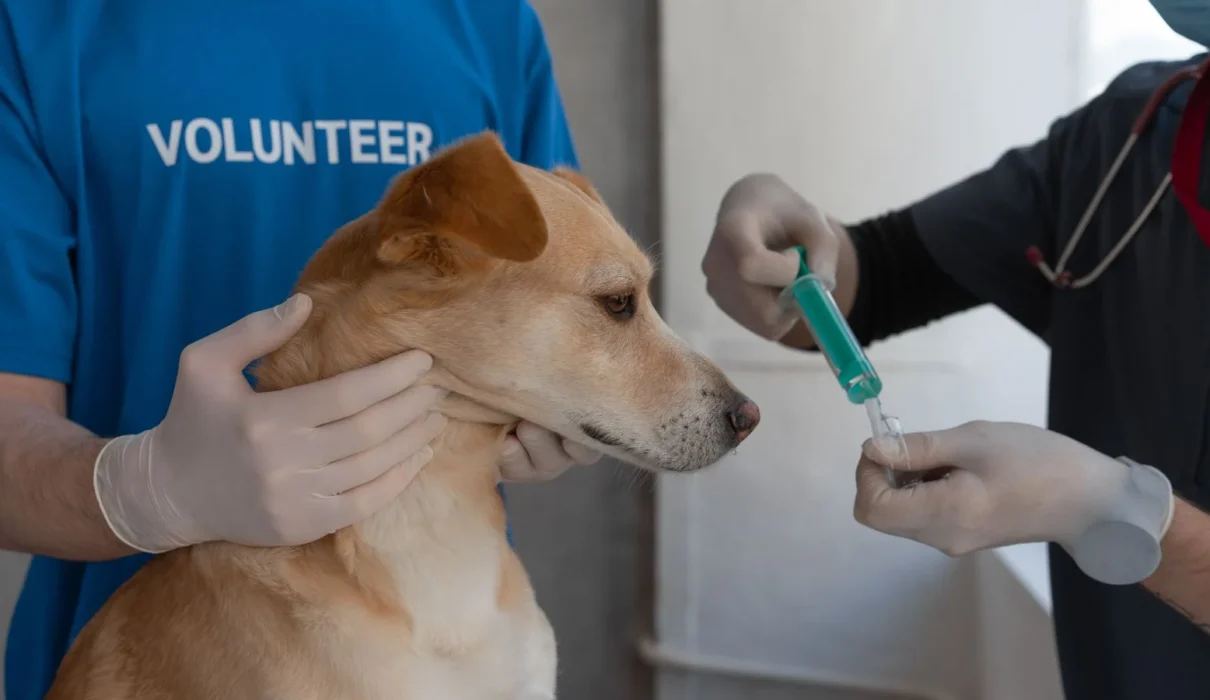
Here’s the short version of the puppy shot schedule. Most puppies start at 6 to 8 weeks old with a combination shot that covers distemper, adenovirus, parvovirus and usually parainfluenza (vets call it DAPP or DHPP). That shot repeats every 2 to 4 weeks until your puppy is at least 16 weeks old. Two leptospirosis shots start at 12 weeks, rabies comes at around 12 to 16 weeks depending on your state’s law, and about a year later the first boosters are due.
Table of Contents
- Why Your Puppy’s Shot Record Looks Unfinished
- Puppy Shot Schedule by Age
- Core vs Lifestyle Vaccines
- When Do Puppies Get Their Rabies Shot?
- What Happens at Your Puppy’s First Vet Visit
- Why Puppies Need a Series of Shots
- After the Shot: What’s Normal and When to Call
- What to Avoid Until Your Puppy’s Shots Are Done
- How Much Do Puppy Shots Cost?
- Keep Every Shot in One Place
- Missed or Late Puppy Shots
- Puppy Shot Schedule FAQ
- Puppy Shot Schedule: The Short Version
Why Your Puppy’s Shot Record Looks Unfinished
You pick up your puppy and the breeder or shelter hands you a folder. Inside there might be one vaccine sticker, a deworming date and a vet’s scribble you can’t read. It feels like something is missing. It isn’t. Most puppies come home partway through their shots, and the rest of the series is your job now.
The good news is the schedule follows a clear pattern, set out in the canine vaccination guidelines from the American Animal Hospital Association (AAHA) and the World Small Animal Veterinary Association (WSAVA). Once you see it laid out, it’s just 3 or 4 vet visits a few weeks apart, then a booster visit a year later.
Puppy Shot Schedule by Age
| Age | Core shots | Lifestyle shots | Also at this visit |
|---|---|---|---|
| 6 to 8 weeks | DAPP shot 1 | Bordetella, if your puppy is at risk | Exam, stool test, deworming |
| 10 to 12 weeks | DAPP shot 2, leptospirosis shot 1 (from 12 weeks) | Canine influenza or Lyme, if advised | Exam |
| 14 to 16 weeks | DAPP shot 3 (the last one at 16 weeks or later), leptospirosis shot 2, rabies | Second influenza or Lyme dose | Ask when outings are safe |
| About 6 months | Extra DAPP dose, if your vet advises it | None | Exam |
| About 1 year later | DAPP, leptospirosis and rabies boosters | Yearly lifestyle boosters | Annual exam |
| After that | DAPP every 3 years, leptospirosis yearly, rabies every 1 or 3 years | Yearly, if still at risk | Annual exam |

Think of this puppy shots schedule as a map, not a stopwatch. The exact weeks shift a little from clinic to clinic, and that’s fine. What matters is the pattern. AAHA recommends at least 3 doses of the combination vaccine between 6 and 16 weeks of age, given 2 to 4 weeks apart. WSAVA adds that the most important of those early doses is the one given at 16 weeks or older, so if your puppy started late or the visits drifted, your vet may add a fourth.
WSAVA also suggests considering one more core dose at about 6 months of age instead of waiting until the 1 year booster. It narrows the window for the small number of puppies that didn’t respond to the earlier shots. Not every clinic does this, so it’s a good question for your vet. The 12 to 16 week visits are also a good time to ask your vet to look in your puppy’s mouth, since that’s when baby teeth start to fall out (here’s when puppies lose their baby teeth).
Core vs Lifestyle Vaccines
AAHA splits puppy shots into two groups. Core vaccines are for every dog. Lifestyle vaccines (vets also call them noncore) depend on where you live and what your puppy will do.
- Core, for every dog: distemper, adenovirus (hepatitis), parvovirus, parainfluenza (usually in the same shot), leptospirosis and rabies.
- Lifestyle, for some dogs: Bordetella (kennel cough), canine influenza, Lyme disease and rattlesnake toxoid.
One recent change catches a lot of people out. AAHA updated its guidelines in 2024 to make leptospirosis a recommended core vaccine for all dogs. Older schedules online still list it as optional. VCA’s vets explain why it matters: leptospirosis can cause kidney or liver failure, and it can spread to people.
For lifestyle shots, think about your puppy’s next year. Boarding, daycare, groomers, dog shows, hiking in tick country or living where canine influenza has been reported are all good reasons to ask.
When Do Puppies Get Their Rabies Shot?
Most puppies get their first rabies shot between 12 and 16 weeks of age. VCA gives that 12 to 16 week window, and the UC Davis veterinary school recommends the same range. A booster is due 1 year after the first shot. After that, your dog gets a rabies vaccine every 1 or 3 years, depending on the vaccine used and the law where you live.
That last part is important. In the US, rabies vaccination is set by state law, and sometimes by city or county rules too. AAHA’s own schedule simply says rabies is given as required by law. Your vet knows the rules where you live, so ask at the first visit when the rabies shot is due and what proof you’ll need for licensing.
What Happens at Your Puppy’s First Vet Visit
According to VCA’s veterinarians, most puppies should see the vet at 6 to 8 weeks of age for a health exam and to start vaccines and parasite prevention. Here’s what to expect:
- A full health exam, so your vet has a baseline for your puppy.
- A stool test: VCA recommends one for all puppies, especially during their first few visits. Bring a fresh sample in a bag.
- Deworming: many vets give a routine dewormer, because lots of puppies carry common worms.
- The first or next shot in the series, plus a date for the next visit.
- A chat about parasite prevention, behavior and training, and when your puppy can safely meet other dogs.
Bring every record the breeder or shelter gave you, including any vaccines and dewormings already done. If your puppy is already home, my new puppy checklist has that vet appointment on the list for the first week, and the 8 week puppy schedule shows how vet visits fit around naps and potty breaks.
Why Puppies Need a Series of Shots
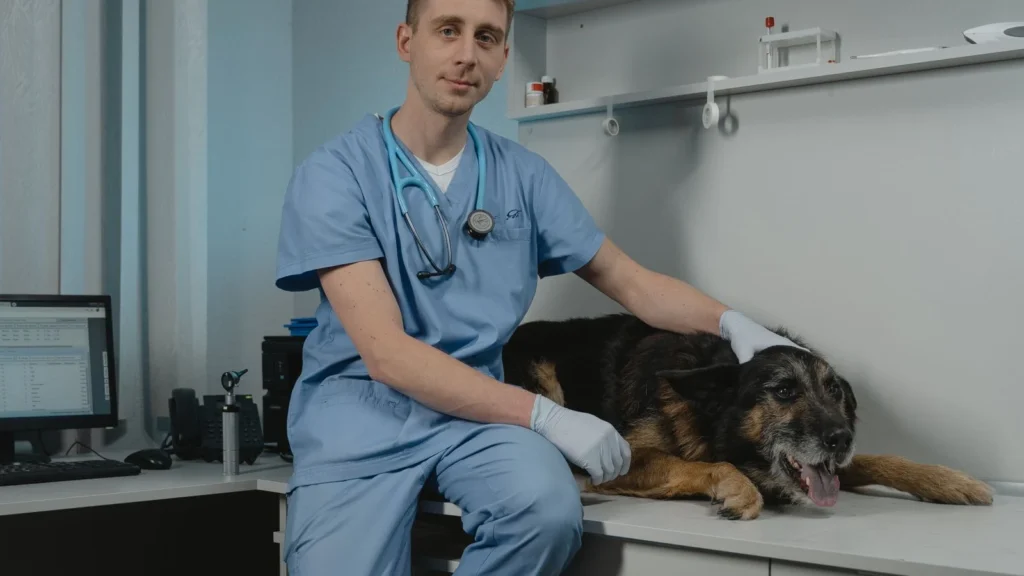
Puppies are born with borrowed protection. They get antibodies from their mother’s first milk, and those maternal antibodies protect them for the first weeks of life. The catch, as the Merck Veterinary Manual explains, is that maternal antibodies also block vaccines. A puppy can’t be effectively vaccinated until they fade.
Nobody can see when that happens for your particular puppy. It varies from litter to litter and even between puppies in the same litter. So vets repeat the shot every few weeks until 16 weeks or older, and one of those doses lands after your puppy’s maternal antibodies have dropped. VCA’s vets put it plainly: in young puppies, maternal antibodies may hinder protection until later in the vaccine series. That’s also why UC Davis suggests the extra dose at 6 months, to catch any puppy that still had maternal antibodies at 16 to 18 weeks.
After the Shot: What’s Normal and When to Call
| What you see | Normal or not? | What to do |
|---|---|---|
| Quieter than usual, eating a bit less, for a day or two | Normal | Let your puppy rest. It should pass in 24 to 48 hours |
| A small lump where the shot went in | Usually normal | Call your vet if it’s painful or still there after a few weeks |
| Vomiting, diarrhea or trouble breathing | Not normal | Call your vet right away |
What to Avoid Until Your Puppy’s Shots Are Done
Until the series is finished, the risky places are the ones where lots of unknown dogs have been. VCA advises waiting until a puppy has finished the full vaccination course before letting them get close to dogs with an unknown vaccine history, and its guide to social groups for dogs suggests skipping dog parks until your puppy is fully immunized for distemper and parvovirus, rabies and Bordetella.
Parvovirus is the big reason. The Cornell University Baker Institute notes that the virus can survive for months outside an animal, even through winter, and that a puppy can be exposed without any warning on lawns, in parks or even at home. Cornell’s advice is to avoid public places where there’s likely to be lots of virus, like animal shelters and kennels.
Places to Skip for Now
- Dog parks and dog beaches
- Pet store floors and busy sidewalks where many dogs walk
- Shelters, kennels and boarding facilities
- Meetups with dogs whose vaccines you can’t confirm
Safe Ways to Socialize Before the Series Is Done
Waiting doesn’t mean hiding your puppy away. WSAVA’s guidelines say careful socialization can begin before the vaccine series is complete, and the first months are when puppies learn the most about the world.
- Carry your puppy through new places so they see and hear the world without touching public ground.
- Invite healthy, fully vaccinated dogs you know for short, calm playdates at home.
- Have visitors over: new faces, hats, beards, kids who can follow rules.
- Practice car rides, new floor surfaces and everyday sounds at home.
And know the warning signs. Vomiting, diarrhea, blood in the poop or a sudden tired, floppy puppy needs a call to your vet the same day, especially before the series is finished. My guide to how often puppies poop covers the red flags and why vets take puppy diarrhea so seriously.
How Much Do Puppy Shots Cost?
| Vaccine or visit | Typical US cost (2026) | Source |
|---|---|---|
| DAPP (DHPP), per dose | $35 to $55 | PetPremium |
| Leptospirosis, per dose | $30 to $45 | PetPremium |
| Rabies (1 year vaccine) | $25 to $40 | PetPremium |
| Bordetella, per dose | $30 to $50 | PetPremium |
| Full puppy series, 8 to 16 weeks | $180 to $340 | PetPremium |
| Shelter or low cost clinic | About $20 a vaccine | AKC |
Prices vary a lot by city and clinic, so treat these as a ballpark. The PetPremium 2026 cost report puts a full puppy vaccine series at $180 to $340, and the AKC notes that shelters often charge around $20 per vaccine, or even give them free. If money is tight, ask your vet about wellness plans or low cost vaccine clinics in your area. Skipping the series is the expensive option: NAPHIA’s 2026 figures put many parvo treatment cases at $1,000 to $5,000 or more.
Keep Every Shot in One Place
Between the breeder’s folder, the vet’s printouts and the rabies tag, shot records scatter fast. And you’ll need them for boarding, daycare, groomers, training classes and travel. The free Dog Medical Vault has a vaccination record page that keeps your dog’s whole shot history on one page, with a plain guide to what each vaccine protects against. Fill in each dose after every visit, and next year’s booster reminder is already done.
If you like planning on your phone, my First 30 Days Puppy OS Notion template has a vaccination timeline and a vet visit manager for the early weeks.

Missed or Late Puppy Shots
Life happens. If a visit slips by a week, call your vet and rebook as soon as you can. They’ll decide whether your puppy needs an extra dose to finish strong. A few rules from AAHA help here:
- A dog older than 16 weeks with no or unknown core shots gets 2 doses of the combination vaccine, 2 to 4 weeks apart.
- Leptospirosis always starts with 2 doses, 2 to 4 weeks apart, at any age.
- VCA adds that if the leptospirosis booster isn’t given within 15 months of the very first dose, the 2 dose series restarts.
Puppy Shot Schedule FAQ
-
What is the schedule of shots for a puppy?
Most puppies get a combination DAPP shot at 6 to 8 weeks, then every 2 to 4 weeks until they’re at least 16 weeks old. Leptospirosis is 2 shots starting at 12 weeks, rabies comes at around 12 to 16 weeks depending on state law, and boosters are due about a year later. That’s based on the AAHA and WSAVA vaccination guidelines.
-
When do puppies get their rabies shot?
Usually between 12 and 16 weeks of age, according to VCA and the UC Davis veterinary school. A booster follows 1 year later, then every 1 or 3 years depending on the vaccine and your state’s law.
-
What shots do puppies get at 8 weeks?
At 6 to 8 weeks most puppies get their first DAPP shot, which covers distemper, adenovirus, parvovirus and usually parainfluenza. Some also get a Bordetella vaccine if they’re at risk. The visit usually includes an exam, a stool test and deworming.
-
How many rounds of shots do puppies need?
Usually 3 or 4 rounds. AAHA recommends at least 3 doses of the combination vaccine between 6 and 16 weeks, 2 to 4 weeks apart, with the last dose at 16 weeks or older. WSAVA suggests considering one more at about 6 months.
-
Can my puppy go outside before all the shots?
Yes, in your own yard and in places unknown dogs don’t use. VCA advises avoiding dog parks and dogs with unknown vaccine history until the series is complete. You can still socialize your puppy safely by carrying them in new places and meeting healthy, vaccinated dogs you know.
-
How much do puppy shots cost?
A 2026 cost report from PetPremium puts a full puppy vaccine series at about $180 to $340 in the US, with a DAPP shot at $35 to $55 per dose. The AKC notes that shelters often charge around $20 per vaccine. Exam fees may be extra.
-
Is leptospirosis a core vaccine for puppies?
Yes, in the US. AAHA updated its canine vaccination guidelines in 2024 to make leptospirosis a recommended core vaccine for all dogs. Puppies get 2 doses, 2 to 4 weeks apart, starting at 12 weeks, then a yearly booster.
Puppy Shot Schedule: The Short Version
Start at 6 to 8 weeks. Repeat the DAPP shot every 2 to 4 weeks until at least 16 weeks. Add 2 leptospirosis shots from 12 weeks and rabies at around 12 to 16 weeks, as your state requires. Keep your puppy away from dog parks and unknown dogs until the series is done, but keep socializing safely. Then book the 1 year boosters, and write every dose down.
Over to you: how did your puppy handle their first vet visit? Brave little soldier, or full drama? Tell me in the comments.

2 Comments