


 By
Dog hiccups happen when the diaphragm, the muscle under the lungs, spasms and the vocal cords snap shut, which makes the little “hic” sound (American Kennel Club, Dogs Trust). They are far more common in puppies than in adult dogs, and most bouts stop on their own.
This guide starts with puppy hiccups, then covers 7 common causes, 6 ways to help, how to tell hiccups from reverse sneezing or a cough, and the signs that mean it’s time to call your vet. General guidance, not veterinary advice.
Table of Contents
- Why Do Puppies Get Hiccups?
- Do Dogs Get Hiccups as Adults?
- 7 Common Causes of Dog Hiccups
- What Do Dog Hiccups Look and Sound Like?
- Dog Hiccups vs Reverse Sneezing, Coughing and Wheezing
- How to Stop Dog Hiccups: 6 Things to Try
- How to Prevent Hiccups in Puppies
- When to Call the Vet About Dog Hiccups
- Can Hiccups Be a Sign of Something Serious?
- Dog Hiccups: FAQ
- Dog Hiccups: The Short Version
Why Do Puppies Get Hiccups?
Puppy hiccups are very common, and nobody knows exactly why young dogs get them so much more than adults (Royal Kennel Club). The AKC says puppies often hiccup after eating or drinking too fast, when they are tired, when they are very excited or when they are too cold.
There are a few theories:
- A leftover from the womb. The AKC notes one idea that hiccuping before birth helps developing animals practice breathing, which may explain why young puppies do it most.
- A body that is still developing. The Royal Kennel Club says a puppy’s organs and digestive system are still maturing.
- Overexcitement. The Dogs Trust veterinary team says hiccups may be a stress response to overstimulation, which may partly explain why puppies get them more than adult dogs.
- Gulped air. Puppies often gobble food and water, and Dogs Trust says gulping can take in extra air.

How long do puppy hiccups last?
The Royal Kennel Club says a typical episode lasts a few minutes and usually stops on its own. Dogs Trust says puppy hiccups can last up to about an hour. Hiccups that go on for more than a few hours are a reason to call your vet (AKC, Dogs Trust, Royal Kennel Club).
When do puppies grow out of hiccups?
The Royal Kennel Club says episodes tend to decrease from about 4 months of age, and the Dogs Trust vet team says most hiccups happen before about 8 months. The AKC says puppies usually hiccup less as they get older, or stop altogether.
Do hiccups hurt puppies?
Dogs Trust says there is no current evidence that hiccups are painful for puppies or adult dogs. The Royal Kennel Club suggests letting a puppy carry on if it isn’t upset or in pain. A puppy that seems to be in pain should see a vet (Royal Kennel Club, Dogs Trust).
Is it normal for a puppy to hiccup every day?
Short, occasional bouts are part of normal puppy life. The Royal Kennel Club does advise calling your vet if hiccups happen several times a day, or if they come with other signs such as coughing, a runny nose, vomiting or diarrhea.
Do Dogs Get Hiccups as Adults?
Yes. Dogs of any age can hiccup, but adults do it much less often than puppies (Royal Kennel Club, AKC). The triggers are the same: eating or drinking too fast, excitement and swallowed air. An adult dog that suddenly starts having frequent or long bouts deserves a closer look, which is covered further down.
7 Common Causes of Dog Hiccups
Scientists don’t know the exact reason mammals hiccup (AKC). These are the triggers named by the AKC, the Dogs Trust vet team and the Royal Kennel Club.
1. Eating too fast
Fast eating is the trigger every source names. Dogs Trust says gulping food can take in extra air, and the AKC suggests smaller portions or a slow feeder bowl.
2. Drinking too fast
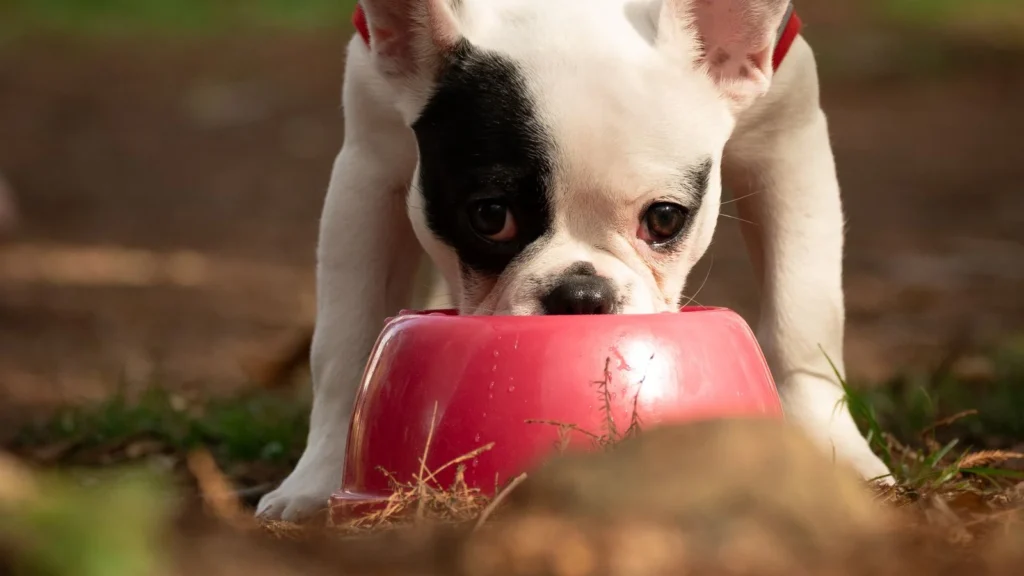
Big gulps of water work the same way. The AKC and Dogs Trust both list drinking too quickly as a cause.
3. Excitement and overstimulation

The AKC lists excitement, and Dogs Trust says overstimulation may trigger hiccups as a stress response. Busy play sessions, visitors and the holiday rush can all wind a puppy up.
4. Being tired
The AKC says puppies may hiccup when they are tired. Young puppies need a lot of rest, and our guide to how much puppies sleep shows what is normal at each age.
5. Cold

Being too cold is on the AKC’s list of puppy hiccup triggers. In winter, keep potty trips short for young puppies and give them a warm bed away from drafts.
6. A full stomach or swallowed air
The Royal Kennel Club lists pressure in the stomach from eating too much, eating or drinking too fast, or swallowing air. The AKC notes a theory that hiccups help release gas or ease an upset stomach.
7. Stomach irritation or food intolerance
The Royal Kennel Club also names food intolerance and stomach irritation. If hiccups come with vomiting, diarrhea or a poor appetite, call your vet. Our guide to a dog throwing up yellow explains which vomiting signs need a vet.
What Do Dog Hiccups Look and Sound Like?
Dog hiccups sound much like a person’s: a gentle but abrupt, rhythmic noise, says the Royal Kennel Club. Dogs Trust describes the sudden closing of the vocal cords that makes a puppy’s little squeak.
The Royal Kennel Club adds that hiccups don’t cause breathing problems or vomiting, and that they are different from coughing, vomiting, regurgitating and reverse sneezing. That makes the next comparison useful.
Dog Hiccups vs Reverse Sneezing, Coughing and Wheezing
| What you notice | What it sounds like | Usually means | What to do |
|---|---|---|---|
| Hiccups | Gentle, rhythmic hic, breathing otherwise normal | A diaphragm spasm, harmless in most dogs (AKC, RKC) | Let them pass |
| Reverse sneeze | Loud snorts while pulling air in through the nose | A reflex from irritation at the back of the nose (Cornell) | Usually passes within a minute |
| Cough | A honk that pushes air out, often ending in a gag | Kennel cough or another airway problem (Merck) | Call your vet |
| Wheeze or hard breathing | Whistling, or breathing that looks like work | Needs a vet check (AKC, Dogs Trust) | Call your vet promptly |
Reverse sneezing is the one most often mixed up with hiccups. It is a run of loud snorts as a dog pulls air in through the nose, usually with the neck stretched out. Our guide to reverse sneezing in dogs explains what it looks like and how to help. A honking cough is different again, and our kennel cough symptoms guide covers when it needs a vet.
Retching that brings nothing up, especially with a swollen belly, is not hiccups. Read the signs of bloat in dogs and go to a vet now if you see them.
How to Stop Dog Hiccups: 6 Things to Try
Most bouts stop without help. If your dog seems bothered, these steps from the AKC, Dogs Trust and the Royal Kennel Club may help:
- Let them pass. Dogs Trust says no action is usually needed, and that staying calm matters, since a fuss could worry your puppy.
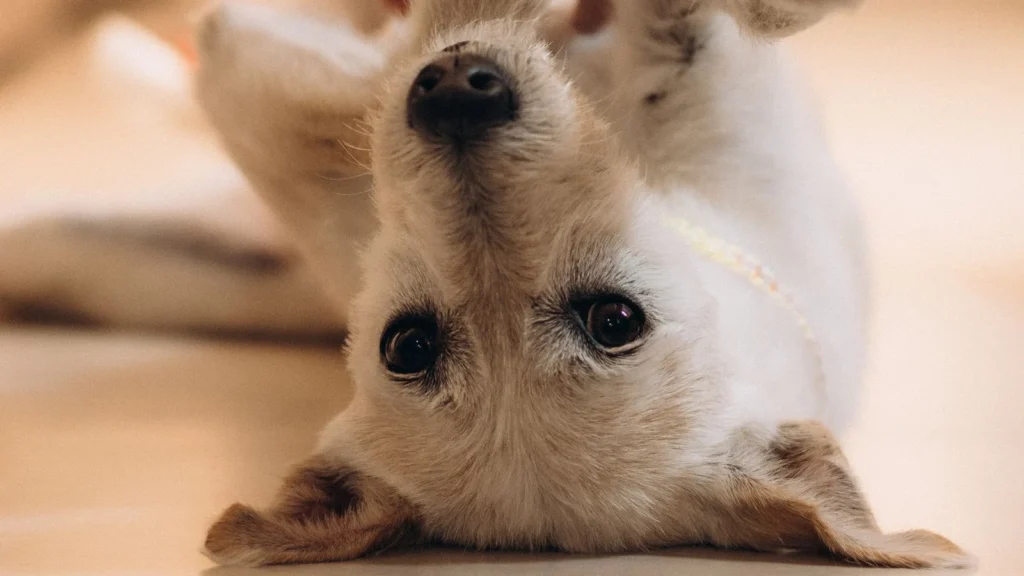
- Rub the belly. The AKC suggests getting your dog to lie on its back for a belly rub to steady its breathing. Gentle stroking works too (Royal Kennel Club).
- Offer water to sip slowly. The AKC says a calm, slow drink may help. Dogs Trust adds that you should never force a puppy to drink.
- Hold off on food. The Royal Kennel Club suggests waiting until the hiccups stop before feeding, to reduce the risk of choking.
- Try calm, gentle activity. A quiet toy or a slow stroll can be a calm distraction (Royal Kennel Club).
- Slow down the next meal. Smaller portions or a slow feeder bowl help a fast eater (AKC).
What not to do
- Don’t scare your dog. The AKC and the Royal Kennel Club both say startling your dog, pulling the tongue or pressing on the eyes should never be tried.
- Skip human hiccup remedies. The Dogs Trust vet team says they can be dangerous for dogs.
- Don’t give medicine. Never give your dog any medicine for hiccups unless your vet prescribes it.
How to Prevent Hiccups in Puppies
You can’t stop every bout, but you can cut down the common triggers:
- Feed smaller, more frequent meals and stick to the right portion for your puppy (Royal Kennel Club). Our puppy feeding chart shows how much and how often by age.
- Use a slow feeder or puzzle feeder so meals take longer (AKC, Dogs Trust, Royal Kennel Club).
- Try a different water bowl. The Royal Kennel Club suggests a different height or shape, or an anti-gulp bowl.
- Rest after meals. The Royal Kennel Club suggests avoiding exercise for about an hour after eating.
- Keep mealtimes calm. Feed away from busy play and excited visitors (Dogs Trust).
- Keep your puppy warm in cold weather, since cold is a trigger (AKC).
- Protect nap time. Tired puppies hiccup more (AKC), so build rest into your puppy’s day.
Keep your vet’s number handy for the rare bout that won’t stop. The Print & Go Pack includes a one page Emergency Cheat Sheet:
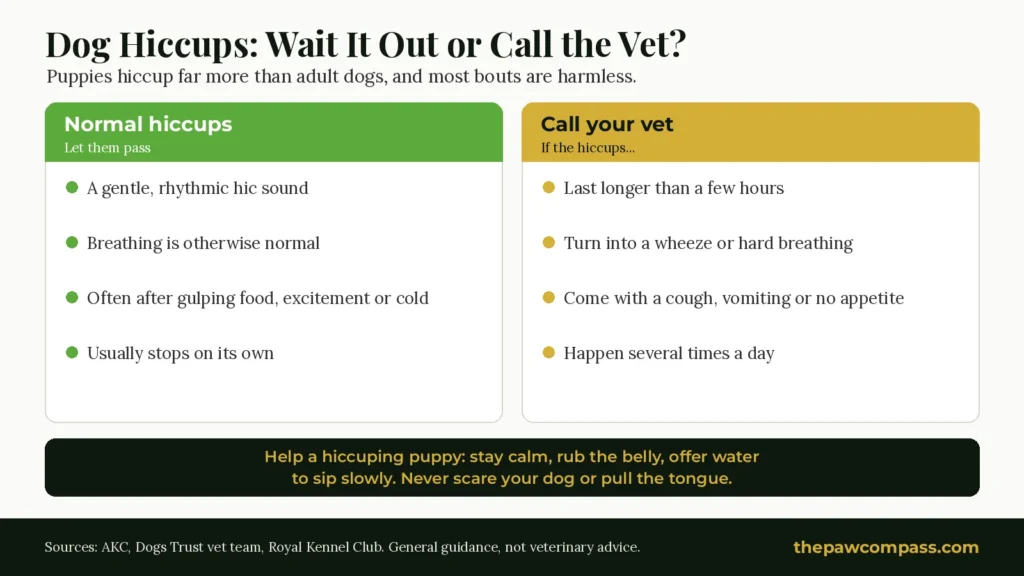
When to Call the Vet About Dog Hiccups
| What you notice | What to do | Source |
|---|---|---|
| A short bout, and your dog is happy and breathing normally | Let it pass | Royal Kennel Club, Dogs Trust |
| Hiccups last longer than a few hours | Call your vet | AKC, Dogs Trust, Royal Kennel Club |
| Hiccups turn into a wheeze, or breathing is irregular or hard | Call your vet promptly | AKC, Dogs Trust |
| Coughing, sneezing or a runny nose along with the hiccups | Call your vet | Dogs Trust, Royal Kennel Club |
| Vomiting, regurgitation, diarrhea or blood in the stool | Call your vet | Dogs Trust, Royal Kennel Club |
| Not eating or drinking, seems in pain or unusually tired | Call your vet | Royal Kennel Club, Dogs Trust |
| Hiccups several times a day | Book a vet visit | Royal Kennel Club |
Trouble breathing is never a hiccup problem. If your dog is struggling for air, go to an emergency vet now.
Can Hiccups Be a Sign of Something Serious?
Rarely, yes. A case presented at the Mississippi State University College of Veterinary Medicine (presented by Hayley Bloom, Class of 2022, with faculty advisor Dr. Alyssa Sullivant, DVM, MS, DACVIM) describes Maggie, a Labrador Retriever, five years old, whose family reported episodes of “hiccups” that weren’t linked to eating or drinking. The first episode lasted about 45 minutes and came with vomiting. Later episodes grew longer and more frequent, up to 3 hours, sometimes with diarrhea.
The vets found an unusual form of Addison’s disease, a hormone problem of the adrenal glands, and Maggie improved with treatment. The report notes that hiccups are rarely documented in veterinary medicine, and that in people, persistent hiccups have been linked to stomach problems, parasites, breathing problems and hormone disorders.
The takeaway is simple. Short bouts in a puppy are normal. Hiccups that keep coming back in an adult dog, last for hours or come with vomiting, diarrhea or other changes deserve a vet visit.
Dog Hiccups: FAQ
-
Do dogs get hiccups?
Yes. Dog hiccups happen when the diaphragm spasms and the vocal cords close suddenly, making a “hic” sound (AKC, Dogs Trust). They are much more common in puppies than in adult dogs. General guidance, not veterinary advice.
-
Why do puppies get hiccups so much?
Nobody knows for sure. The AKC lists eating or drinking too fast, tiredness, excitement and cold as triggers. Other theories include a reflex left over from the womb and a digestive system that is still developing (Royal Kennel Club).
-
How long do puppy hiccups last?
A typical bout lasts a few minutes (Royal Kennel Club), and Dogs Trust says puppy hiccups can last up to about an hour. Call your vet if they go on for more than a few hours.
-
How do you get rid of dog hiccups?
Usually you don’t need to. To help, stay calm, give a gentle belly rub, offer water to sip slowly and hold off on food until they stop (AKC, Royal Kennel Club). Never scare your dog or pull the tongue.
-
Are dog hiccups the same as reverse sneezing?
No. Hiccups are a gentle, rhythmic hic with otherwise normal breathing. A reverse sneeze is a run of loud snorts as the dog pulls air in through the nose. Both are usually harmless.
-
When do puppies stop getting hiccups?
The Royal Kennel Club says episodes tend to decrease from about 4 months of age, and Dogs Trust says most hiccups happen before about 8 months. Many dogs rarely hiccup as adults.
-
When should you worry about dog hiccups?
Call your vet if hiccups last more than a few hours, happen several times a day, turn into a wheeze, or come with coughing, vomiting, diarrhea, pain or not eating (AKC, Dogs Trust, Royal Kennel Club).
Dog Hiccups: The Short Version
- Hiccups are a diaphragm spasm that makes a soft, rhythmic hic.
- Puppies hiccup far more than adults and tend to grow out of it from about 4 months.
- Common triggers: eating or drinking fast, excitement, tiredness and cold.
- Most bouts last minutes. Stay calm, rub the belly and offer water to sip.
- Never scare your dog, pull the tongue or use human remedies.
- Hiccups that last hours, keep coming back or turn into a wheeze need a vet.
- Snorting while breathing in is reverse sneezing, not hiccups.
General guidance, not veterinary advice. Over to you: when does your puppy get the hiccups most? Tell us in the comments.
