


 By
When can puppies go outside? It depends where. Your own yard is fine from day one for potty breaks, as long as it’s a spot other dogs don’t use. Quiet public places are fine early too, if you carry your puppy or keep them off ground where lots of dogs walk. Dog parks and meetings with unknown dogs wait until the vaccine series is done, which Ohio State’s veterinary college puts at about 16 to 20 weeks, and until your vet says go. That split is where VCA, AAHA, the AKC and the American Veterinary Society of Animal Behavior (AVSAB) largely agree.
You’ve got a new puppy, a sunny afternoon and a dozen people online telling you different things. Some say keep them in until 16 weeks. Others say get them out now or they’ll grow up scared. Both camps have a point, which is why the honest answer depends on the place, not just the age.
Table of Contents
- When Can Puppies Go Outside? It Depends Where
- When Can Puppies Go Outside to Pee?
- Why Vets Worry: Parvo and Other Puppy Diseases
- Why Waiting Too Long Has a Cost Too
- Where Vets Agree and Where They Differ
- Safe Outings Before the Shots Are Done
- Vaccine Timeline: What Opens Up When
- When to Call the Vet
- Puppies Going Outside FAQ
- When Can Puppies Go Outside: The Short Version
When Can Puppies Go Outside? It Depends Where
So when can a puppy go outside safely? Here’s the place by place answer, with what the vets and vet groups actually say.
| Place | When | What the vets say |
|---|---|---|
| Your own yard, for potty breaks | From day one | The AKC says house training starts the day your puppy comes home. Use a spot other dogs don’t visit |
| Friends’ homes with healthy, vaccinated dogs | Early, with your vet’s OK | The AKC says known dogs who are vaccinated and haven’t been around unvaccinated dogs are a safe start |
| Quiet public places, carried or on a blanket | Early | Ohio State’s vet college and AAHA suggest carrying your puppy or using a stroller, plus a blanket or tarp on ground dogs may have used |
| Puppy classes | From 7 to 8 weeks, at least 7 days after the first shots | AVSAB and Ohio State support well run classes. Some vets prefer you wait (see below) |
| Sidewalks and public grass on their own feet | Vets differ | Ohio State says stick to sidewalks and avoid grass with unknown dog traffic. The AKC says public walks wait for all the shots |
| Dog parks, shelters, kennels, boarding | After the full series and your vet’s OK | VCA and Cornell say avoid them until vaccines are done. The AKC says dog parks are fine 7 to 10 days after the full series |

Why such a range? Puppies aren’t fully protected until the vaccine series is complete, which Ohio State’s veterinary college puts at 16 to 20 weeks. By then, the most important window for socialization has already closed. So the goal isn’t inside versus outside. It’s keeping your puppy off the ground where unknown dogs go, while still letting them see, hear and smell the world.
When Can Puppies Go Outside to Pee?
Right away. The AKC says potty training should begin the day your puppy comes home, and that very young puppies may need a trip outside every 1 to 2 hours while they’re awake. Your own yard or a private patch of grass is the place to start.
- Pick one spot near the door, ideally somewhere other dogs don’t visit. The AKC notes that unvaccinated puppies can catch parvovirus, leptospirosis and distemper from feces other dogs leave behind.
- Skip shared grass for now: building lawns, dog relief areas and busy grass strips. Ohio State’s vet college advises keeping contact with grassy areas where dog traffic is unknown to a minimum.
- If a dog with parvo has used your yard, talk to your vet first. Cornell’s Baker Institute says the virus can survive outside for months, and you can’t bleach a lawn. Rain and sunlight bring it down over a few weeks.
- No yard? Ask your vet about the safest option near you. The AKC says puppy pads or another approved potty area can work while you train.
For how long your puppy can wait between trips, see how long a puppy can hold its pee. The 8 week puppy schedule shows where those potty trips fit in a real day.
Why Vets Worry: Parvo and Other Puppy Diseases
Parvovirus is the big one. According to Cornell’s Baker Institute, it most often strikes puppies between 6 and 20 weeks old. It’s extraordinarily hardy: it can survive for months outside an animal, even through winter, and it resists most household cleaners. Because most dog parks, lawns and even homes aren’t disinfected regularly, a puppy can be exposed without any warning. Cornell’s advice is to keep your puppy away from places with lots of virus, like animal shelters and kennels, until the vaccinations are complete.
It isn’t the only risk. The AKC lists parvovirus, leptospirosis and distemper as illnesses unvaccinated puppies can pick up from other dogs and from feces on the ground. That’s why the vaccine series comes first, with a shot every 2 to 4 weeks until at least 16 weeks. The puppy shot schedule lays out each visit.
Why Waiting Too Long Has a Cost Too
The other side of the scale is behavior. VCA calls 3 to 16 weeks of age the sensitive period for socialization, when puppies are ideal candidates for new people, places and sounds. Ohio State’s veterinary college puts the socialization period at 3 weeks to 12, possibly 14, weeks, and the AKC describes it as the first three months of life.
Here’s the catch VCA points out: by the time your puppy finishes the vaccine series, that sensitive period is over. Without well timed socialization, puppies face a considerable risk of permanent fears or anxiety. The AVSAB position statement goes further. It says behavior problems, not infectious diseases, are the number one cause of death in dogs under 3 years old, and that socialization before puppies are fully vaccinated should be the standard of care. My puppy socialization plan shows what to do week by week.
Where Vets Agree and Where They Differ
Where They Agree
- Start the vaccine series on time and keep up with deworming and parasite prevention. Ohio State’s vet college says every puppy should be on a parasite prevention plan before and during socialization.
- Keep your puppy away from dog parks, shelters, kennels and groups of unknown dogs until the series is done (VCA, Cornell, AKC).
- Don’t keep your puppy shut in until 16 weeks. Socialize early, in controlled ways (AVSAB, VCA, Ohio State, AKC).
- Ask your vet about disease risk where you live. VCA recommends talking to your veterinarian about local infectious disease risk and following their vaccine schedule.
Where They Differ
- Puppy classes before the series is done. AVSAB says puppies can start socialization classes as early as 7 to 8 weeks, with at least one set of vaccines 7 days before the first class and a first deworming. Ohio State’s guide adds a vet’s clean bill of health and classes reserved for puppies under 4 months. But in an AKC article, veterinarian Dr. Chyrle Bonk says she’d rather you wait until the full series is done.
- Pet stores. The AKC’s socialization guide suggests a pet store visit once the vaccine series has started. VCA advises avoiding groups of unknown dogs, and Ohio State says to treat places with high or unknown dog traffic with caution. A middle path: carry your puppy or use a cart, and keep them off the floor.
- Walks on public ground. Ohio State suggests walks in different neighborhoods, sticking to sidewalks and avoiding grass where dog traffic is unknown. The AKC article says public walks should wait until all the shots are done and your vet gives the go ahead.
When the experts split, your vet is the tiebreaker. They know which diseases are circulating where you live, and they know your puppy’s vaccine record.
Safe Outings Before the Shots Are Done
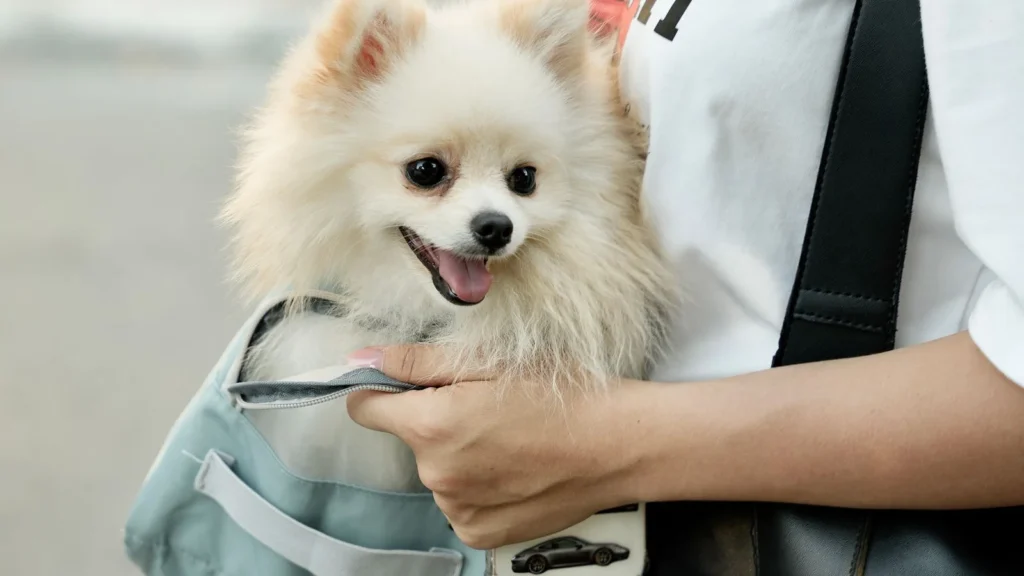
- Carry your puppy, or use a sling or stroller, especially where unvaccinated dogs may have been (AAHA, Ohio State).
- Bring a blanket or tarp. Ohio State suggests a puppy can watch a kid’s soccer game from a covered patch of ground.
- Explore new neighborhoods: city, suburban and rural streets, staying on the sidewalk (Ohio State).
- Go somewhere new at least twice a week, starting at a comfortable distance from anything that might frighten your puppy (VCA).
- Set up playdates at home with healthy, vaccinated dogs you know are gentle. Ohio State says the best play pal is a friendly, mature adult dog (AKC, Ohio State).
- Screen your visitors. Ohio State suggests asking about recent visits to dog parks or shelters, changing shoes and clothes, and washing hands before handling your puppy.
- Bring the world inside. AAHA suggests something new at home every day: run the hairdryer, make popcorn, move a chair into the kitchen.
- Take car rides. AVSAB recommends taking puppies on as many car trips as possible.
Vaccine Timeline: What Opens Up When
| Age | Shots (most puppies) | What’s usually OK |
|---|---|---|
| 6 to 8 weeks | DAPP shot 1 and a first exam | Your own yard, visitors at home, carried outings |
| 7 to 8 weeks and up | At least 7 days after the first shots | A well run puppy class, if your vet agrees |
| 10 to 12 weeks | DAPP shot 2, leptospirosis from 12 weeks | More carried outings, playdates with known vaccinated dogs |
| 14 to 16 weeks | DAPP shot 3 (at 16 weeks or later), leptospirosis 2, rabies | Keep socializing safely while the series finishes |
| About 16 to 20 weeks | Series complete | Public walks, then dog parks once your vet says go |
Every puppy’s dates shift a little depending on when they started. The puppy shot schedule has the full visit by visit plan, and the AKC says dog parks are fine 7 to 10 days after the full series. VCA suggests waiting until your puppy is fully immunized for distemper and parvovirus, rabies and Bordetella before group dog settings.
When to Call the Vet
Cornell’s Baker Institute lists the usual signs of parvo as lethargy, depression and loss of appetite, followed by a sudden high fever, vomiting and diarrhea. Call your vet the same day if you see any of these, especially before the vaccine series is done. Cornell says many dogs respond to treatment when it starts in time. For what normal puppy poop looks like, and when it isn’t, see how often puppies poop.
Puppies Going Outside FAQ
-
When can puppies go outside?
It depends where. Your own yard is fine from day one for potty breaks, if other dogs don’t use it. Quiet public places are fine early if you carry your puppy or keep them on a blanket. Dog parks and unknown dogs wait until the vaccine series is done, about 16 to 20 weeks according to Ohio State’s veterinary college, and your vet’s OK.
-
When can puppies go outside to pee?
From the first day. The AKC says potty training should begin the day your puppy comes home. Use a private spot in your own yard that other dogs don’t visit, and skip shared grass until the vaccine series is done.
-
Can you carry a puppy outside before vaccinations?
Yes. AAHA and Ohio State’s veterinary college both suggest carrying your puppy or using a stroller so they can see the world without touching ground where unknown dogs have been. Avoid nose to nose contact with dogs you don’t know.
-
When can a puppy go to the dog park?
After the full vaccine series and your vet’s go ahead. The AKC says 7 to 10 days after the full series is safe, and VCA suggests waiting until your puppy is fully immunized for distemper and parvovirus, rabies and Bordetella.
-
Can a puppy meet other dogs before all their shots?
Yes, if you know the dogs. The AKC says puppies can meet healthy, vaccinated dogs who haven’t been around unvaccinated dogs and are gentle with puppies, ideally at home. Wait on unknown dogs until the series is done.
-
When can a puppy go on walks?
Vets differ. An AKC article says walks in public should wait until all the shots are done and your vet agrees. Ohio State’s veterinary college suggests short walks on sidewalks in new neighborhoods, avoiding grass where unknown dogs go. Ask your vet what fits the risk where you live.
-
Can puppies go to puppy class before all their shots?
Often, yes. AVSAB says puppies can start socialization classes at 7 to 8 weeks with at least one set of vaccines 7 days before the first class and a first deworming. Pick a class that checks vaccine records and cleans its floors. Some vets prefer that you wait, so check with yours.
When Can Puppies Go Outside: The Short Version
Own yard: from day one, in a spot other dogs don’t use. Quiet public places: early, carried or on a blanket. Puppy class: from 7 to 8 weeks, a week after the first shots, if your vet agrees. Dog parks, shelters and unknown dogs: after the full series and your vet’s OK. In between, keep socializing, because the window for it closes before the shots are done.
Over to you: where did your puppy go on their first carried outing? Tell me in the comments.

3 Comments