

 By
How often do puppies poop? A lot. Most 8 week old puppies poop 3 to 5 times a day, usually within half an hour of a meal. By 12 weeks that tends to settle to 2 to 4 times, by 6 months to 2 or 3, and by their first birthday most dogs have found their own normal of 1 to 3 a day. If your puppy goes even more often, the poop holds its shape and they’re bouncing around like usual, you’re most likely looking at a healthy, very fast little gut.
Table of Contents
- Why Puppies Poop So Often (and Always at the Worst Moment)
- How Often Do Puppies Poop? Chart by Age
- How Long After Eating Does a Puppy Poop?
- A Sample Poop Schedule for an 8 Week Old Puppy
- Why Is My Puppy Pooping So Much?
- Puppy Not Pooping? How Long Is Too Long
- What Healthy Puppy Poop Looks Like
- Puppy Pooping in the Crate? Causes and Fixes
- Do Puppies Poop at Night? How to Skip the 3 am Wake-Up Call
- When to Call the Vet: 6 Red Flags
- Puppy Poop FAQ
- Puppy Poop by Age: The Short Version
Why Puppies Poop So Often (and Always at the Worst Moment)
Picture this. It’s 6:30 in the morning and breakfast disappeared in about 40 seconds. You’re standing on a wet lawn in your slippers while your puppy sniffs every blade of grass like it owes them money. Nothing. You give up, head inside, start the coffee, and turn around just in time to see the hunch. Behind the couch. Of course.
If that sounds like your kitchen, you’re in good company. PetMD’s veterinarian, Dr. Sandra Mitchell, explains that puppies are small, their gut is still developing, and food moves through it very quickly. The younger the puppy, the faster it goes. Add 3 or 4 meals a day, plus naps, zoomies and drinks of water, and you get a lot of poop with very little warning.
The good news is that it slows down, and it gets predictable sooner than you’d think. Once you know the pattern, you can be outside before the hunch instead of after it.
How Often Do Puppies Poop? Chart by Age
| Age | Meals a day | Poops a day | What changes |
|---|---|---|---|
| Newborn (0 to 2 weeks) | Nursing | 8-12 | Poops after most feeds |
| 8 weeks | 4 | 3-5 | Potty training starts |
| 12 weeks | 3-4 | 2-4 | Patterns show up |
| 4 months | 3 | 2-4 | Digestion gets more efficient |
| 6 months | 2-3 | 2-3 | Close to adult habits |
| 1 year and up | 2 | 1-3 | Settles into their own normal |
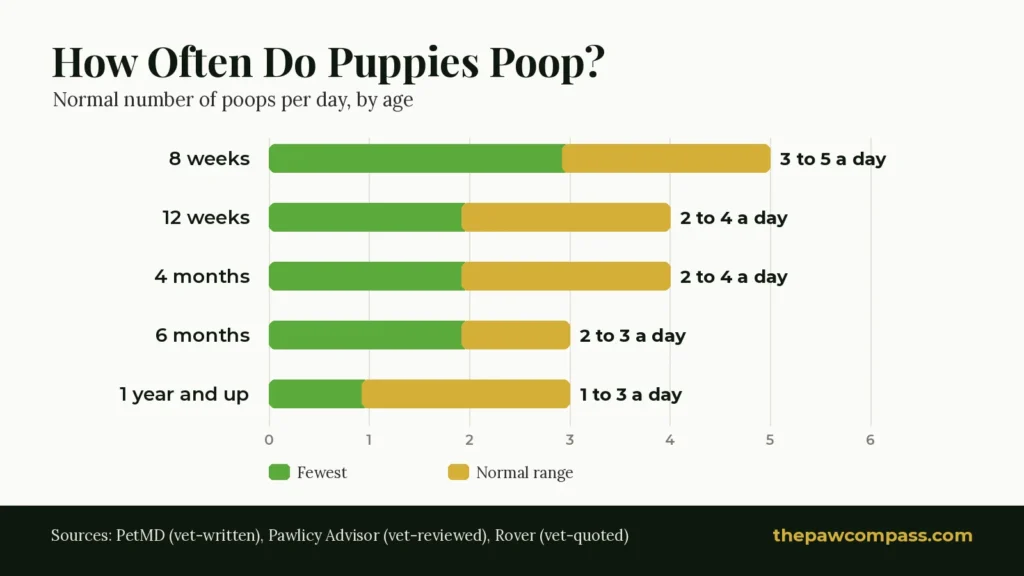
See the pattern? Poops follow meals. Rover’s veterinary expert points out that puppies digest quickly and eat several small meals a day, so they need to go more often. Banfield Pet Hospital recommends 4 small meals a day under 12 weeks, 3 meals from 3 to 6 months and 2 meals after 6 months, and the poop count drops right along with them.
PetMD’s numbers tell the same story: a 2 week old may poop at every feeding, a 12 week old may be down to about 4 a day, a 6 month old to about 3, and most dogs settle into their adult routine by 1 year. Pawlicy Advisor’s vet-reviewed guide puts newborns at as many as 8 to 12 poops a day and an 8 week old at 3 to 4. Grown dogs usually go once a day, although PetMD says 2 or 3 times is still normal for some.
Still setting up? My new puppy checklist covers everything to have ready before day one, including the enzymatic cleaner you will absolutely use.
How Long After Eating Does a Puppy Poop?
Not long. The AKC’s potty training timeline says to take your puppy outside 5 to 30 minutes after a meal, and even sooner for very young puppies. For adult dogs, PetMD puts it at about 30 minutes after eating or right after waking up. Puppies digest faster than grown dogs, so plan on the short end.
Why so quick? Eating switches on a natural reflex: food landing in the stomach tells the lower gut to make room. In a puppy, that message arrives fast and loud.
The 5 Moments Your Puppy Is Most Likely to Poop
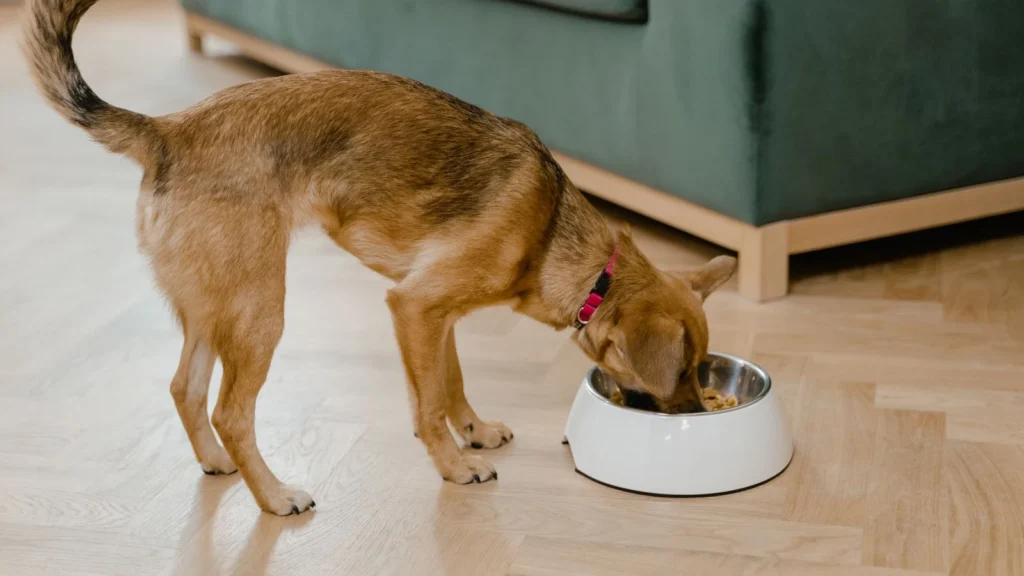
Rover’s vet, Dr. Joanne Fernandez, lists the times to head outside. Line your trips up with these and you’ll catch most poops before they happen:
- First thing in the morning. Straight out, before breakfast and before you put the kettle on.
- After every nap. Carry a small puppy out if you have to. Waking up gets everything moving.
- 5 to 30 minutes after a meal. This is the big one. Set a timer on your phone if your mornings are chaos.
- During or right after play. The AKC notes that playtime stimulates the digestive tract too. If the zoomies stop suddenly and the sniffing starts, go.
- Last thing before bed. An empty puppy sleeps better. So do you.
Learn the tells, too. PetMD’s vet lists sniffing the floor, looking around, circling and getting into position. Once the circling starts, you have seconds, not minutes.
A Sample Poop Schedule for an 8 Week Old Puppy
Here’s how poops fit into a real day at 8 weeks. The times match the full day in my 8 week puppy schedule, so you can use the two together. Your puppy won’t poop on every one of these trips. The point is to be outside at the moments they’re most likely to.
| Time | What happens | Poop chance |
|---|---|---|
| 6:00 am | Wake up, carry outside | High |
| 6:15-6:30 am | Breakfast, then outside | High |
| 9:00-9:30 am | Nap ends, meal 2, outside | High |
| 12:00-12:30 pm | Nap ends, lunch, outside | High |
| 3:00 pm | Nap ends, play, outside | Medium |
| 5:30-6:00 pm | Nap ends, dinner, outside | High |
| 7:30 pm | Last trip before bed | Medium |
| 11:00 pm | Overnight trip | Low |
Two habits make a schedule like this work. Feed at the same times every day, and keep a simple log for the first week or two. Dr. Fernandez recommends tracking when your puppy eats, drinks and goes, so you can spot the pattern and add breaks where you need them. A sticky note on the fridge is fine. If you use my First 30 Days Puppy OS Notion template, its potty log buttons record each trip with one tap, and after a week you’ll know your puppy’s poop o’clock better than your own.
Why Is My Puppy Pooping So Much?
Start with the chart. If your 10 week old goes 5 times a day on 4 meals and the poop holds its shape, that’s a normal puppy. PetMD’s vet says 5 or 6 poops a day isn’t unusual, and some puppies go even more. What matters most is a sudden change from your puppy’s own normal.
When the count does jump, these are the usual reasons, mostly from Rover’s vet:
- Too much food. Overeating means more trips. Measure meals with a real measuring cup instead of eyeballing a scoop, and follow the bag’s guide for your puppy’s expected adult weight.
- Too many treats and chews. Purina’s 90/10 rule says 90 percent of daily calories should come from complete and balanced puppy food, and treats should make up no more than the other 10 percent. Training days add up fast.
- A food switch. Changing food too quickly upsets a puppy’s stomach. Rover’s vet suggests switching gradually over about a week. My guide on how to improve dog gut health has more on keeping digestion steady.
- Stress. A new home, new people and new noises can upset a puppy’s stomach and loosen their stool. The first week home is a lot for a small dog.
- Parasites. PetMD’s vet says almost all puppies are born with intestinal parasites, which is why vets deworm early and test stool often. Worms, giardia and bacterial infections can all mean more frequent, looser poops.
- Food intolerance. Sometimes a puppy’s gut simply doesn’t like an ingredient. Your vet can help you work out which one.
What Fecal Tests Cost in Year One
The Companion Animal Parasite Council (CAPC), a group of veterinary parasite experts, recommends at least 4 fecal exams during a puppy’s first year and deworming that starts at 2 weeks of age. Here’s what that looks like on your bill:
| Item | Typical cost | How often |
|---|---|---|
| Fecal test | $40-$75 | At least 4 times in year 1 |
| Extended fecal panel | About $100 or more | If your vet suggests it |
| 4 fecal tests in year 1 | $160-$300 | Year 1 total |
Those prices come from Lemonade’s 2026 guide to dog fecal tests. Ask your vet whether to bring a fresh sample to each puppy visit, so the test can happen while you’re already there.
Puppy Not Pooping? How Long Is Too Long
This one is less common. PetMD’s vet calls a healthy puppy who isn’t pooping enough rare, so it’s worth paying attention when it happens. Here’s how to read it:
- One skipped poop, happy puppy: keep an eye on it. PetMD notes that a missed poop without straining is less of a worry.
- A change that lasts more than 24 hours: call your vet. That’s PetMD’s line for any change in a dog’s normal pattern, and Rover’s vet says to call if there’s been no poop at all for 48 hours.
- Straining with little or nothing coming out: call your vet now, especially with vomiting.
Puppies chew everything, and PetMD warns that pieces of toys, squeakers and other chewed things can cause an intestinal blockage, which is an emergency. Not drinking enough can slow things down too, so keep fresh water where your puppy can always reach it.
What Healthy Puppy Poop Looks Like
Congratulations, you’re a poop inspector now. Every dog parent gets the job. PetMD’s vet describes healthy puppy poop as brown, well formed and shaped like a soft, large Tootsie Roll. It should hold together when you pick it up without being hard.
Vets use a 1 to 7 fecal score to describe it. Here’s how Purina’s fecal scoring chart breaks it down, with what I’d do at each score:
| Score | Looks like | What to do |
|---|---|---|
| 1 | Hard, dry pellets | Check water, watch for straining |
| 2 | Firm, segmented, easy pickup | Ideal |
| 3 | Log shaped, moist surface | Usually fine |
| 4 | Very moist, soggy log | Watch the next few |
| 5 | Moist piles with some shape | Watch closely |
| 6 | Shapeless piles or spots | Call your vet if it lasts a day |
| 7 | Watery puddles | Call your vet |
Colors and Extras to Watch For
- Chocolate brown: the goal, according to Pawlicy’s vet guide.
- Yellow or green: can point to a diet problem or an infection. Call your vet if it sticks around.
- Black and tarry: can be a sign of internal bleeding, Pawlicy’s vet guide warns. Call your vet.
- Red streaks or blood: call your vet.
- A little mucus: a small amount can be normal, PetMD says, as long as there’s no blood in it.
- Spaghetti or rice: PetMD’s vet says worm pieces can look like spaghetti or grains of rice. Bag a sample and call your vet.
- Bits of toys or fabric: your puppy ate something they shouldn’t have. Watch for straining and vomiting.
Puppy Pooping in the Crate? Causes and Fixes
A crate works because most puppies don’t want to sleep next to their own mess. When poop shows up in there anyway, the AKC points to a short list of usual suspects:
| Cause | Fix |
|---|---|
| Crate is too big | Use a divider so there’s only room to stand, turn around and lie down |
| Crated too long | Shorten stretches to what your puppy can hold |
| Bedding hides the mess | Take the bedding out for a short time |
| Upset stomach | Look at recent food changes and call your vet if stools stay loose |
| Crate stress | Keep crate time short and happy, with a chew |
| A medical problem | Ask your vet to rule it out if accidents keep happening |
Size is the most common culprit. My dog crate size chart shows exactly which crate fits your puppy and when to move the divider as they grow. For timing, PetMD and vets quoted by Rover put the daytime limit at about 3 to 4 hours for a 3 month old, and less is better. My guide to how long a puppy can hold its pee has the full chart by age.
Do Puppies Poop at Night? How to Skip the 3 am Wake-Up Call
Many do, at least at first. The AKC says lots of young puppies need a quick overnight potty break until they’re several months old. Night poops fade as meals drop and their gut matures.
Dinner timing helps the most. Veterinarian Dr. Catherine Barnette, writing for PetsRadar, suggests feeding dinner a few hours before bedtime rather than right before it, and making a trip outside the last step of your bedtime routine. In my 8 week schedule, dinner at 5:45 pm and a last trip at 7:30 pm does exactly that.
If your puppy does wake you, keep the overnight trip dull: lights low, straight out, straight back to bed. My guide to how much puppies sleep has the full night routine by age.
When to Call the Vet: 6 Red Flags
Puppies are tough, but they’re small, and tummy trouble can turn serious fast. Call your vet if you notice any of these:
- Diarrhea that lasts more than 24 hours
- Straining with little or nothing coming out, or no poop for 48 hours
- Blood in the poop, or black, tarry poop
- Diarrhea plus vomiting, a fever, or a puppy who won’t eat
- A tired, floppy puppy, or one who seems to have a sore belly
- Worms, or pieces of something they chewed, in the poop
Why Vets Take Puppy Diarrhea Seriously
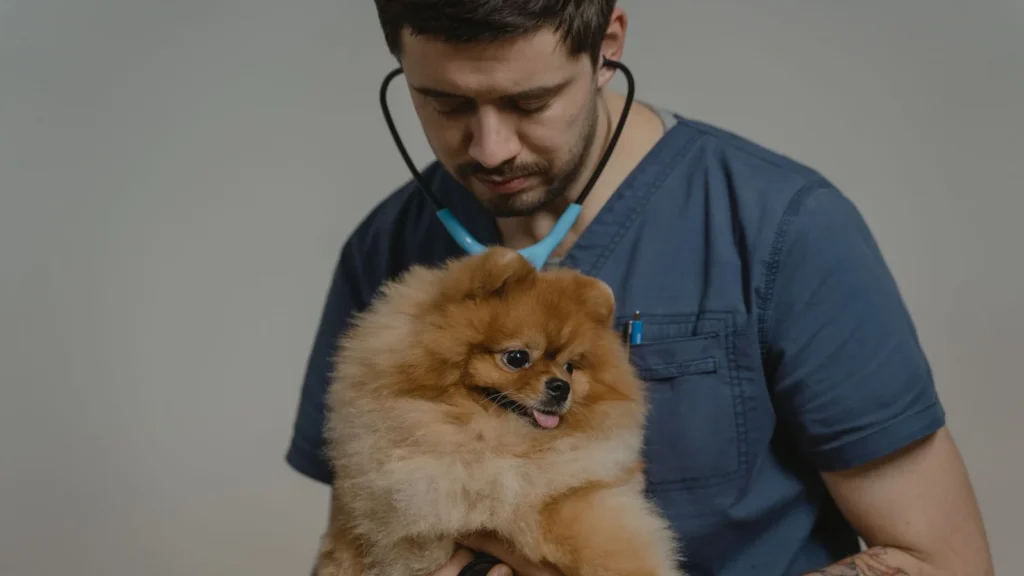
Parvovirus is a big reason vets don’t wait and see with young puppies. NAPHIA, the North American Pet Health Insurance Association, says to contact a vet immediately if a young or unvaccinated dog has severe or bloody diarrhea, vomiting, lethargy or loss of appetite, a fever or unusually low temperature, belly pain, or dehydration. Only your vet can test for it.
It’s expensive, too. NAPHIA’s 2026 roundup says many parvo cases cost between $1,000 and $5,000 or more to treat, with hospital stays often lasting 3 to 7 days. Staying on schedule with your puppy’s vaccines is the best protection there is.
Puppy Poop FAQ
-
How often do 8 week old puppies poop?
Usually 3 to 5 times a day. Pawlicy Advisor’s vet-reviewed guide puts it at 3 to 4, and vets quoted by Rover say 3 to 5 at 2 months. Most of those poops come within half an hour of a meal, so plan a trip outside after every meal.
-
How long after eating does a puppy poop?
Usually within 5 to 30 minutes. The AKC recommends taking your puppy outside in that window after every meal, and even sooner for very young puppies.
-
How long can a puppy go without pooping?
A happy puppy who skips one poop usually isn’t an emergency. PetMD advises having any change in your dog’s normal pattern checked if it lasts more than 24 hours, and Rover’s vet says to call if there’s been no poop for 48 hours. Straining with nothing coming out needs a call sooner, because it can mean a blockage.
-
Is it normal for a puppy to poop 6 times a day?
It can be. PetMD’s vet says 5 to 6 poops a day isn’t uncommon for a puppy, and some go more. If the poop is well formed and your puppy is eating, playing and acting normally, it’s usually just a fast puppy gut. A sudden jump from their usual count is worth a call.
-
Do puppies poop at night?
Many do at first. The AKC says young puppies often need a quick overnight potty break until they’re several months old. Feeding dinner a few hours before bed and taking your puppy out last thing at night cuts down on night poops.
-
When do puppies start pooping less?
Gradually, as meals drop. PetMD’s vet says a 12 week old may be down to about 4 poops a day and a 6 month old to about 3. Most dogs settle into an adult routine of 1 to 3 a day by their first birthday.
-
Why does my puppy poop in the crate?
The most common reasons are a crate that’s too big, a crate stretch that’s too long, bedding that hides the mess, an upset stomach or stress. A divider that leaves just enough room to stand, turn around and lie down fixes the most common one.
Puppy Poop by Age: The Short Version
So, how often do puppies poop? Most go 3 to 5 times a day at 8 weeks, 2 to 4 times at 3 to 4 months, 2 or 3 times at 6 months and 1 to 3 times as adults. Head outside 5 to 30 minutes after every meal, after naps and play, and last thing at night. Watch the shape more than the count. Call your vet when something changes and stays changed for a day, and right away for blood, vomiting or a flat, tired puppy.
Now be honest: what’s your puppy’s record for poops in one day? And where was the most inconvenient one? Tell me in the comments. No judgment here. We’ve all been behind the couch with a paper towel.
