

 By
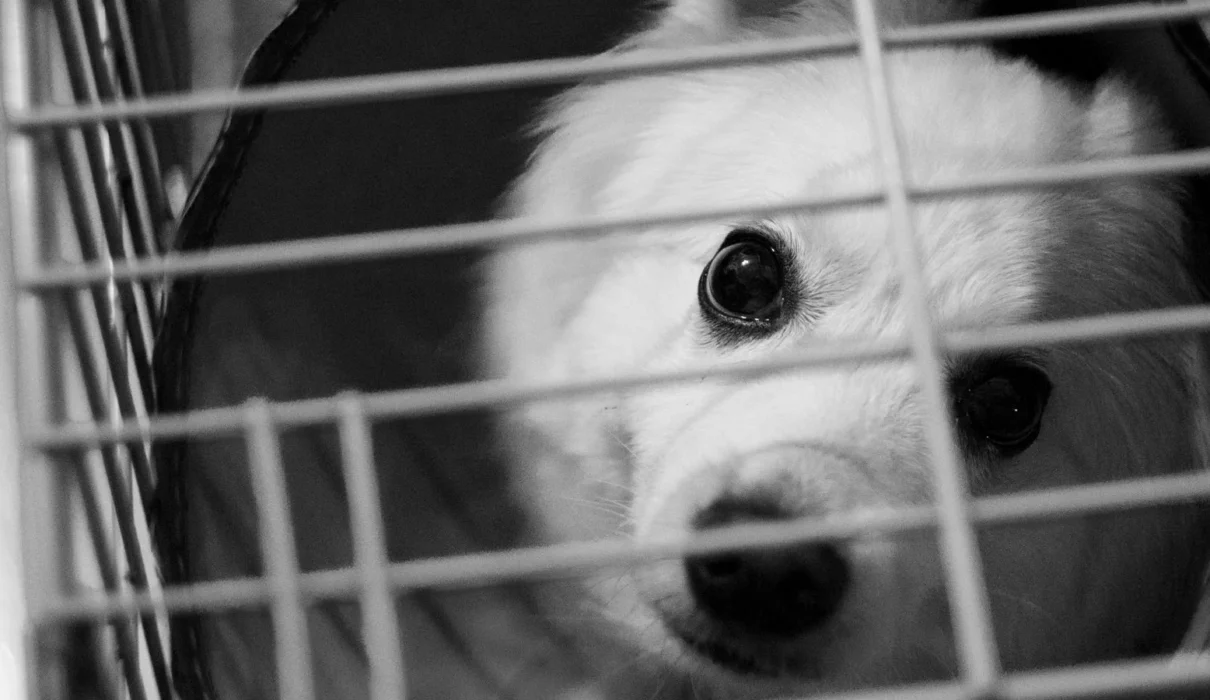
Dog anxiety in crate time usually shows up as pacing, panting, drooling, nonstop whining or barking, and scratching or biting at the door, and the right fix depends on whether your dog panics only in the crate or any time they’re alone. If your dog panics, stop crating for now: the AKC says crates shouldn’t be used for dogs experiencing panic or severe anxiety, because they can hurt themselves trying to escape.
Below are the 6 signs to watch for, how to tell crate anxiety from separation anxiety, and 7 steps to help your dog feel safe again, based on guidance from the AKC, the ASPCA, Humane World for Animals and a board certified veterinary behaviorist.
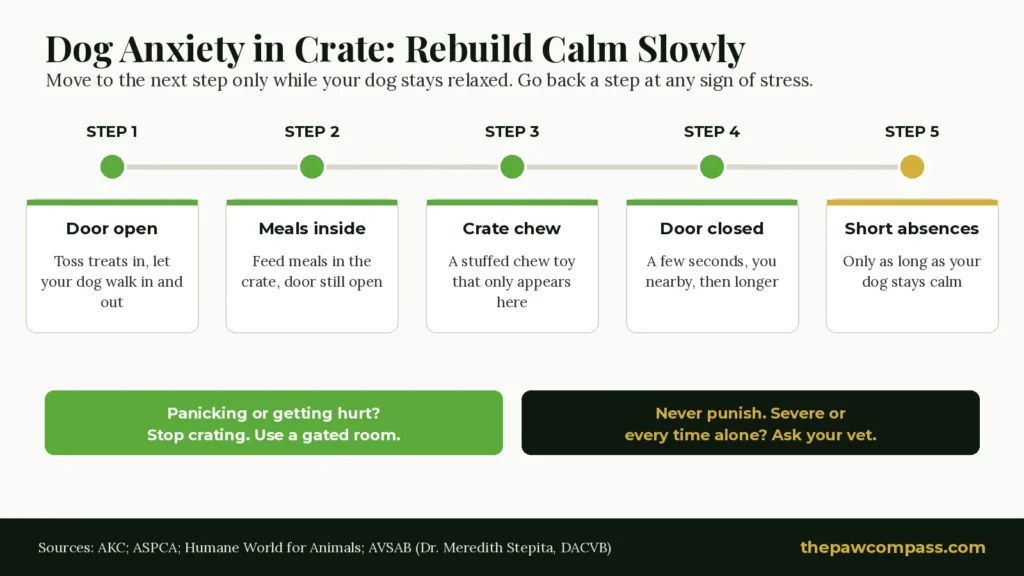
Table of Contents
6 Signs of Dog Anxiety in a Crate
The AKC and veterinary behaviorist Dr. Meredith Stepita, writing for the American Veterinary Society of Animal Behavior (AVSAB), list these signs of distress in a crate:
- Pacing, panting or shaking instead of settling down
- Whining, howling or barking that starts within minutes and goes on for a long time
- Scratching or biting at the door or the bars
- Drooling
- Peeing or pooping in the crate, even in a dog who is house trained
- Injuries from escape attempts. Dr. Stepita says dogs can break teeth and cut their skin and mouth trying to get out, and the ASPCA also lists cut paws and damaged nails.
A dog who won’t walk into the crate at all is telling you something too. Take these signs seriously, especially injuries.
Crate Anxiety or Separation Anxiety?
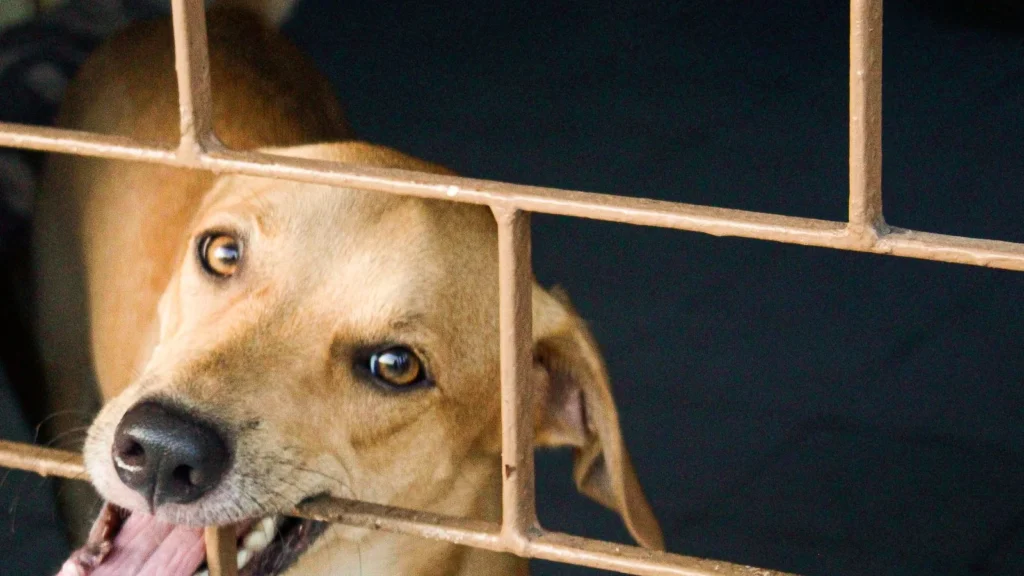
They can look the same, but they need different plans. Dr. Stepita’s first step is simple: video your dog home alone outside the crate. If your dog stays calm loose in the house, the problem is likely confinement anxiety, which she says is often an easy fix since the dog is fine outside the crate. If your dog is just as upset loose in the house, it’s more likely separation anxiety.
| What’s going on | What you may see | Calm outside the crate? | What helps |
|---|---|---|---|
| Confinement anxiety | Distress only when shut in | Usually yes | Rebuild the crate slowly, or use a gated room |
| Separation anxiety | Distress any time they’re left alone | No | Your vet or a veterinary behaviorist. A crate can make it worse. |
| Barrier frustration | Pushing to reach something they want, not fear | Yes | Change the setup and reward calm |
| Boredom or a need | Whining after settling for a while | Yes | A potty break, exercise or a chew toy |
Dr. Stepita notes that most of her patients with separation anxiety do not improve when placed in a crate, and that their anxiety is often worse because they also have confinement anxiety. Humane World for Animals agrees: a crate won’t solve separation anxiety, and a dog may get injured trying to escape.
Dog Anxiety in Crate: 7 Steps That Help
Step 1: Stop Crating if Your Dog Panics
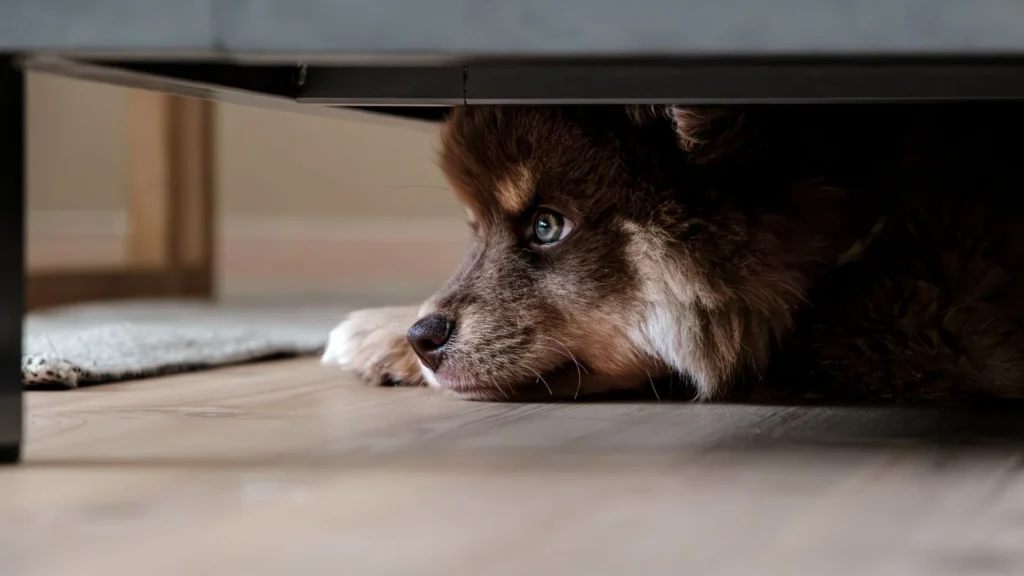
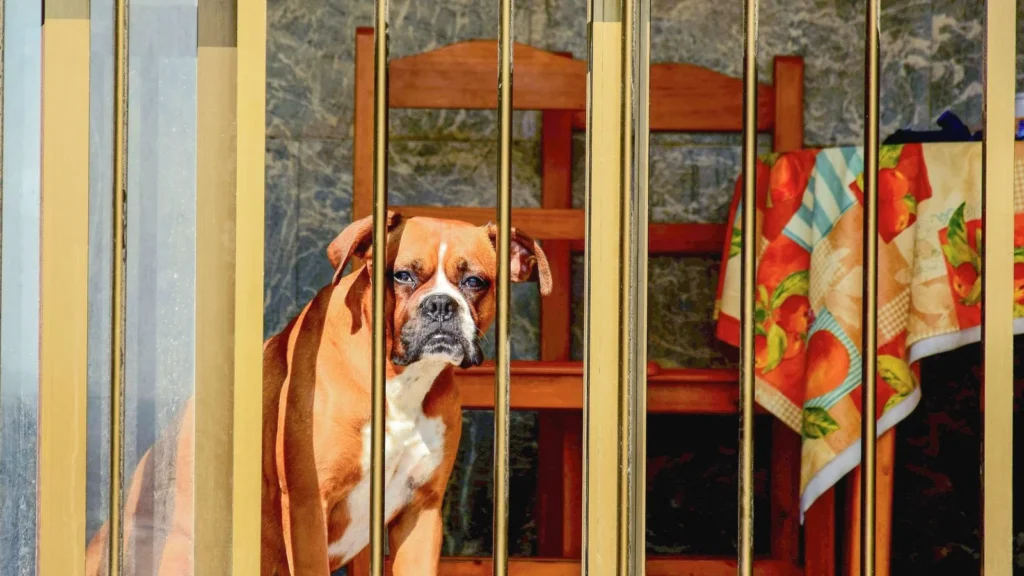
Don’t keep using a crate your dog is trying to break out of. The AKC suggests a larger, puppy proofed space such as a gated area or an exercise pen instead, and the ASPCA suggests a baby gate to keep your dog in one room. This keeps your dog safe while you work on the problem.
Step 2: Film Your Dog Home Alone
Set up a phone or pet camera and leave for a short time, with your dog loose in a safe room. Watch the video for the signs above. It shows if the problem is the crate itself or being alone, and that decides the rest of your plan.
Step 3: Check the Basics First
Make sure your dog has had exercise and a potty break before crate time. Trainer Rachel Lane, quoted by the AKC, says the crate should be just large enough for your dog to stand up, turn around and lie down comfortably, and that you should never crate a dog longer than they’re comfortable or can hold their bladder. Humane World says puppies under 6 months shouldn’t stay in a crate for more than three or four hours at a time.
Our dog crate size chart helps you check the fit, a crate divider lets a crate grow with a puppy, and here’s how long dogs can hold their pee.
Step 4: Make the Crate a Good Place Again
Start over as if your dog has never seen a crate. The AKC suggests leaving the door open, tossing treats in whenever your dog goes near it, hiding a few smelly treats near the front, and letting your dog walk in on their own. Humane World suggests feeding meals in the crate. Lane’s tip for a dog who won’t go in: sit next to the crate and toss treats in without closing the door.
Step 5: Save a Special Chew for the Crate
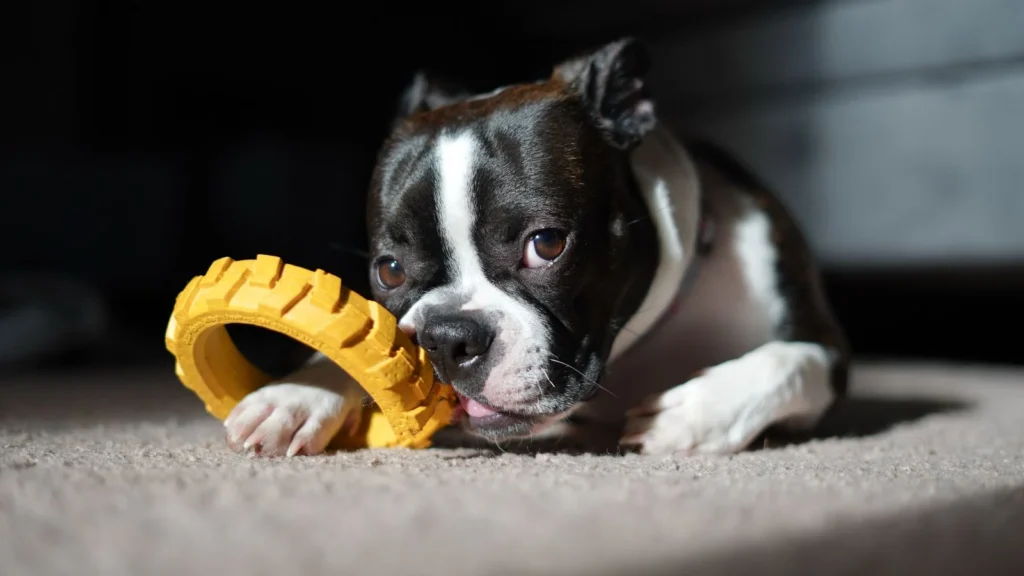
Give your dog a food stuffed chew toy each time they go in, and only there. The AKC notes that freezing it makes it last longer. This gives the crate a strong, happy meaning and keeps your dog busy while they settle.
Step 6: Build Up Time in Tiny Steps
Once your dog walks in happily, close the door for a few seconds while they eat or chew, then open it before they get worried. Add time slowly while you stay nearby. Dr. Stepita describes this as desensitization and counter conditioning, pairing the crate with high value food, and suggests setting up the plan with your veterinarian.
For time alone, the ASPCA recommends many short absences that don’t cause anxiety, made longer step by step. If you see panting, trembling or pacing, go back to a shorter absence. Our crate training schedule shows one way to plan the sessions.
Step 7: Get Professional Help
If your dog injures themselves, panics within seconds, or is upset any time they’re alone, bring in help. The ASPCA recommends a Certified Applied Animal Behaviorist (CAAB) or a board certified veterinary behaviorist, or a Certified Professional Dog Trainer with experience treating fear. It also says some dogs need anti anxiety medication before training can work, so talk to your vet before giving any medication for a behavior problem.
What Not to Do
- Don’t punish. The ASPCA says anxious behavior is a distress response, not disobedience, and punishment can make it much worse. Humane World adds: never punish a dog for whining.
- Don’t use the crate as punishment. Both the AKC and Humane World say crates should never be used that way.
- Don’t force a panicking dog in. The AKC says crates shouldn’t be used for dogs experiencing panic or severe anxiety.
- Don’t leave your dog in too long. Keep crate time within what your dog is comfortable with and can hold their bladder for.
Whining in the Crate: Stress or Something Else?
Timing is a clue. The AKC says vocalizing that starts within minutes of going in likely signals stress or anxiety, which is common in puppies who haven’t learned to be alone yet. Whining after a dog has settled for a while more often means boredom, hunger or a need to go to the bathroom. Humane World notes that a dog who is just testing you will probably stop whining soon.
For young dogs, see our guide to puppy crying in the crate. Crate training a puppy? Puppy OS has a crying tracker, so you can see whether crying spells are getting shorter. For newly adopted adult dogs, our rescue dog nighttime routine covers the first nights.
Short, regular practice is easier to keep up with a plan on the fridge. The Print & Go Pack includes a Fridge Schedule:
When to Call Your Vet
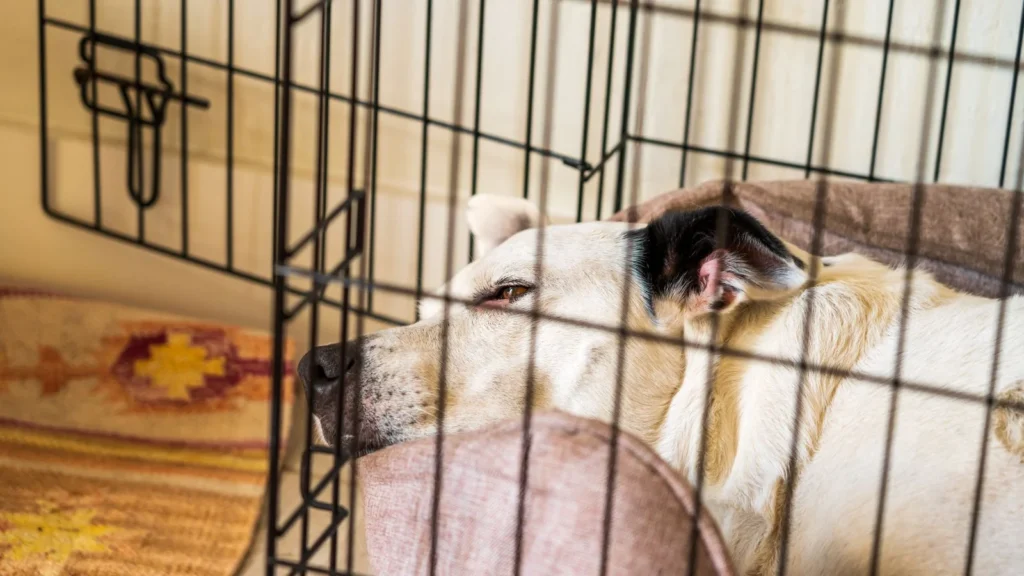
Call your vet if your dog hurts themselves in the crate, has accidents they never used to have, or shows signs of distress whenever they’re left alone. A sudden change in an older dog is also worth a check, since pain or other health problems can change behavior. If your senior dog is restless at night too, here’s why a dog suddenly paces at night.
Dog Anxiety in Crate: FAQ
-
How do you know if a dog has crate anxiety?
Watch for pacing, panting, shaking, drooling, whining or barking that starts within minutes, scratching or biting at the door, and accidents in the crate. If your dog is calm when left loose in the house but panics in the crate, it’s likely crate anxiety rather than separation anxiety.
-
Should you let a dog cry it out in the crate?
Not if it’s panic. The AKC says crying that starts within minutes of going in likely means stress or anxiety, while whining after settling often means boredom, hunger or a potty need. Humane World says a dog who is just testing you will usually stop soon, and never to punish whining.
-
Is it cruel to crate a dog with anxiety?
It can be harmful for a dog who panics. The AKC says crates shouldn’t be used for dogs experiencing panic or severe anxiety, and the ASPCA suggests a baby gate to keep an anxious dog in one room instead.
-
Should a dog with separation anxiety be crated?
Usually not. Veterinary behaviorist Dr. Meredith Stepita says most dogs with separation anxiety don’t improve in a crate and often get worse. Humane World says a crate won’t solve separation anxiety and dogs may get hurt trying to escape.
-
Can crate anxiety in dogs be fixed?
Often, yes. Dr. Stepita says confinement anxiety on its own is often an easy fix since the dog is calm outside the crate. Rebuild the crate slowly with treats, meals and a special chew, or skip the crate and use a gated area instead.
-
How long can a dog stay in a crate?
No longer than your dog is comfortable and can hold their bladder, says trainer Rachel Lane via the AKC. Humane World says puppies under 6 months shouldn’t stay in a crate for more than three or four hours at a time.
-
What can you give a dog for crate anxiety?
Ask your vet first. The ASPCA says to consult your vet or a veterinary behaviorist before giving any medication for a behavior problem, and that anti anxiety medication can help some dogs cope while they learn. Training and a safe setup come first.
Dog Anxiety in Crate: The Short Version
- Panicking, drooling, hurting themselves? Stop crating and use a gated area for now.
- Film your dog alone outside the crate to tell crate anxiety from separation anxiety.
- Check size, exercise, potty breaks and time limits first.
- Rebuild the crate with treats, meals and a special chew, door open.
- Add time in tiny steps and go back a step at the first sign of stress.
- Never punish, and bring in your vet or a behaviorist if it’s severe.
Over to you: what helped your dog feel calmer in the crate? Tell us in the comments.

1 Comment