


 By
A good rescue dog nighttime routine is simple and the same every night: dinner at a set time, a calm walk and potty break, a quiet wind down, one last trip outside, then bed in the same quiet spot. The AKC suggests starting your new dog where you want them to sleep long term, such as a crate or dog bed in your bedroom, and keeping a steady routine, because dogs do best when they know what to expect.
Below is a 7 step evening plan, where your dog should sleep, what to do if they cry or pace, and what the first nights, weeks and months usually look like.
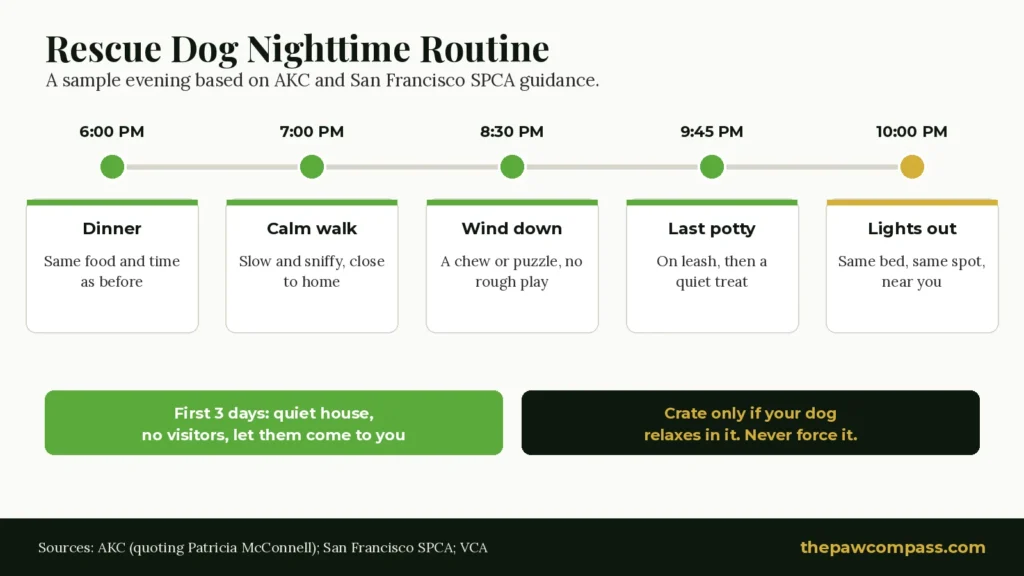
Table of Contents
- Why Nights Are Hard for a New Rescue Dog
- Rescue Dog Nighttime Routine: 7 Steps
- Where Should a Rescue Dog Sleep the First Night?
- What If Your Rescue Dog Cries or Paces at Night?
- Night Accidents: What to Do
- The First 3 Days, 3 Weeks and 3 Months
- When to Call Your Vet or a Behaviorist
- Rescue Dog Nighttime Routine: FAQ
- Rescue Dog Nighttime Routine: The Short Version
Why Nights Are Hard for a New Rescue Dog
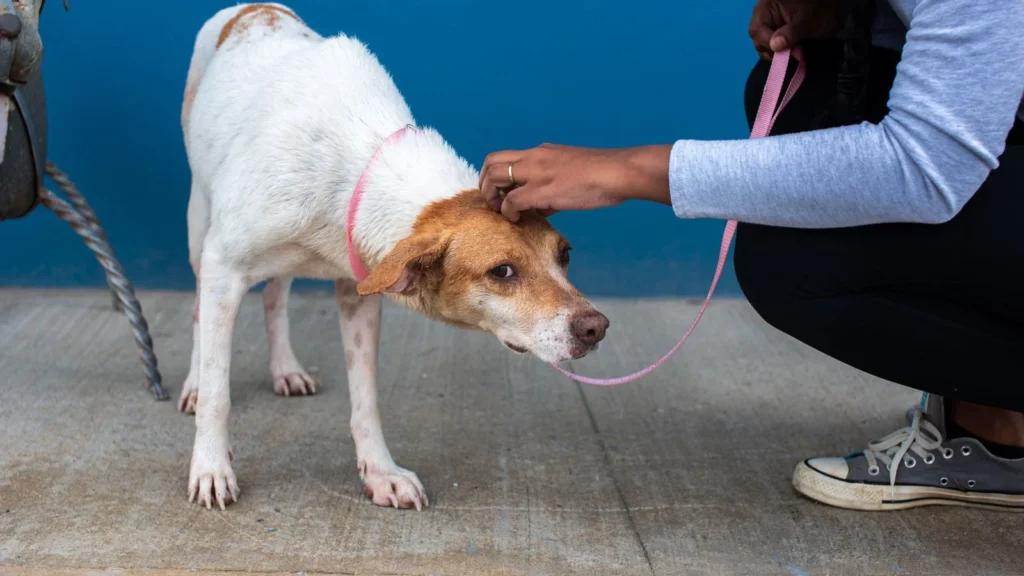
Everything is new: the smells, the sounds, the people and the house rules. The AKC’s guide to decompression notes that rescued dogs may already be stressed from shelters, foster homes, long transport and medical checks. Animal behaviorist Patricia McConnell, quoted by the AKC, says many dogs are in shock for the first 3 days and may not show their true personality until they’ve been home for a few days.
Quiet nights can make that stress easier to see. Signs of stress the AKC lists include:
- Panting or pacing
- Tucked ears or tail
- Lip licking and yawning
- Freezing or crouching
- Growling, which is a warning that your dog is uncomfortable
Rescue Dog Nighttime Routine: 7 Steps
Times are a sample. What matters most is doing the same things in the same order every night.
Step 1: Keep Dinner the Same
Ask the shelter or foster home when your dog was last fed and what they ate. The AKC suggests keeping the same food and schedule at first and feeding the same diet for at least two weeks, then switching gradually by mixing old and new food. A familiar dinner is one less new thing on a stressful day.
Step 2: Take a Calm Evening Walk
Once your dog is comfortable, the AKC suggests slow, quiet, sniffy walks, with a long line on a well fitted harness for a little freedom. Skip busy parks for now. On the very first days, a short potty walk close to home is enough.
Step 3: Wind Down With a Chew or Puzzle
The AKC recommends enrichment such as treat dispensing toys and nosework, and VCA’s veterinary behaviorists suggest food stuffed or puzzle toys to keep anxious dogs busy. Save calm activities for the evening and skip rough play or excited visitors before bed.
Step 4: Make the Last Potty Trip Boring
Take your dog outside on a leash right before bed, and reward them with praise and a treat when they go, as the AKC suggests for a new dog’s first day. Don’t assume they know your house rules because they were house trained before: the AKC advises treating a new adult dog like a puppy for now: keep them in sight and take them out often. Adult dogs can usually wait longer than puppies overnight. Here’s how long dogs can hold their pee.
Step 5: Use the Same Bed in the Same Spot
McConnell’s advice, via the AKC, is to start your dog where you want them to sleep later, with a crate or dog bed in your bedroom. Give them a quiet retreat the AKC calls a Zen Zone, such as a covered crate, a spot under a table or a bedroom corner, and treat it as a place where they’re always left alone.

Step 6: Keep Lights Out Low Key
Dim the lights, keep your voice soft and let your dog choose whether to come close. The AKC warns against hugging, picking up or playing hard with a new dog right away, and says to let them decide how much contact they want. AKC quotes trainer Mary Angilly: more patience and more choice lead to faster trust.
Step 7: Respond Calmly if They Wake
If your dog wakes and whines, take them out on a leash once, quietly, then back to bed with no play. Never punish growling: Angilly warns, via the AKC, that this can make a dog more worried and may take away the warning signals before a bite.
Where Should a Rescue Dog Sleep the First Night?
Near you, in the spot you plan to keep. The AKC suggests a crate or dog bed in your bedroom from the start. If you have other pets, the AKC advises keeping the new dog separated at first with crates, pens or gates.
Should a Rescue Dog Sleep in a Crate?
Only if they relax in one. The San Francisco SPCA says not all dogs need to be crate trained, and if your dog can’t relax in a crate, don’t force them. VCA’s veterinary behaviorists add that crates should be used with caution for dogs with separation anxiety, since panicked dogs can injure themselves trying to escape. If your dog does like a crate, our dog crate size chart helps you pick the right size, and our crate training schedule shows how to build up crate time slowly. If the crate itself causes panic, see dog anxiety in crate.

What If Your Rescue Dog Cries or Paces at Night?
- Rule out a potty need first. One calm trip outside on a leash.
- Check the basics: water nearby, a comfortable temperature, a quiet spot.
- Stay calm and boring. The AKC says a quiet atmosphere and a steady routine help new dogs settle over the first weeks.
- Watch for separation anxiety. VCA lists following you from room to room, whining or howling, destructiveness, drooling and refusing food among the signs. Talk to your vet if you see them.
Pacing can have other causes too, especially in older dogs. See why a dog paces at night and, if your dog is licking their paws at night, the common causes of that too. Puppies are a little different; our guide to crying in the crate covers young dogs.
Night Accidents: What to Do
Accidents are common in a new home, even with dogs who were house trained before. Clean quietly with an enzyme cleaner, never scold, and go back to frequent, rewarded trips outside, as the AKC suggests for a new adult dog. If accidents keep happening, our guide on how to stop a dog from peeing in the house walks through the causes, including when to see your vet.
The First 3 Days, 3 Weeks and 3 Months
Many shelters use the 3-3-3 guideline. The San Francisco SPCA says not every dog will follow it exactly, but it’s a helpful way to set expectations.
| Stage | What you may see | What helps | Source |
|---|---|---|---|
| First 3 days | Hiding, avoiding eye contact, eating little | A calm, quiet home and letting your dog come to you | SF SPCA, AKC |
| Next 3 weeks | Personality starts to show, maybe barking or chewing | Short reward based training and daily enrichment | SF SPCA |
| About 3 months | More trust, settling into your routine | Keep the routine and add new things slowly | SF SPCA, AKC |
McConnell, via the AKC, says many dogs seem settled after 3 weeks but don’t fit into the household routine until about 3 months. The AKC’s decompression guide adds that fearful dogs can take a few weeks to a few months to feel comfortable.
A printed routine on the fridge helps everyone in the house do the same thing at the same time. The Print & Go Pack includes a Fridge Schedule:
When to Call Your Vet or a Behaviorist
The San Francisco SPCA says escalating behavior, or signs such as a poor appetite, lethargy, social withdrawal or vomiting, are reasons for a vet visit. VCA’s behaviorists say medication can help some dogs with separation anxiety alongside training, so ask your vet if night distress doesn’t ease. If vet visits themselves are stressful, here’s why dogs panic at the vet and what helps.
Rescue Dog Nighttime Routine: FAQ
-
What is a good nighttime routine for a rescue dog?
Keep it the same every night: dinner at a set time, a calm walk and potty break, a quiet chew or puzzle toy, one last trip outside on leash, then bed in the same quiet spot. The AKC says dogs do best when they know what to expect.
-
Where should a rescue dog sleep the first night?
Where you want them to sleep long term. The AKC suggests a crate or dog bed in your bedroom from the start, and keeping a new dog separated from other pets at first with crates, pens or gates.
-
Should a rescue dog sleep in a crate?
Only if they relax in it. The San Francisco SPCA says not all dogs need crate training and not to force a dog who can’t relax in one. VCA advises caution with crates for dogs with separation anxiety.
-
How long does it take a rescue dog to settle at night?
It varies. Patricia McConnell, quoted by the AKC, says many dogs are in shock for the first 3 days, seem settled after about 3 weeks, and fit into the household routine at around 3 months. Fearful dogs can take longer.
-
Why does a rescue dog cry at night?
Usually stress from a new home, a need to potty, or separation anxiety. Take them out once on a leash, keep things calm, and talk to your vet if you see signs like drooling, destructiveness or refusing food.
-
What is the 3-3-3 rule for rescue dogs?
It’s a guideline many shelters use: about 3 days to decompress, 3 weeks to learn the routine, and 3 months to build trust. The San Francisco SPCA notes not every dog will follow it exactly.
-
Do rescue dogs need a potty break at night?
Some do at first. Take your dog out last thing before bed and first thing in the morning. The AKC advises treating a new adult dog like a puppy for house training, so if they wake and whine, take them out calmly on a leash.
Rescue Dog Nighttime Routine: The Short Version
- Same dinner, same time, for at least the first two weeks.
- A calm walk, a quiet chew, then one last potty trip on leash.
- Bed in the same spot, ideally in your bedroom.
- A crate only if your dog relaxes in it.
- No hugging or rough play at bedtime. Let your dog come to you.
- Give it time: days to decompress, weeks to learn, months to trust.
Over to you: what helped your rescue dog sleep through their first week? Tell us in the comments.

1 Comment