


 By
By If your dog keeps licking paws at night, the most common causes are allergies, a yeast or bacterial infection, anxiety, pain or joint discomfort, contact irritation from something they walked through, or a foreign object stuck in the paw. Most cases are manageable at home or with a single vet visit. A small number need faster attention, and I’ll show you exactly how to tell the difference.
The slurp, slurp, slurp sound at 11pm is one of those things that starts out mildly annoying and slowly becomes impossible to ignore. You keep telling yourself it’s just grooming. And then you notice the fur between their toes is turning brown, or the skin looks red and raw, and suddenly you’re not sure anymore. That’s usually the moment dog parents start actually looking into it. If that’s where you are right now, this post is for you.
Table of Contents
- Why Nighttime Specifically?
- The First Thing to Check: One Paw or Both?
- Dog Keeps Licking Paws at Night: The 6 Real Causes
- Age Breakdown at a Glance
- What NOT to Do (Common Mistakes That Make It Worse)
- Home vs Vet: The Honest Checklist
- Step-by-Step Home Management Plan
- What Happened with My Own Dog
- What I Want You to Take Away
- FAQ
Why Nighttime Specifically?
Here’s the thing nobody explains in most articles on this topic. The licking didn’t start at night. It was probably happening during the day too, you just didn’t notice because your dog was moving around, distracted, doing dog things. Nighttime is when the house goes quiet and the licking becomes the loudest thing in the room.
That said, there are real reasons why the urge to lick intensifies after dark. Allergens that built up on the paws during the day haven’t been cleaned off. Joint pain that was partially managed by movement during the day has nowhere to go now that your dog is lying still. Anxiety that was masked by activity and stimulation surfaces when everything quiets down. Nighttime licking isn’t always a nighttime problem. It’s often a daytime problem that gets heard at night.
The First Thing to Check: One Paw or Both?
Before going through the 6 causes, do this one thing. Look at which paws your dog is licking.
One specific paw, always the same one, almost always points to something localized: a cut, a splinter, a thorn, a cyst, or joint pain in that specific leg. Pain-driven licking tends to be targeted.
Both front paws, or all four, points to something systemic: allergies, anxiety, infection, a contact irritant they walked through. Whole-body issues show up in multiple paws at once.
This single observation cuts the diagnostic work in half and is something most articles on this topic skip entirely.
Dog Keeps Licking Paws at Night: The 6 Real Causes
1. Environmental or Food Allergies
Allergies are the most common reason dogs lick their paws, and the most commonly mismanaged one too. Dog parents treat the licking. Vets treat the allergy. Those are very different interventions and only one of them actually works.
Environmental allergens, think pollen, grass, mold, dust mites, land on paws during walks and then stay there. The paws are essentially your dog’s point of contact with everything outside, and if your dog is atopic (prone to allergic reactions), the paws and face are where that reaction shows up first. The AKC’s breakdown of what allergy-related paw licking actually looks like. Food allergens work differently, they trigger the immune response from the inside, but the skin symptoms often look identical.
What you’ll actually see:
- Brown or rust-colored staining on the fur between the toes from saliva contact
- Licking both front paws or all four, rarely just one
- Seasonal pattern, worse in spring or fall when pollen counts peak, or consistent year-round if it’s food-related
- Redness, mild swelling, or a slightly musty smell from the paws
- Often paired with ear scratching, belly redness, or eye discharge
Breed risk: Labrador Retrievers, Golden Retrievers, French Bulldogs, Bulldogs, West Highland White Terriers (Westies), Boxers, and German Shepherds show disproportionately high rates of atopic dermatitis. If you have one of these breeds and they’re licking their paws, allergies should be your first hypothesis, not your last.
Age breakdown: Allergies typically first present between 1-3 years of age and tend to worsen over time without management. Dogs that develop allergy symptoms after age 5 are more likely dealing with a food sensitivity than environmental atopy.
Cost of diagnosis: Skin cytology to identify infection: $50-$100. Allergy testing (intradermal or blood-based): $200-$500. Prescription allergy medication like Apoquel or Cytopoint injection: $40-$100 per month or $50-$100 per injection. Food elimination trial (the most accurate way to diagnose food allergies): 8-12 weeks on a novel protein diet, cost varies but typically $60-$150/month for prescription food.
Resolution timeline: Environmental allergy management is long-term, ongoing, not a one-time fix. Food allergies can show significant improvement within 4-8 weeks of a proper elimination trial. Neither resolves without addressing the root allergen.
2. Yeast or Bacterial Infection
This is the cause that most dog parents don’t recognize until it’s already well established, because the early signs are subtle and the later signs look like something else entirely.
Yeast loves warm, moist environments. A dog that’s been licking their paws for any reason, even just from mild allergy-related itch, creates exactly that environment between their toes. The licking itself causes the infection, then the infection causes more licking, and the cycle runs for weeks before anyone connects the dots. VCA’s guide on yeast dermatitis in dogs.
What it actually looks like up closely:
- That same rust-brown or reddish staining on the fur, but now with a smell. Musty, slightly sweet, yeasty. If you’ve ever smelled corn chips on your dog’s paws, that’s it.
- Skin between the toes that looks greasy or thickened
- Visible redness, swelling, or crusty discharge around the nail folds
- Bacterial infections look similar but tend to produce more obvious pus or scabbing
Breed risk: Dogs with skin folds and wrinkles, Bulldogs, Shar Peis, Basset Hounds, and Cocker Spaniels, are more prone because moisture gets trapped. Atopic dogs of any breed are also at higher risk because their compromised skin barrier lets organisms take hold more easily.
Age breakdown: Can happen at any age, though older dogs with weakened immune function or chronic allergy issues are more vulnerable to recurrent infections.
Cost of diagnosis: Skin cytology (swab or tape prep under the microscope): $50-$100, this is quick and tells your vet immediately whether it’s yeast, bacteria, or both. Treatment with antifungal or antibiotic medication: $30-$80 for topical, $50-$150 for oral depending on severity and duration.
Resolution timeline: Uncomplicated yeast infections typically respond within 2-4 weeks of appropriate treatment. Bacterial infections may take 3-6 weeks. Recurring infections that keep coming back every few months almost always signal an underlying allergy that hasn’t been addressed.
3. Anxiety or Compulsive Licking
Licking releases endorphins. That’s not a metaphor, it’s a biochemical feedback loop, and a dog dealing with unresolved anxiety will lick because it genuinely makes them feel better in the moment, the same way some people bite their nails. The problem is the relief is temporary and the damage to the paw skin is cumulative.
If anxiety is behind your dog’s paw licking, nighttime makes it worse for exactly the same reason it makes anxiety-driven pacing worse. Distractions disappear. Stimulation drops. The anxiety that was outrun during the day catches up.
You might also notice this in dogs who pace at night from anxiety. If that sounds familiar, check my post on why dogs pace at night suddenly because pacing and paw licking often show up in the same dog at the same time, driven by the same underlying stress.
What makes anxiety licking different from physical causes:
- Your dog licks paws that look completely normal. No redness, no smell, no visible irritation.
- The licking increases around specific events: your leaving, storms, fireworks, visitors, routine changes
- Paired with other anxiety signals: yawning, panting at rest, clingy behavior, restlessness
- Often targets the same paw or spot repeatedly, which can eventually create a wound where there wasn’t one
Breed risk: High-drive working breeds, Border Collies, Australian Shepherds, German Shepherds, Vizslas, are more prone to anxiety-related compulsive behaviors. Velcro breeds like Labradors and Vizslas can develop separation anxiety that expresses as paw licking. Rescued dogs with unknown history also show higher rates.
Age breakdown: Can develop at any age. Puppies often lick from simple overstimulation or separation anxiety. Middle-aged dogs usually need a trigger. Senior dogs can develop compulsive licking as part of Canine Cognitive Dysfunction.
Cost of diagnosis: Behavioral consultation with your vet: $50-$150. Referral to a certified veterinary behaviorist: $150-$300 for initial assessment. Medication if prescribed (fluoxetine, clomipramine, or similar): $20-$60/month.
Resolution timeline: Behavioral modification with a consistent protocol takes 6-12 weeks to show meaningful improvement. Medication, when appropriate, typically takes 4-6 weeks to reach full effect.
Honestly, anxiety licking is the cause I see dismissed most often, because it doesn’t look like a “real” medical problem. The paws look fine. There’s no infection, no injury, nothing to point at. So dog parents assume it’s nothing. But compulsive licking can eventually create a lick granuloma, a raised, thickened skin lesion that’s extremely difficult to treat and can require surgery. Nothing is what it starts as, but nothing is also what it stays.
4. Pain or Joint Discomfort
A dog licking one specific paw repeatedly, especially at night, is doing something deliberate. Licking is how dogs try to soothe pain. They can’t reach for aspirin. They can’t tell you their hip hurts. They lick the area nearest to where it hurts, or they lick the paw on the leg that’s giving them trouble.
Joint pain, arthritis, an interdigital cyst, or a cracked nail are all common physical causes of targeted nighttime paw licking.VCA’s guide on interdigital cysts in dogs.
If this sounds like what you’re seeing, two other posts in this series are directly relevant. Pain that shows up as nighttime licking often shows the same signs I covered in my post on signs your dog is in pain but not limping, and if your dog is also struggling to rise after lying down, there’s more on the joint pain side of this in my post on dogs struggling to get up after lying down.
What pain-driven paw licking looks like:
- Always the same paw, never alternating
- Licking intensifies at night when the dog is lying still and movement is no longer masking discomfort
- Stiffness or slowness getting up in the mornings
- Reluctance to bear weight on the affected leg, or a subtle change in gait
- May be accompanied by the dog holding the paw slightly elevated when standing
Breed risk: Large breeds with higher arthritis and hip dysplasia rates, Labs, German Shepherds, Golden Retrievers, Rottweilers. Also any breed with a history of joint issues. Interdigital cysts are particularly common in short-haired large breeds like Labs and Bulldogs.
Age breakdown: Puppies: growing pains in large breeds, or paw injuries from rough play. Middle-aged: acute injuries, sprains, cracked nails. Senior: arthritis, joint degeneration, interdigital cysts becoming more common with age.
Cost of diagnosis: Vet exam to assess the affected paw and rule out injury: $50-$150. X-rays if joint involvement is suspected: $150-$400. Interdigital cyst treatment ranges from topical management ($20-$50) to surgical removal ($500-$1,500) depending on severity.
Resolution timeline: Acute injuries and minor cysts: 2-4 weeks with appropriate care. Arthritis is managed rather than resolved, but most dogs show real improvement in nighttime comfort within 3-6 weeks of starting a consistent management plan including orthopedic bedding and joint support.
5. Contact Irritation
This one is the easiest to fix and the easiest to overlook. Your dog walked through something, it’s sitting on their paws right now, and they’re licking it off.
Road salt, lawn pesticides or herbicides, cleaning products used on your floors, fertilizer, puddle chemicals, even certain types of grass can all cause contact irritation that drives persistent licking. The paw pads are sensitive, they absorb more than most dog parents realize, and if your dog goes outside and then comes in and immediately starts licking their paws, this is almost certainly why.
What distinguishes this from allergies: it’s usually acute and clears up quickly once the irritant is removed. Seasonal allergy licking builds up over days or weeks. Contact irritation often starts within an hour of exposure.
Age breakdown: Any age. Puppies are actually at higher risk because they’re more likely to walk through things without hesitation and their skin is more sensitive. Older dogs with thinner or more sensitive paw pads can also react more strongly to irritants they previously tolerated fine.
Cost of management: Usually zero, beyond the cost of a paw rinse routine. If the skin becomes broken or infected from excessive licking after contact exposure, a vet visit to treat secondary infection runs $50-$150.
Resolution timeline: Clears in 24-48 hours once the irritant is removed and the paws are cleaned. If it doesn’t clear, it’s probably not contact irritation and the cause needs to be revisited.
6. Foreign Object or Paw Injury
A thorn, a grass seed, a tiny piece of gravel, a splinter. Dogs pick these up constantly and you’d be amazed how small an object can drive obsessive, targeted licking.
Grass awns (also called foxtails in some regions) deserve a special mention because they’re particularly nasty. They’re barbed, they migrate inward rather than working their way out, and they can cause serious infections that require surgical removal if they’re not caught early.
This is the cause where looking at your dog’s paw yourself is both the fastest and most important step. Gently spread the toes and look between the pads and along the nail folds. Use a phone flashlight. Run your finger gently along the paw pad surface. You’d be surprised what you can find.
What to look for:
- Licking laser-focused on one specific spot, usually one toe or one area of the pad
- Swelling between the toes or around the nail fold
- A visible entry point, small red dot or wound
- Limping or hesitating to put weight on the paw
Age breakdown: Any age, though dogs who spend a lot of time in grass, parks, or brush are more exposed regardless of age.
Cost: If you can remove the object yourself safely: free. Vet removal of embedded foreign objects: $75-$250. Surgical removal if a grass awn or similar has migrated: $500-$2,000 depending on how far it’s traveled.
Resolution timeline: Immediate improvement once the object is removed. Any secondary infection from the wound takes 1-2 weeks of antibiotic treatment.
Age Breakdown at a Glance
| Age Stage | Most Likely Cause | What to Do |
|---|---|---|
| Puppy (under 1 year) | Contact irritation, foreign object, separation anxiety licking | Inspect paws, rinse after walks, monitor for pattern |
| Young adult (1-3 years) | Allergies developing, anxiety, contact irritation | Watch for seasonal pattern, vet visit if staining appears |
| Middle-aged (3-7 years) | Allergies, yeast infection (secondary to allergies), anxiety | Vet visit to rule out infection, allergy workup if recurring |
| Senior (7+ years) | Joint pain, arthritis, interdigital cysts, infection | Vet visit sooner, check for gait changes alongside licking |
What NOT to Do (Common Mistakes That Make It Worse)
This section exists because it’s missing from almost every competitor article on this topic, and the mistakes dog parents make here are genuinely common.
Don’t use human antiseptic products on paws. Hydrogen peroxide, rubbing alcohol, and Neosporin are all either toxic to dogs if ingested (and they will lick it off) or actively damaging to the tissue you’re trying to help. Diluted chlorhexidine solution is the safe alternative vets use, and it’s inexpensive.
Don’t yell at or physically stop your dog from licking. For anxiety-driven licking this actively makes it worse by adding stress to an already stressed dog. For pain-driven licking, the dog will just find another moment. Address the cause rather than blocking the symptom.
Don’t assume it will resolve on its own if the fur is already stained brown. Brown staining means the licking has been going on long enough to deposit significant saliva. By the time you’re seeing staining, you’re already past the early stage.
Don’t add a cone without treating the underlying cause. A cone prevents damage but doesn’t address why the dog is licking. Remove the cone and the licking resumes immediately.
Don’t apply paw balm to broken or infected skin without vet guidance. Paw balm is for dry, irritated skin. It’s not appropriate for wounds, open sores, or infected tissue.
Home vs Vet: The Honest Checklist
Manage at home and monitor if:
- Licking started after a walk and cleared up within a day (contact irritation, almost certainly)
- No staining, no redness, no smell from the paws
- You found and safely removed a foreign object and the licking has reduced
- One isolated incident, never happened before
Call your vet this week if:
- Brown or rust-colored staining between the toes that’s been there more than a few days
- Any visible redness, swelling, or smell from the paws
- Licking the same paw repeatedly that they’re also favoring when walking
- Licking that’s been going on for more than a week with no obvious trigger
- Your dog is a senior and this is a new behavior
Go sooner (within 48 hours) if:
- Visible pus, discharge, or an open wound on the paw
- Swelling between the toes that appeared quickly
- Your dog is limping or refusing to bear weight on the affected paw
- You suspect a grass awn or embedded foreign object
Step-by-Step Home Management Plan
Tonight:
- Gently examine both paws with a phone flashlight, look between every toe, along the pad edges, and around nail folds
- If you find a foreign object you can safely remove (like a visible splinter), remove it with tweezers and clean the area with diluted chlorhexidine
- Rinse paws with warm water if your dog was outside today, allergens and irritants sitting on the paws right now will drive overnight licking
This week:
- Start a daily paw rinse routine after every outdoor walk. Warm water, 20-30 seconds per paw, dry thoroughly especially between the toes (moisture left between the toes feeds yeast)
- Check the paws daily in good light and note whether the staining or redness is improving, staying the same, or getting worse
- If allergies are suspected, try rinsing with a diluted chlorhexidine solution (available at any pet store or pharmacy, use the vet-safe concentration) rather than plain water
- Apply a paw balm to dry or cracked pad surfaces if the skin looks rough but unbroken, not to red, swollen, or infected areas
Longer term:
- For allergy-driven licking: talk to your vet about an elimination diet trial (8-12 weeks on a novel protein, no treats or extras) or environmental allergy testing
- For anxiety-driven licking: add more exercise and mental stimulation during the day, establish a consistent bedtime routine, consider a calming supplement with researched ingredients
Products worth knowing about for this specific issue:
Anti-itch and allergy supplements: look for omega-3 fatty acids (EPA and DHA specifically, not just “fish oil”), which have real research support for reducing inflammatory skin responses in atopic dogs. For targeted itch support, colostrum and quercetin are increasingly well-studied. Dosage matters: a supplement that lists ingredients without amounts is guessing.
Calming aids: if anxiety is part of the picture, L-theanine and L-tryptophan remain the best-researched options for daily use. For event-specific anxiety (storms, fireworks), melatonin can help as a short-term tool.
Paw balms: useful for dry, cracked pads that are driving licking. Look for balms with beeswax or shea butter base and without essential oils, which can be irritating or toxic. Never apply balm to broken or infected skin.
Orthopedic beds: if joint pain is part of the picture, a memory foam base that properly supports the hips and elbows overnight reduces the pain-driven urge to lick. Minimum 3-4 inches of solid memory foam, not egg-crate.
A few things worth having on hand regardless of cause: a paw rinse basin or shallow tray for soaking, chlorhexidine solution (vet-safe dilution, not concentrated), and an Elizabethan collar for nights when licking is breaking skin before you’ve confirmed the cause.
What Happened with My Own Dog
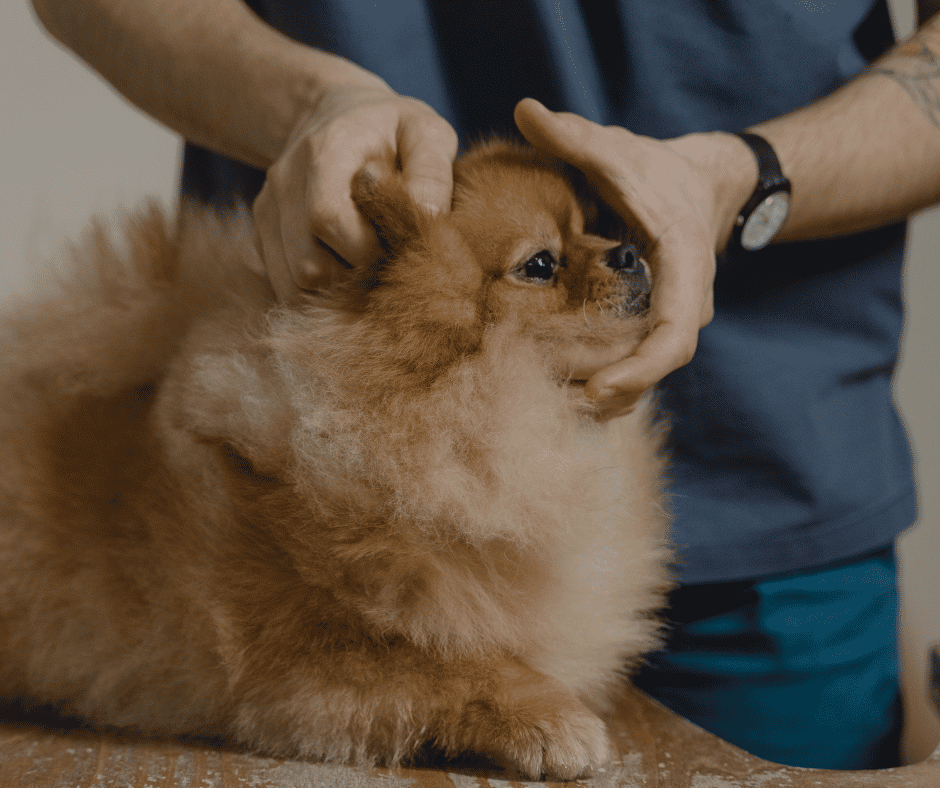
My dog went through a phase of paw licking that took me longer to take seriously than I’d like to admit. It was intermittent at first, a few nights a week, always the same front paw. I checked it, saw nothing obvious, told myself it was probably just a habit.
By the time I looked closely enough to notice the light brown staining between her toes, it had been going on for three weeks. The vet found a mild yeast overgrowth, secondary to seasonal allergies she’d been developing quietly. Three weeks of antifungal wash, a conversation about managing her environmental allergen load, and a daily paw rinse routine that we’ve kept up since.
What I learned: the absence of visible redness or injury does not mean nothing is happening. By the time you can see the staining, the licking has already been going on long enough to matter.
What I Want You to Take Away
That slurp sound at night isn’t just annoying. It’s information.
One paw versus both paws. Staining or no staining. Seasonal or year-round. A smell or no smell. Your dog is giving you real diagnostic clues every night, and once you know what to look for, the cause is usually narrowable before you even book a vet appointment.
Most of what’s on this list is manageable, either with a daily paw rinse and some observation, or a single vet visit. The ones that get complicated are almost always the ones that were ignored for too long.
That slurp at 11pm is not nothing. It never was.
FAQ
-
How do I know if my dog’s paw licking is serious?
Staining (brown fur between the toes), any smell coming from the paws, visible redness or swelling, or licking that’s been going on for more than a week without a clear cause are all signals to call your vet. One or two nights of licking with no other symptoms is probably fine to watch.
-
Can I put something on my dog’s paws to stop the licking?
Paw balm can help if dry skin is the issue. Diluted apple cider vinegar (50/50 with water) is sometimes recommended as a home rinse for mild yeast, though evidence is limited and it should never be used on broken skin. Avoid human antiseptics. For anything beyond dry skin, address the cause rather than blocking the licking.
-
Why does my dog only lick one paw?
One paw almost always means a localized issue: a foreign object, an injury, a cyst, or pain in that specific leg. Whole-body causes like allergies tend to show up in multiple paws. This is one of the most useful diagnostic clues you have before you even call a vet.
-
The fur between my dog’s toes is turning reddish brown. What is that?
That’s saliva staining from chronic licking. The iron in saliva oxidizes on the fur and produces that rust-colored discoloration. It’s a reliable sign that the licking has been going on for a while, not just a few nights. It doesn’t tell you the cause, but it tells you the behavior is established and the cause needs to be found.
-
Can allergies really cause this much paw licking?
Yes. Atopic dermatitis in dogs frequently presents in the paws and face before anywhere else. It’s one of the most commonly underdiagnosed causes of repetitive paw licking, partly because dog parents expect allergies to show up as sneezing or eye watering (like in humans) rather than as skin symptoms.
-
What’s a lick granuloma and when should I worry about it?
A lick granuloma is a raised, thickened skin lesion that forms when a dog licks the same spot repeatedly over a long period. It’s the result of chronic licking, not the cause of it. Once formed, they’re difficult to treat and often require a combination of treating the underlying cause, preventing further licking, and sometimes surgical intervention. If you see a raised, firm, hairless lesion on a paw or leg, don’t wait.
This article is for informational purposes and is not a substitute for veterinary care. If you’re concerned about your dog’s health or notice sudden changes, please consult your veterinarian.

5 Comments