


 By
Reverse sneezing in dogs is a reflex where a dog pulls air in through the nose in loud, fast snorts instead of pushing it out. Cornell University’s Riney Canine Health Center says it is common, usually stops on its own and has an excellent outlook for most dogs. It can look like your dog can’t breathe, but the American Kennel Club (AKC) notes that most dogs are completely normal before and after an episode.
This guide covers what a reverse sneeze looks and sounds like, 10 common triggers, how to tell it apart from a kennel cough honk or choking, five ways to help during an episode and when to call your vet. General guidance, not veterinary advice.
Table of Contents
- What Is Reverse Sneezing in Dogs?
- Is Reverse Sneezing Harmful?
- Which Dogs Reverse Sneeze Most?
- 10 Common Triggers of Reverse Sneezing in Dogs
- Reverse Sneezing vs Coughing: How to Tell
- How to Stop a Reverse Sneeze: 5 Things to Try
- When to Call the Vet About Reverse Sneezing
- Reverse Sneezing in Puppies
- What Your Vet May Do
- How to Cut Down on Reverse Sneezing at Home
- Reverse Sneezing in Dogs: FAQ
- Reverse Sneezing in Dogs: The Short Version
What Is Reverse Sneezing in Dogs?
Vets also call it paroxysmal respiration. Cornell explains that irritation in the nasopharynx, the area at the back of the nose above the palate, sets off a reflex: a run of loud, sudden, rapid breaths in. In a normal sneeze, air rushes out through the nose. In a reverse sneeze, air is pulled in and the opening to the windpipe is closed, which is why it sounds so dramatic.
Dr. Lori Teller, an associate professor at the Texas A&M College of Veterinary Medicine & Biomedical Sciences, describes it as a sudden, involuntary breathing reflex caused by a muscle spasm where the back of the mouth meets the throat. The spasm briefly narrows the opening of the windpipe, so for a few seconds it is harder for the dog to breathe in. She says it is “much scarier to the owner than to the dog.”
What does a reverse sneeze look and sound like?
The sound is a loud snort, often with honking or gagging noises mixed in (AKC, Texas A&M). Cornell describes the typical posture:
- Standing still with the neck stretched out and the head tilted back
- Elbows pointing outward
- Nostrils flared, mouth closed and lips pulled back
- Chest and belly moving fast with each snort (Texas A&M)
How long does a dog reverse sneeze last?
VCA Animal Hospitals says most episodes last less than a minute, usually a few seconds, though longer ones have been reported. Dr. Teller puts a typical spasm at around 30 seconds. Cornell adds that episodes can last from seconds to minutes and may come back at irregular times. The AKC says swallowing usually ends the spasm, and VCA notes it typically stops once the dog breathes out through the nose.
Is Reverse Sneezing Harmful?
For most dogs, no. VCA says complications are very rare and the dog is normal before and after. The AKC says reverse sneezing is not known to be harmful in dogs without an underlying condition such as heart disease, and that many dogs have repeat episodes throughout their lives. Cornell calls the prognosis excellent and says that in many dogs no cause is ever found.
Two exceptions matter. If your dog has heart disease or another known airway problem, mention the episodes to your vet. And if the snorting comes with other signs, such as a cough, a nosebleed or trouble getting air in, it needs a vet check. The tables below show which signs point where.
Which Dogs Reverse Sneeze Most?

Any dog can do it. Cornell says reverse sneezing happens at any age, in males and females, neutered or intact, and in any breed. It is reported more often in dogs under 15 kg (about 33 pounds) than in medium to large dogs, and it is more common in brachycephalic (flat-faced) breeds.
The AKC names miniatures, terriers and flat-faced breeds, and Dr. Teller of Texas A&M lists pugs, Shih Tzus and Bulldogs. VCA adds that dogs with long, narrow nasal passages also seem to be affected often, so a long nose doesn’t rule it out.
10 Common Triggers of Reverse Sneezing in Dogs
Anything that irritates the nose, sinuses or back of the throat can set off an episode (VCA). These are the triggers named by Cornell, VCA, the AKC and the Merck Veterinary Manual.
1. Dust, pollen and other allergens

Cornell says the reflex may be a way to clear dust, allergens and other irritants from the upper airway. The AKC lists dust, powders and allergens, and VCA names pollen and allergies. Episodes that cluster in certain seasons or after walks in long grass are worth noting for your vet.
2. Perfume, smoke and household sprays
VCA lists smoke and strong odors as triggers. The AKC says a look around the home often reveals the cause and names perfumes and carpet cleaners as common ones. Over the holidays, scented candles, room sprays and fireplace smoke add to the mix. Our guide to Christmas dangers for dogs covers the other seasonal hazards.
3. Excitement
Both Cornell and the AKC say episodes often follow excitement. The doorbell, a family member coming home or a burst of play can all set one off.
4. Pulling on the leash
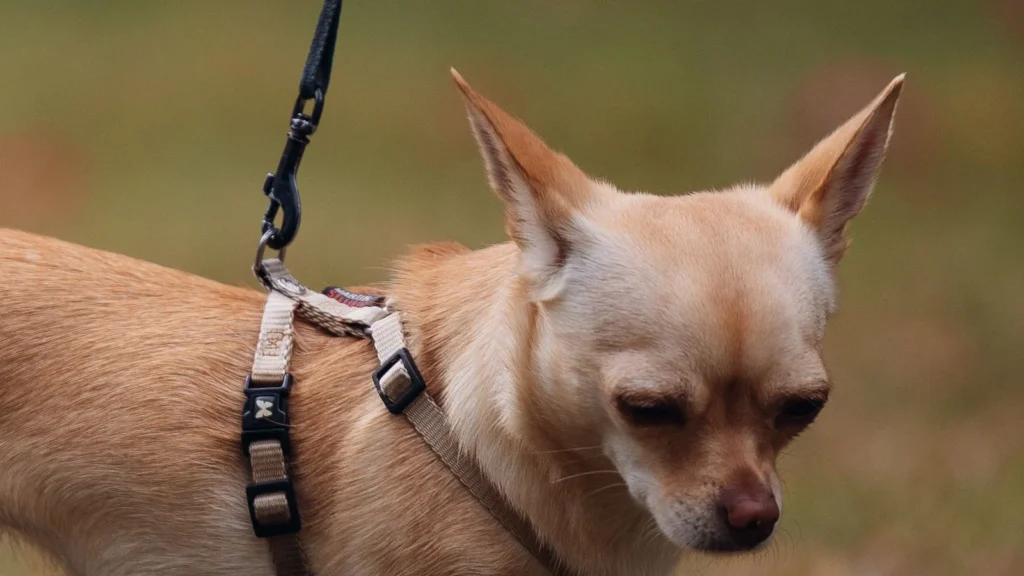
Cornell lists pulling hard on a leash as a trigger. If your dog’s episodes start on walks, ask your vet whether a harness would take pressure off the throat for your dog.
5. Eating or drinking too fast
Gulping food or water is another trigger on Cornell’s list. A slow feeder bowl or smaller, more frequent meals can help a fast eater.
6. Grass seeds and other foreign material
Cornell mentions plant matter in the upper airway, and VCA lists foreign bodies such as seeds and grass. A sudden run of frequent episodes after time outdoors, especially with sneezing or face rubbing, is a reason to see your vet.
7. Nasal mites
The Merck Veterinary Manual says the canine nasal mite lives in the nasal passages and sinuses and spreads through direct and indirect contact between dogs. Signs include nosebleeds, sneezing, reverse sneezing, a reduced sense of smell, facial itching, nasal discharge, head shaking and noisy breathing. Merck notes there is no evidence that this mite is a risk to people.
8. Nose and throat infections
Cornell lists viral, fungal and bacterial infections. If the snorting comes with a honking cough, nasal discharge or low energy, an infection is more likely. Our guide to kennel cough symptoms explains the signs and when they need a vet.
9. An elongated soft palate
Flat-faced dogs can have brachycephalic obstructive airway syndrome, in which a long soft palate partly blocks the airway. Cornell lists it as a cause and says dogs with an elongated soft palate and other signs of breathing trouble may benefit from surgery to shorten it.
10. Masses in the nose or throat
Cornell includes masses on its list, and VCA says vets rule out nasal tumors and polyps when they look into abnormal snorting. This is uncommon, but it is one reason a change in the pattern of episodes deserves a vet visit.
Cornell also lists lower airway disease and stomach problems such as vomiting. In many dogs, no single cause is found.
Reverse Sneezing vs Coughing: How to Tell
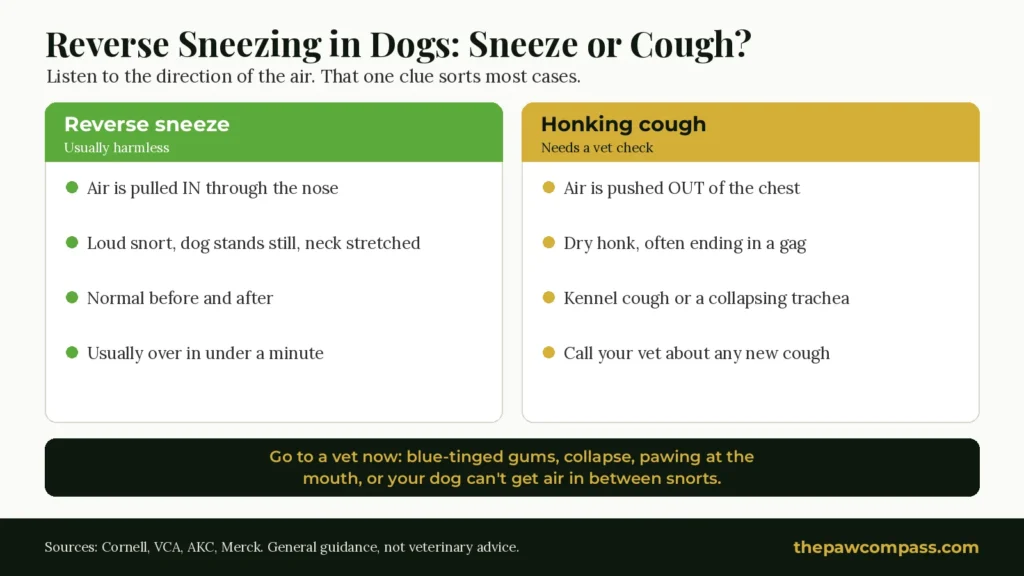
Reverse coughing and sneezing in dogs are easy to confuse because both can sound like a honk. A soft, rhythmic hic with normal breathing is something else again, and our guide to dog hiccups explains it. The most useful clue is the direction of the air. The AKC explains that with coughing or gagging, a dog is pushing air out of the lungs. With a reverse sneeze, air is pulled in through the nose, and the AKC notes it is not usually serious and passes on its own. With choking, a blockage makes it hard to get air in at all.
| What you see | Air moves | Usually means | What to do |
|---|---|---|---|
| Loud snorts, dog stands still with the neck stretched, normal right after | In, through the nose | Reverse sneeze, harmless in most dogs (Cornell) | Stay calm, time it, film it |
| Sudden honking cough, often ending in a gag or retch | Out, from the chest | Kennel cough or another airway infection | Call your vet |
| Dry, honking cough that keeps coming back, mostly in toy breeds | Out, from the chest | Collapsing trachea (Merck, AKC) | Call your vet |
| Pawing at the mouth, distress, drooling, blue-tinged gums | Little or none gets in | Choking (AKC) | Emergency vet now |
The honk is what confuses most dog parents. Kennel cough is a cough that the Merck Veterinary Manual compares to a goose honk, and it often ends in retching or gagging. Our kennel cough guide walks through that sound and the other signs. The Merck Veterinary Manual says a collapsing trachea mostly affects toy and miniature breeds and causes a dry, honking cough, and the AKC’s chief veterinarian, Dr. Jerry Klein, describes it as more serious than a reverse sneeze.
Gagging that brings nothing up is different again. The AKC says gagging needs an emergency vet when there are signs of choking, bloat or trouble breathing. If the belly looks swollen, read signs of bloat in dogs and go now. If your dog coughs and then brings up foam, see dog throwing up white foam.
How to Stop a Reverse Sneeze: 5 Things to Try
Most episodes end on their own within a minute. These steps from Cornell, the AKC, VCA and Texas A&M can help one pass sooner:
- Stay calm. Speak softly and comfort your dog. Cornell and Dr. Teller both say calming the dog helps.
- Gently massage the throat. Light strokes down the neck can help the spasm relax (Cornell, AKC).
- Cover the nostrils for a moment. Cornell and the AKC say briefly holding the nostrils closed for a few seconds can help, because it makes your dog swallow, and swallowing usually ends the spasm.
- Blow gently in the face. A soft puff of air also encourages swallowing (Cornell, AKC, Texas A&M).
- Offer fresh air or a lick. The AKC suggests moving to a cool spot or fresh air, and VCA says something to lick or drink may help your dog swallow.
Film an episode on your phone if you can. A short clip helps your vet confirm it’s a reverse sneeze and not a cough, since VCA says the diagnosis is usually based on the history and the signs.
If your dog can’t get air in, paws at the mouth or the gums look blue-tinged, treat it as choking, not a reverse sneeze. The AKC says a choking dog should see a vet even if it seems to recover, so the mouth, throat and neck can be checked.
When to Call the Vet About Reverse Sneezing
| What you notice | What to do | Why |
|---|---|---|
| A short episode, and your dog is normal right after | Watch, note the time, film it | Most dogs need no treatment (Cornell) |
| Episodes are more frequent, longer or more severe | Book a vet visit | Your vet may check for allergies and mites (Cornell) |
| Nosebleed, nasal discharge, face rubbing or head shaking | Book a vet visit | Possible nasal mites or a foreign body (Merck, VCA) |
| A cough, labored breathing or your dog seems unwell | Call your vet today | Needs a check for other problems (Texas A&M) |
| Can’t get air in, blue-tinged gums or collapse | Emergency vet now | Could be choking (AKC) |
Dr. Teller says occasional episodes are normal, but recurring or chronic episodes, other breathing signs or a dog that seems unwell call for a visit. If your dog has heart disease, raise even mild episodes at the next checkup, since the AKC’s reassurance applies to dogs without underlying conditions.
Reverse Sneezing in Puppies
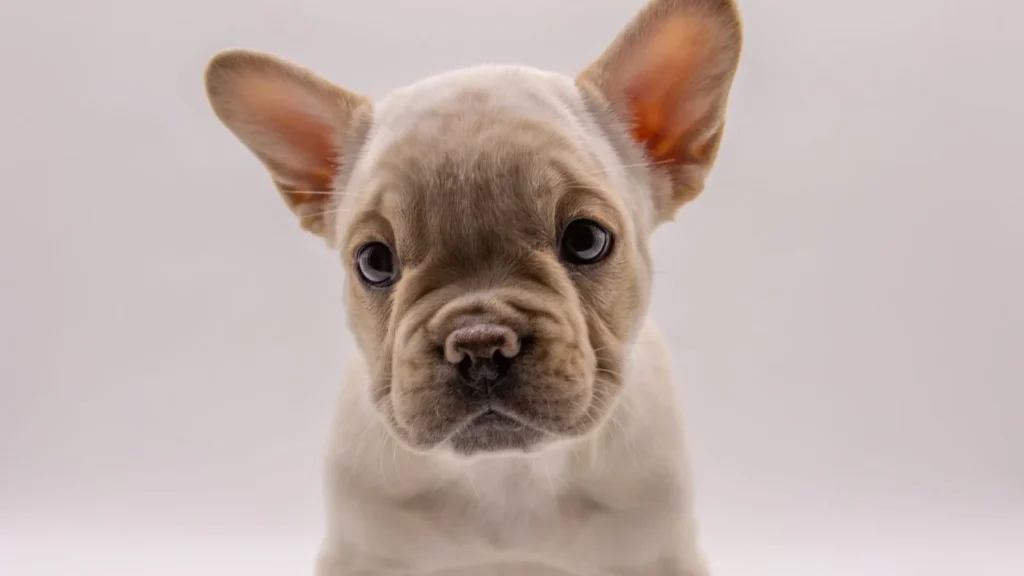
Puppies reverse sneeze too, since Cornell says it can happen at any age. Flat-faced puppies such as French Bulldogs and pugs belong to the higher risk group (Cornell, Texas A&M). A puppy that snorts after a burst of zoomies or a gulped meal and then goes straight back to playing is acting like a typical reverse sneezer.
Puppies also pick up airway infections more easily, and our kennel cough guide notes that puppies are hit harder by kennel cough. Call your vet if a puppy has a cough, nasal discharge, low energy or a poor appetite along with the snorting. Keeping vaccines on schedule helps, and our puppy shot schedule shows the timing.
What Your Vet May Do
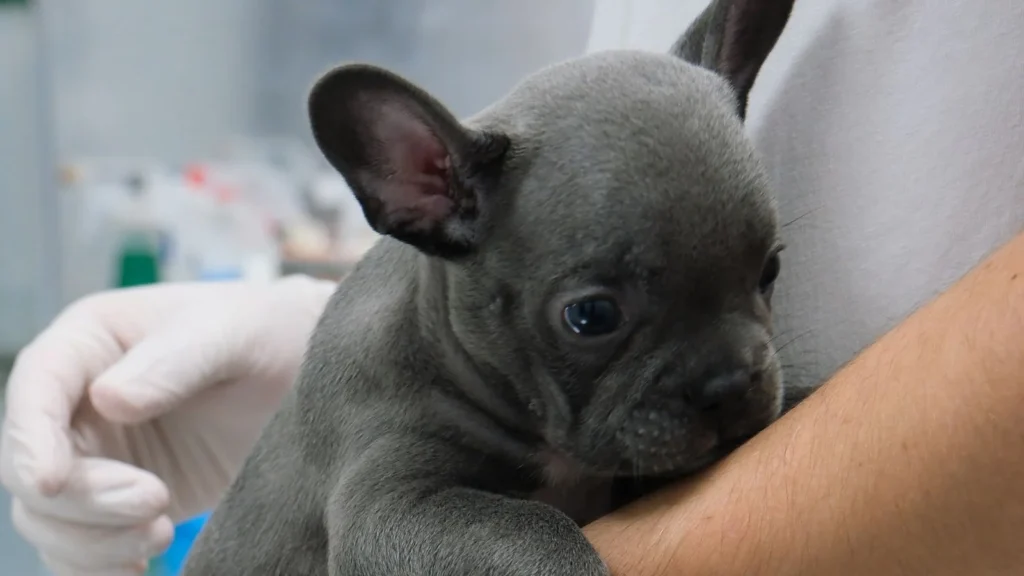
VCA says reverse sneezing is usually diagnosed from the history and the signs. The vet rules out other causes of abnormal snorting, such as upper respiratory infections, a collapsing trachea, nasal tumors or polyps and foreign bodies. Blood tests, allergy tests or X-rays are sometimes used.
For frequent or severe episodes, Cornell says the vet may treat for allergies and mites to see if things improve. If the signs continue, the next steps can include a mouth exam under sedation, X-rays of the head and rhinoscopy, where a small camera looks inside the nose for a mass or foreign object. Merck adds that rhinoscopy and nasal flushing are the most useful ways to find nasal mites.
Most dogs need no treatment at all (Cornell, AKC). VCA says that in some cases a vet may prescribe anti-inflammatory, antihistamine or decongestant medicine. Only your vet can decide whether your dog needs one and which is safe.
Don’t give your dog human allergy, cold or sinus pills. ASPCA Animal Poison Control warns that some antihistamine products also contain a decongestant, and some decongestants can cause agitation, restlessness and a fast heart rate in pets. If your dog swallows any human medicine, call your vet, ASPCA Animal Poison Control at (888) 426-4435 or the Pet Poison Helpline at 855-764-7661. A fee may apply.
How to Cut Down on Reverse Sneezing at Home
You can’t prevent every episode, but you can cut down on common triggers:
- Go easy on scents. Skip perfume, carpet cleaner and room sprays near your dog (AKC), and keep smoke away from them (VCA).
- Keep dust down. Vacuum and wash bedding often, since dust and allergens are triggers (Cornell, AKC).
- Calm the greetings. Keep arrivals low key if excitement sets off episodes (Cornell, AKC).
- Reduce leash pulling. Ask your vet about a harness and practice loose leash walking (Cornell lists pulling as a trigger).
- Slow down meals. Use a slow feeder bowl if your dog gulps food or water (Cornell).
- Keep a log. Note the date, the length of the episode and what happened just before. The pattern helps your vet find triggers.
Keep your vet’s number and the poison control numbers where everyone in the house can find them. The Print & Go Pack includes a one page Emergency Cheat Sheet:
Reverse Sneezing in Dogs: FAQ
-
What does reverse sneezing in dogs sound like?
A loud, rapid snort as your dog pulls air in through the nose, sometimes with honking or gagging sounds (AKC, Texas A&M). Your dog usually stands still with the neck stretched out. General guidance, not veterinary advice.
-
Why do dogs reverse sneeze?
Irritation at the back of the nose or throat sets off a reflex (Cornell). Common triggers include dust, pollen, perfume, smoke, excitement, pulling on the leash, eating too fast, nasal mites and grass seeds. In many dogs no cause is found.
-
Is reverse sneezing in dogs harmful?
Usually not. VCA says complications are very rare, and the AKC says it is not known to be harmful in dogs without underlying conditions such as heart disease. Cornell calls the outlook excellent for most dogs.
-
How do you stop a dog’s reverse sneeze?
Stay calm, gently massage the throat, briefly cover the nostrils for a few seconds or blow gently in the face to make your dog swallow (Cornell, AKC). Most episodes stop on their own within a minute.
-
What is the difference between reverse sneezing and kennel cough?
A reverse sneeze pulls air in through the nose, and the dog is normal right after. Kennel cough pushes air out in a honking cough, often ending in a gag, and needs a call to your vet.
-
Can puppies reverse sneeze?
Yes. Cornell says it happens at any age, and flat-faced puppies are more prone. Call your vet if a puppy also has a cough, nasal discharge or low energy, since those can point to an infection.
-
When should you take a dog to the vet for reverse sneezing?
Book a visit if episodes become frequent, longer or more severe, or come with a nosebleed, nasal discharge, a cough or labored breathing. Go to an emergency vet if your dog can’t get air in or has blue-tinged gums.
Reverse Sneezing in Dogs: The Short Version
- A reverse sneeze is a reflex that pulls air in through the nose in loud snorts.
- Most episodes last under a minute, and dogs are normal before and after.
- Small and flat-faced dogs do it most, but any dog can.
- Common triggers: dust, pollen, scents, smoke, excitement, leash pulling and eating fast.
- A honk that pushes air out is a cough, not a reverse sneeze. Call your vet.
- Gentle throat rubs, a brief nostril cover or a puff of air can end an episode.
- Frequent episodes, nosebleeds or trouble getting air in need a vet.
General guidance, not veterinary advice. Over to you: what sets off your dog’s reverse sneezing? Tell us in the comments.
