


 By
Signs of bloat in dogs include retching with nothing coming up, a swollen or tight belly, heavy drooling, restlessness and pacing, panting, pale gums and weakness. If you see these, go to your vet or the nearest emergency clinic now: Cornell University’s College of Veterinary Medicine says bloat with a twisted stomach (GDV) needs immediate medical and surgical treatment. There is no safe way to treat it at home.
Below are the 9 signs to know, what to do right now, how fast bloat becomes deadly, puppy bloat signs, which dogs are most at risk and how to lower the risk over the holidays. General guidance, not veterinary advice.
Table of Contents
- 9 Signs of Bloat in Dogs (Go to the Vet Now)
- What to Do Right Now
- What Is Bloat in Dogs?
- How Fast Bloat Becomes Deadly
- Early vs Late Signs of Bloat
- Puppy Bloat Signs: When a Round Belly Is a Problem
- Which Dogs Are Most at Risk of Bloat?
- Holiday Bloat Risks
- How Vets Treat Bloat
- How to Lower the Risk of Bloat
- Can Bloat in Dogs Go Away on Its Own?
- Signs of Bloat in Dogs: FAQ
- Signs of Bloat in Dogs: The Short Version
9 Signs of Bloat in Dogs (Go to the Vet Now)
These signs come from Cornell, VCA Animal Hospitals, the American College of Veterinary Surgeons (ACVS) and the AKC Canine Health Foundation. Your dog doesn’t need all of them. Retching with nothing coming up plus a swelling belly is the classic pair.
- Retching with nothing coming up. Cornell lists non productive retching, or trying to vomit with nothing produced.
- A swollen, tight belly. VCA says the swelling is most obvious on the left side, and tapping behind the last rib may sound hollow, like a drum.
- Heavy drooling, listed by Cornell as excessive drooling.
- Restlessness or pacing. Your dog can’t settle or get comfortable.
- Panting or hard breathing. VCA explains that the swollen stomach presses on the diaphragm and makes breathing labored.
- Belly pain, stretching or the “praying” position, with the front legs stretched forward and the chest low to the ground (Cornell, ACVS).
- Pale gums, listed by Cornell and the AKC Canine Health Foundation.
- Weakness or collapse. Cornell lists weakness or collapse as a sign.
- Acting anxious or not like themselves. The AKC Canine Health Foundation says a change in temperament alongside these signs is a warning sign too.

What to Do Right Now
- Go to the nearest vet or emergency clinic now. VCA says immediate veterinary attention is needed, within minutes to a few hours.
- Call on the way if someone else can drive, so the team can get ready for you.
- Don’t wait to see if it passes. The AKC Canine Health Foundation says a delay of more than 5 hours between the first signs and hospital admission is linked to more illness and deaths.
- Don’t try home remedies. No pill, drink or trick can untwist a stomach. Don’t give any medicine or try to make your dog vomit unless a vet tells you to.
- Help your dog into the car gently and keep them as calm as you can.
If you aren’t sure, go anyway. VCA notes that simple bloat and a twisted stomach often look the same on a physical exam, so even vets need X-rays to tell them apart.
What Is Bloat in Dogs?
Bloat starts when the stomach fills with gas, fluid or food and stretches (gastric dilatation). It becomes gastric dilatation volvulus, or GDV, when the stomach then twists on itself. Cornell explains that the twist stops the stomach from emptying and traps the gas inside. ACVS adds that the twist cuts off blood flow.
As the stomach swells, VCA says it presses on the diaphragm and on large blood vessels in the belly, which leads to labored breathing, shock and collapse. Without blood flow, parts of the stomach wall can die and the stomach can rupture. The Merck Veterinary Manual calls GDV an acute, life threatening condition that mainly affects large and giant breed dogs.
How Fast Bloat Becomes Deadly
| What the sources say | Figure | Source |
|---|---|---|
| How soon to get care | Within minutes to a few hours | VCA |
| Delay linked to worse outcomes | More than 5 hours from first signs | AKC CHF |
| Higher risk patients | Signs for more than 6 hours | ACVS |
| Survival with prompt treatment | Greater than 80% | Cornell, AKC CHF |
| Deaths even with treatment | About 15% to 20% | ACVS, Merck |
| Without treatment | Almost always fatal | AKC CHF |
The message from every source is the same: the earlier a dog with bloat reaches a vet, the better the odds. ACVS says stabilization and surgery work best early in the disease.
Early vs Late Signs of Bloat
| Stage | What you may see | Source |
|---|---|---|
| Early | Restlessness, stretching, drooling, retching with nothing coming up | ACVS |
| Early | Signs of belly pain, pacing, not settling | ACVS, Cornell |
| Later | Panting, a visibly bloated belly, weakness | ACVS |
| Shock | Labored breathing, collapse, the swollen belly obvious as the dog lies on its side | VCA |
Don’t wait for the late signs. ACVS says initial signs are often linked to belly pain, which some dogs hide well. Our guide to the quieter signs of pain can help you spot discomfort early.
Puppy Bloat Signs: When a Round Belly Is a Problem
Puppies can bloat too. VCA says any dog may be affected, even though large, deep chested dogs are most at risk, and the AKC Canine Health Foundation notes that GDV is more common in older dogs than younger ones. The emergency signs are the same at any age: a tight, swelling belly with retching, drooling, restlessness, pale gums or weakness means go to a vet now.
A puppy with a round, pot bellied look and no other emergency signs may have worms. Cornell says puppies are more likely than adult dogs to show signs of roundworms, which can include diarrhea, vomiting and a pot bellied appearance, and that puppies can pick up roundworms from their mother before birth and while nursing. In rare cases, Cornell adds, a heavy infestation can block the intestine, which can be deadly. Ask your vet about a deworming plan and a stool check.
Feeding matters too. Cornell lists eating too quickly and large meals as bloat risk factors, so spread your puppy’s food across the day. Our puppy feeding chart shows how many meals a day suit each age.

Which Dogs Are Most at Risk of Bloat?
| Risk factor | Details | Source |
|---|---|---|
| Size and chest shape | Large and giant breeds with deep chests | Cornell, ACVS |
| Weight over 100 lb | About a 20% lifetime risk of bloat | VCA |
| Older age | Risk rises as dogs age | Cornell, AKC CHF |
| Family history | A parent or sibling who had GDV | Cornell |
| How they eat | Eating fast, one large meal a day | Cornell |
| Raised food bowl | Linked to about 20% of cases in large breeds and 52% in giant breeds in one Purdue study | Purdue (JAVMA 2000) |
| Temperament and stress | Nervous or fearful dogs; recent kennel stays or car trips | Cornell, AKC CHF |
| Exercise after meals | Exercising soon after eating | Cornell, VCA |
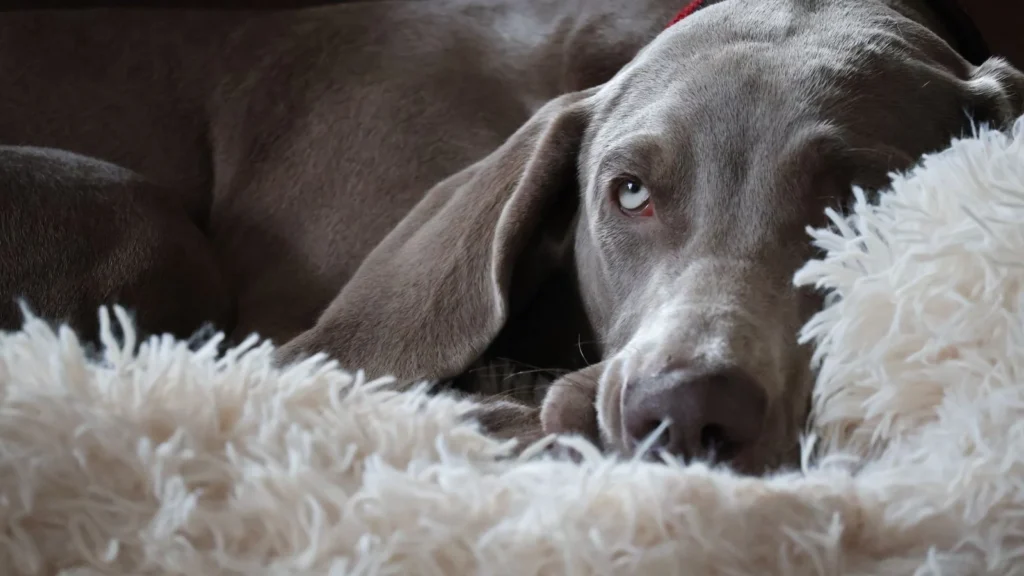
VCA names Great Danes, Saint Bernards, Weimaraners, Irish Setters, Gordon Setters, Standard Poodles, Basset Hounds, Doberman Pinschers and Old English Sheepdogs among the breeds at higher risk, and the AKC Canine Health Foundation adds German Shepherd Dogs. Small dogs aren’t immune: VCA says any dog can bloat, including Dachshunds and Chihuahuas, and that bloat without a twist occasionally happens in elderly small dogs.
Cornell and ACVS also list dry foods with oils or fats among the first four ingredients, and the AKC Canine Health Foundation and VCA mention being thin or underweight.

Holiday Bloat Risks
The holidays stack up several risk factors at once. The AKC Canine Health Foundation links recent stress, such as kennel stays or car trips, to a higher risk, and Cornell lists large meals and exercising soon after eating. A dog that gets plates of leftovers from guests and then a lively game in the yard is getting both.
- Keep your dog’s usual meals, split into two or more smaller portions, and ask guests not to share plates.
- Keep play calm after meals. Cornell advises limiting activity after eating.
- Keep raw yeast dough out of reach. The ASPCA says it can make the stomach bloat and possibly twist, and that the yeast also makes alcohol in the stomach.
- Plan for stress. If your dog is boarding or traveling, keep feeding times and amounts close to normal.
- Find your nearest 24 hour emergency vet now, before the holiday, so you know where to go.
If your dog eats raw dough or anything else that may be toxic, call your vet, ASPCA Animal Poison Control at (888) 426-4435 or the Pet Poison Helpline at 855-764-7661. A fee may apply. Our full list of Christmas dangers for dogs covers the other seasonal hazards, and if you’re bringing a puppy home for Christmas, plan the first few weeks of meals before the big day.

Before the holidays, put your emergency vet’s details and the poison control numbers where everyone in the house can find them. The Christmas Kit includes a holiday hazards sheet with emergency numbers for the fridge:
How Vets Treat Bloat
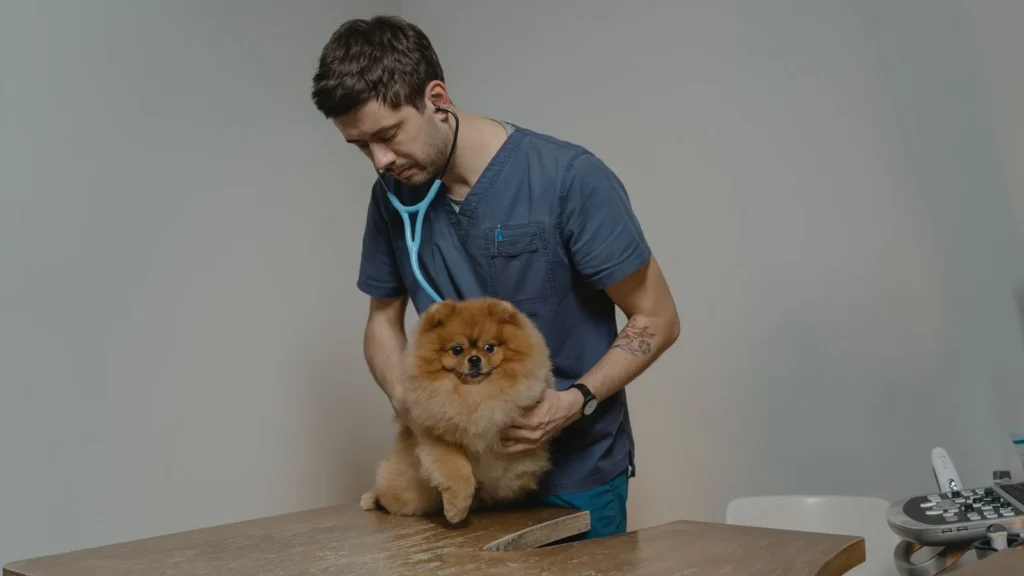
Treatment happens fast and in stages. VCA says the first priority is relieving pressure in the stomach, often with a stomach tube or, if the twist blocks the tube, a needle or catheter placed through the skin. Shock is treated right away with IV fluids, and Cornell says aggressive stabilization comes first.
Once the dog is stable, surgery puts the stomach back in place. ACVS says the surgeon checks the stomach wall, spleen and other organs, and removes damaged tissue if needed. Surgeons usually add a gastropexy, which attaches the stomach to the body wall so it can’t twist again. ACVS says recovery includes a few weeks of limited exercise while the incisions heal.
How to Lower the Risk of Bloat
Not every case can be prevented. The AKC Canine Health Foundation says it’s impossible to know the risk of an individual dog, and some dogs bloat despite every precaution. These steps lower the odds:
- Feed two or more smaller meals a day instead of one big one (Cornell). ACVS suggests two to three small meals a day after a dog has had GDV.
- Slow down fast eaters, since Cornell lists eating too quickly as a risk factor.
- Skip raised food bowls unless your vet advises one for a medical reason. Cornell says to avoid them.
- Limit activity after meals (Cornell). VCA adds that exercise after a big meal or a lot of water may raise the risk.
- Keep stress low around feeding time, especially for nervous dogs.
- Know the signs and where your nearest emergency vet is.
Preventive Gastropexy for High Risk Breeds
For dogs at high risk, many vets recommend a preventive gastropexy. Cornell says it is often done during a spay or neuter for at risk breeds, and the AKC Canine Health Foundation says it is indicated for dogs of high risk breeds. It doesn’t stop the stomach from filling with gas, but it stops the twist, which is the life threatening part.
The numbers are striking. Cornell says gastropexy lowers the risk of the stomach twisting again to as low as 3 to 5 percent, compared with a recurrence rate as high as 80 percent without it. Ask your vet whether it makes sense for your dog’s breed and history.
Can Bloat in Dogs Go Away on Its Own?
Don’t wait to find out. VCA says simple bloat and a twisted stomach often look identical on a physical exam, and the AKC Canine Health Foundation says untreated GDV is almost always fatal. Any dog with the signs above needs a vet now, even if the signs seem to ease.
Signs of Bloat in Dogs: FAQ
-
What are the signs of bloat in dogs?
The main signs are retching with nothing coming up, a swollen or tight belly, heavy drooling, restlessness or pacing, panting, belly pain or a praying position, pale gums and weakness or collapse (Cornell, VCA, ACVS). Any of these means go to a vet now. General guidance, not veterinary advice.
-
What are the first signs of bloat in a dog?
ACVS says early signs are often linked to belly pain and include restlessness, stretching, drooling and retching that brings nothing up. A swollen belly, panting, weakness and collapse tend to follow.
-
How fast is bloat fatal in dogs?
Very fast. VCA says a dog with GDV needs veterinary care within minutes to a few hours, the AKC Canine Health Foundation links delays of more than 5 hours to more deaths, and it says untreated GDV is almost always fatal.
-
Can bloat in dogs go away on its own?
Don’t count on it. VCA says simple bloat and a twisted stomach often look the same on an exam, so only a vet with X-rays can tell them apart. Go to a vet as soon as you see the signs.
-
What do puppy bloat signs look like?
The emergency signs are the same as in adult dogs: a tight, swelling belly with retching, drooling, restlessness, pale gums or weakness. A round belly with no other signs may be worms, which Cornell says can cause a pot bellied look in puppies, so see your vet either way.
-
Which dogs are most at risk of bloat?
Large and giant breeds with deep chests, such as Great Danes, Saint Bernards, Weimaraners, Standard Poodles and German Shepherd Dogs. VCA says dogs over 100 pounds have about a 20% lifetime risk. Older age, a relative with GDV, eating fast and one large meal a day raise the risk too.
-
How can you lower a dog’s risk of bloat?
Feed two or more smaller meals a day, slow down fast eaters, avoid raised bowls and limit activity after meals (Cornell). For high risk breeds, ask your vet about a preventive gastropexy, which Cornell says can lower the risk of the stomach twisting again to as low as 3 to 5 percent.
Signs of Bloat in Dogs: The Short Version
- Retching with nothing coming up and a swelling belly are the classic signs.
- Drooling, pacing, panting, pale gums and weakness are emergency signs too.
- Go to a vet or emergency clinic now. Call on the way. No home remedies.
- With prompt treatment, more than 80% of dogs survive (Cornell).
- Large, deep chested and older dogs are most at risk, but any dog can bloat.
- Smaller meals, slow eating, no raised bowls and calm after meals lower the risk.
- Ask your vet about a preventive gastropexy for high risk breeds.
General guidance, not veterinary advice. Over to you: do you know where your nearest 24 hour emergency vet is? Tell us in the comments how you plan for emergencies over the holidays.
