

 By
Here’s how to stop a dog from peeing in the house: start with a vet check to rule out a medical cause, then work out why it’s happening: incomplete house training, fear or anxiety, marking, or greeting excitement. Clean every spot with an enzyme cleaner, supervise closely, take your dog out on a schedule, reward going in the right place, and never punish. Board certified veterinary behaviorists at VCA say that in almost all cases, a little detective work reveals the cause.
This guide is for adult dogs and older puppies who keep having accidents. If you’re starting from scratch with a young puppy, see how to potty train a puppy instead.
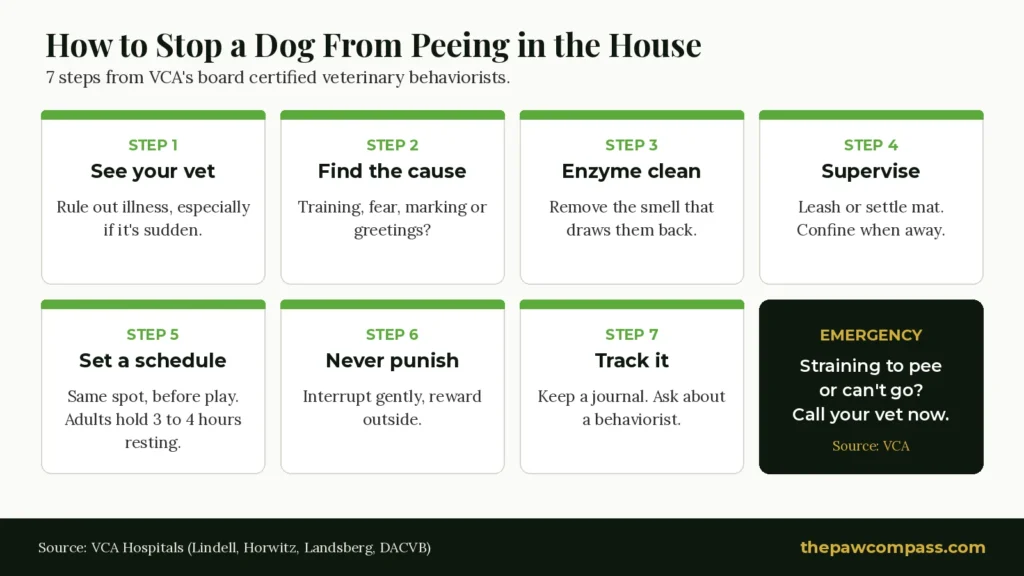
Table of Contents
- Why Do Dogs Pee in the House?
- How to Stop a Dog From Peeing in the House: 7 Steps
- How to Stop a Dog From Marking in the House
- Why Do Dogs Pee When You Come Home?
- Accidents When Your Dog Is Scared or Left Alone
- When a Senior Dog Starts Peeing in the House
- How to Stop a Dog From Peeing in the House: FAQ
- Stopping a Dog From Peeing in the House: The Short Version
Why Do Dogs Pee in the House?
VCA’s behaviorists name four main causes of house soiling, plus two special cases. The clues usually point to one of them:
| Cause | Clues | First step |
|---|---|---|
| A medical problem | A trained dog suddenly has accidents, drinks more, strains, or leaks | Vet exam before anything else |
| Incomplete house training | Accidents since the day you adopted them, even now and then | Restart training like a young puppy |
| Fear or anxiety | Accidents when scared, when left alone, or when frightened outside | Treat the fear, often with a behaviorist |
| Marking | Small amounts on upright things like furniture corners, often after a change at home | Supervise, block targets, find the trigger |
| Submissive or excitement urination | Leaks during greetings or play, most often in puppies and young females | Calm, low key greetings |
| Cognitive decline | A senior dog forgets to signal or goes right after coming back in | Vet exam and a pad area |
How to Stop a Dog From Peeing in the House: 7 Steps
Step 1: See Your Vet First
If your dog is house soiling, especially if it started suddenly, VCA says to have your vet check for an illness first. Training alone won’t fix accidents that come from an illness. The VCA list of possible causes includes:
- Conditions that make a dog drink and pee more: kidney or liver disease, infection, diabetes, Cushing’s disease, and medicines like prednisone.
- Conditions that make peeing uncomfortable: bladder inflammation (cystitis), bladder stones, and orthopedic or nerve pain.
- Brain and nerve changes: age related cognitive decline, and weak sphincter control (incontinence).
Your vet may want bloodwork and a urine sample. VCA’s marking guide adds an important warning: if your dog is straining to urinate, it could be an emergency, so don’t wait. If your dog is drinking a lot more than usual, these signs of kidney failure in dogs are worth knowing, and these signs your dog is in pain can help you spot discomfort.
Step 2: Work Out the Cause
Use the table above. Note when and where accidents happen: right after you leave, during greetings, on the same couch corner, or at night. VCA suggests a training journal to record the number of pees and poops each day, plus any change in health or diet. A pattern often points straight to the cause.
Step 3: Clean Every Spot With an Enzyme Cleaner
Dogs are often drawn back to spots they’ve soiled before. VCA recommends a cleaner that contains enzymes to break down urine and remove as much of the odor as possible. Clean quietly, ideally with your dog out of the room, and don’t react.
Skip DIY sprays made with essential oils. The Pet Poison Helpline lists eucalyptus, tea tree, pine, cinnamon, pennyroyal, wintergreen and sweet birch oil among the essential oils known to poison dogs, and notes they’re absorbed quickly through the skin, stomach and lungs.
Step 4: Supervise, and Confine When You Can’t
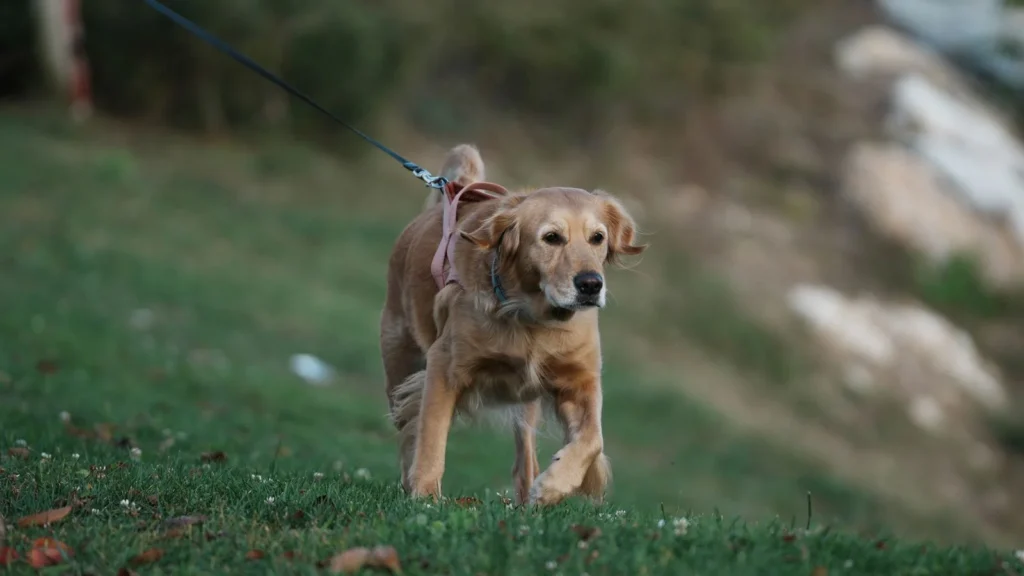
For a dog who isn’t fully house trained, VCA says to supervise closely so they don’t get the chance to go indoors. If your dog is comfortable and doesn’t need to go, keep them on a leash beside you or teach them to rest on a settle mat until the next trip out. That teaches them that sometimes they need to wait a little before the bathroom.
When you can’t watch, confine your dog to an area that won’t be damaged if they have an accident. For long days away, VCA suggests a pet sitter to let them out, so they don’t end up with an urgent need to go.
Step 5: Go Out on a Schedule
Learn your dog’s pattern. VCA says a healthy adult dog can usually hold urine for about 3 to 4 hours when resting, active dogs need to go more often, and most dogs poop 1 to 3 times a day, often shortly after a meal. Our guide to how long dogs can hold their pee compares what different vet sources say.
Pick one outdoor spot and take your dog there before any play. VCA notes that if your dog doesn’t go promptly, you should bring them back in, keep them in sight, and try again a little later. With practice, most dogs adjust to your schedule.
If you’re retraining a younger dog and want the whole family on the same timetable, the Fridge Schedule in our Print & Go Pack helps:
Step 6: Interrupt Gently, Reward Outside, Never Punish
If you catch your dog starting to squat or lift a leg indoors, VCA suggests distracting them with a novel sound and then hurrying them outside. Don’t try to frighten or scold them. When they go in the right spot, reward them.
If you find an accident later, just clean it up. VCA’s behaviorists say punishment confuses and can frighten a dog, and that the “guilty look” most likely means your dog feels worried, not guilty. VCA also warns that punishment can trigger fear, which can make marking worse.
Step 7: Track Progress and Get Help
Keep the journal going so you can see whether accidents are dropping. If they aren’t, or if you suspect fear, separation distress or marking linked to stress at home, VCA recommends asking your vet about a veterinary behaviorist, who can build a treatment plan and decide whether medication might help. For a puppy, The First 30 Days Puppy OS has an accidents page with its own tracker. Here’s how long potty training takes for comparison.
How to Stop a Dog From Marking in the House
Marking is different from a full bladder. According to VCA, most urine marks are small, usually on upright surfaces, and the behavior is normal communication for dogs. It’s most common in intact males, but intact females and many neutered males and spayed females mark too. Triggers include puberty, a new pet or person, a new work schedule, a remodel, or even new tall objects in the house.
- Supervise and block targets. Use gates or close curtains if your dog marks near the windows, and keep them out of problem rooms until training is done.
- Distract, don’t scold. VCA warns that punishment can trigger fear and make marking worse. Call your dog to play, offer a toy or send them to a settle mat.
- Don’t head outside right after an interruption unless your dog really needs to go. The goal is to reduce the urge to mark, not give them a new place to do it.
- Keep a steady routine of exercise and play if a change at home set it off.
- Use a belly band only to protect furniture. VCA says bands don’t teach dogs to stop marking and must be changed when soiled, or a serious skin infection can develop.
- Ask about neutering. VCA cites studies that neutering can reduce marking by up to 80% in male dogs, but it’s not a guaranteed fix. Your vet can tell you if it’s right for your dog.
Why Do Dogs Pee When You Come Home?
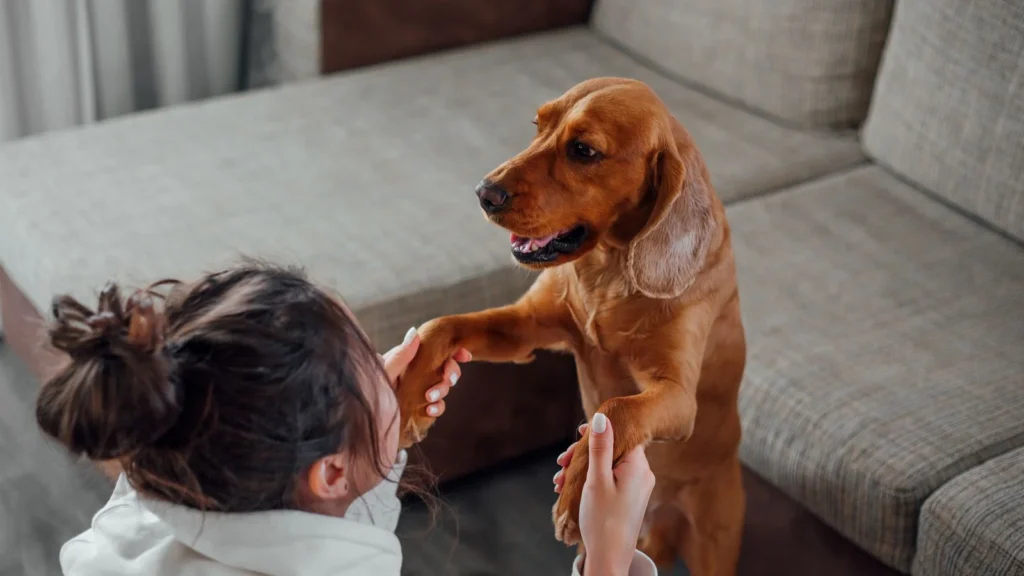
Peeing during greetings usually isn’t a house training problem. VCA describes two kinds: submissive urination, when a dog crouches, pulls their ears back or rolls over as they’re approached, and excitement urination, during happy, energetic greetings. Many dogs show both. Neither is done on purpose, and both are most common in puppies and young female dogs. Many grow out of it.
- Keep greetings low key: calm voice, no reaching over the dog, no direct stare.
- Let your dog come to you. Kneel instead of standing over them, and pet the chest instead of the head.
- For an excited dog, skip eye contact and touch until they calm down, then greet them quietly.
- Give your dog a job, like fetching a toy or sitting for a treat, so greetings turn into something else.
- Practice with visitors who come in, leave, and come back, so each entrance gets less exciting.
- Never scold. VCA says reprimands make these dogs more anxious and more likely to leak.
Accidents When Your Dog Is Scared or Left Alone
VCA notes that a dog who is frightened outside may be too distracted to go, and then has an accident once back inside. A dog frightened indoors may pee while trying to escape. Treatment targets the fear itself, for example by slowly getting a noise sensitive dog used to the sound, or by setting up a sheltered potty area away from the trigger. Distress about being left alone is another behavioral cause that a veterinary behaviorist can help with.
When a Senior Dog Starts Peeing in the House
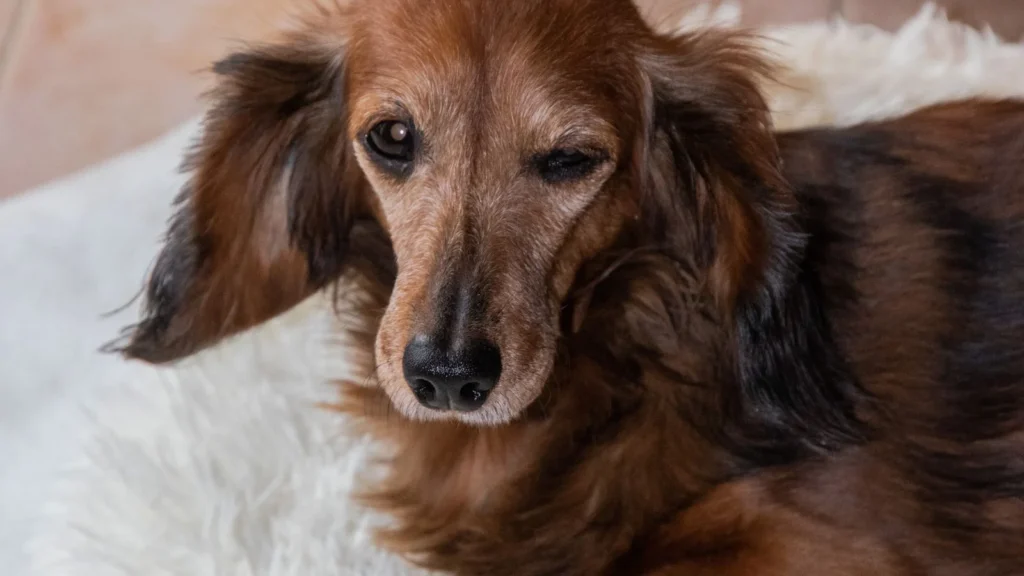
Aging brains change. VCA says dogs with cognitive decline may forget to signal that they need to go, or may go outside, forget to pee, and then pee shortly after coming back in. Be patient. A safe, easy to clean area with pads or washable mats helps, and your vet can prescribe treatments that support brain health. Read more about cognitive dysfunction in dogs.
How to Stop a Dog From Peeing in the House: FAQ
-
Why is a house trained dog suddenly peeing in the house?
Start with your vet. VCA says sudden house soiling in a trained dog is a key reason to check for illness, such as a bladder infection, bladder stones, kidney disease, diabetes or Cushing’s disease. If your dog is healthy, look for changes at home, fear, anxiety or marking.
-
How do you stop a dog from marking in the house?
Supervise closely, block access to the spots your dog targets, and distract them calmly when they start sniffing a high risk area. Don’t scold, which VCA says can make marking worse. Find the trigger, keep a steady routine, and ask your vet about a behaviorist if it continues.
-
Does neutering stop a dog from peeing in the house?
It can help with marking, but it’s not a cure. VCA cites studies showing neutering can reduce marking by up to 80% in male dogs, and notes that neutered and spayed dogs can still mark. It doesn’t fix accidents caused by illness or incomplete training.
-
What can you spray to stop a dog from peeing in the house?
Use an enzyme cleaner on every spot, which VCA recommends because dogs are drawn back to places they’ve soiled. Avoid homemade essential oil sprays. The Pet Poison Helpline lists eucalyptus, tea tree and pine oil among oils known to poison dogs.
-
Should you punish a dog for peeing in the house?
No. VCA’s behaviorists say punishment confuses and can frighten dogs, and the guilty look usually means worry. If you catch your dog in the act, interrupt with a gentle sound and take them outside. If you find it later, just clean it up.
-
Why does a dog pee when you come home?
That’s usually submissive or excitement urination, which VCA says isn’t deliberate and is most common in puppies and young female dogs. Keep greetings calm, let your dog come to you, kneel rather than lean over, and never scold.
-
How do I prevent dogs from peeing in the house while I’m at work?
VCA says a healthy adult dog can usually hold urine for about 3 to 4 hours when resting. For longer days, confine your dog to an easy to clean area and have a pet sitter or dog walker let them out, or train them to use an indoor potty pad.
Stopping a Dog From Peeing in the House: The Short Version
- See your vet before anything else, especially if the accidents are new.
- Work out the cause: training, illness, fear, marking or greeting excitement.
- Clean every spot with an enzyme cleaner. Skip essential oil sprays.
- Supervise closely, and confine when you can’t.
- Go out on a schedule and reward going in the right place.
- Interrupt gently, never punish, and call in a behaviorist if it isn’t improving.
Over to you: what finally worked for your dog? Tell us in the comments.
