


 By
The biggest Christmas dangers for dogs are foods like chocolate, xylitol, grapes and fatty scraps, holiday plants such as mistletoe and holly, and decorations dogs can swallow or chew, like tinsel, ornaments, lights and batteries. If you think your dog ate something toxic, call your vet, an emergency clinic or ASPCA Animal Poison Control at (888) 426-4435 right away. Don’t wait for signs.
This guide covers 29 holiday dangers for dogs in four groups: food, plants, decorations, and gifts and guests. Then it explains what to do if your dog gets into something. It’s based on the ASPCA, the American Veterinary Medical Association (AVMA), Cornell University’s Riney Canine Health Center and the FDA’s Center for Veterinary Medicine.
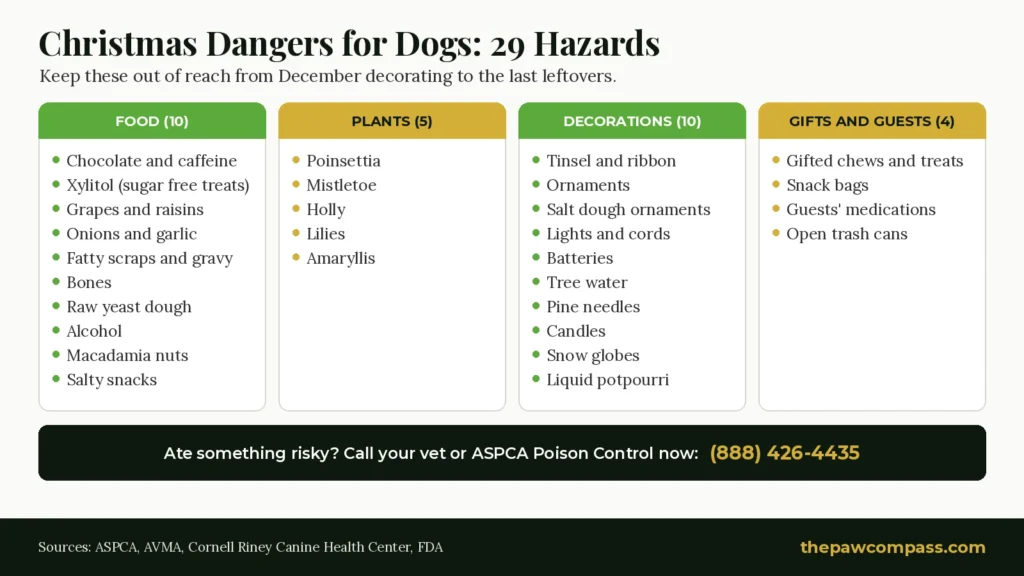
Table of Contents
Christmas Foods That Are Dangerous for Dogs
The ASPCA recommends keeping your dog’s diet the same as any other day over the holidays, and Cornell suggests asking guests not to share food from the table. A small piece of plain, boneless turkey is fine, according to the ASPCA. These 10 are the ones to keep away:
| Food | Why it’s dangerous | Good to know | Source |
|---|---|---|---|
| Chocolate, coffee and caffeine | Methylxanthines can cause vomiting, diarrhea, panting, hyperactivity, an abnormal heart rhythm, tremors and seizures | The darker the chocolate, the higher the risk. Baking chocolate and cocoa powder are the worst, white chocolate the least | ASPCA, FDA |
| Xylitol | A sudden drop in blood sugar, and liver damage that can start within 12 to 24 hours | May be listed as birch sugar or wood sugar. Found in gum, mints, candy, baked goods, some peanut butters and toothpaste | FDA, ASPCA |
| Grapes and raisins | Kidney damage | Cornell warns even small amounts can cause acute kidney failure | ASPCA, Cornell |
| Onions, garlic and chives | Stomach irritation and red blood cell damage that can lead to anemia | Cats are more sensitive, but dogs are at risk too, depending on the amount | ASPCA |
| Fatty scraps, skin and gravy | Upset stomach and pancreatitis, a painful and potentially life threatening disease | Pancreatitis signs: vomiting, stomach pain, restlessness, shaking, diarrhea, fever, weakness | FDA, Cornell |
| Bones | Choking, broken teeth, blockages and internal injuries from sharp pieces | Wrap up leftovers and bones and use a trash can your dog can’t open | Cornell, FDA |
| Raw yeast dough | Painful bloating, a stomach that may twist (see the signs of bloat in dogs), and alcohol poisoning as the dough ferments | Keep rising dough well out of reach | ASPCA, Cornell |
| Alcohol | Vomiting, diarrhea, incoordination, tremors, breathing trouble, coma and even death | It’s absorbed quickly, so get veterinary help promptly | ASPCA |
| Macadamia nuts | Weakness, vomiting, tremors and overheating | Signs usually show within 12 hours, with recovery expected in 24 to 72 hours | ASPCA |
| Salty snacks | Thirst, urination and salt toxicity, which can be fatal | The FDA says a 10 pound pet can get sick from half a teaspoon of table salt | Cornell, FDA |
Two of these need extra speed. The FDA says to treat chocolate as an emergency and call your vet immediately, and to do the same if a product your dog ate lists xylitol on the label. With xylitol, the FDA notes that signs come on quickly. Vomiting usually comes before weakness, staggering, collapse or seizures as blood sugar drops. For chocolate, our guide to signs of chocolate poisoning in dogs covers what to watch for and what to do.
Grapes and raisins hit the kidneys, so it’s worth knowing the signs of kidney failure in dogs. And if your dog seems sore or hunched after a rich meal, these signs your dog is in pain can help you spot it. For a dog who just has a mildly upset stomach once the holidays are over, here’s how to support your dog’s gut health.

Christmas Plants That Are Toxic to Dogs
Holiday plants range from mildly irritating to dangerous. Keep all of them out of reach, or use fake ones.
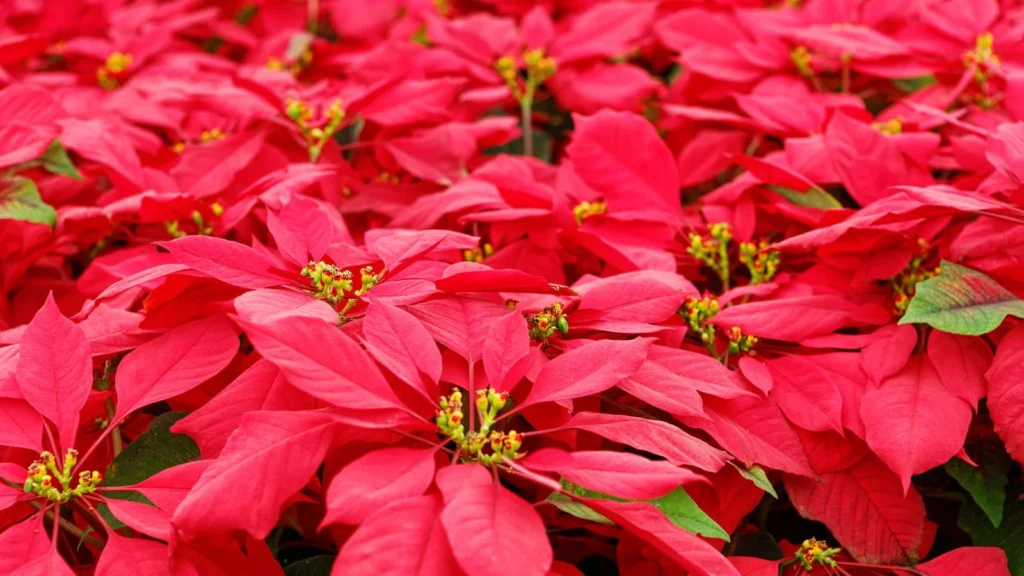
- Poinsettia. Its reputation is worse than its bite. It can irritate the mouth and stomach and cause drooling, vomiting and diarrhea (FDA, Cornell). If your dog eats some, the FDA suggests picking up the food and water bowls for a couple of hours to let the stomach settle.
- Mistletoe. The FDA says severe poisoning is uncommon and usually takes a large amount. Signs include vomiting, diarrhea, difficulty breathing, a slow heart rate, low blood pressure and odd behavior.
- Holly. Not highly toxic, but it can still cause drooling, vomiting, diarrhea, loss of appetite and low energy, and the spiky leaves can hurt the mouth (FDA, Cornell).
- Lilies. Cornell lists them as highly toxic, with a risk of kidney failure. The ASPCA’s kidney failure warning is about cats in particular, so lilies are a firm no in any home that also has a cat.
- Amaryllis. The AVMA lists it with poinsettias, mistletoe, holly, balsam, pine and cedar as holiday plants that can be dangerous or even poisonous if eaten.
Christmas Tree and Decoration Dangers for Dogs
Dogs chew and swallow decorations, so these 10 are worth watching closely:
- Tinsel, ribbon and string. The FDA says they can cause serious stomach and intestinal damage. Keep tinsel off the tree and gather ribbon and string as soon as gifts are open.
- Ornaments. Swallowed ones can block the intestines, and broken ones can injure the mouth, throat or gut, or cause choking (Cornell).
- Salt dough ornaments. Homemade ones can cause salt toxicity, a potentially life threatening electrolyte problem (Cornell), and the ASPCA warns they’re risky even when dry.
- Lights and cords. A chewed cord can cause electrical burns or electrocution (Cornell).
- Batteries. Chewed or punctured batteries can cause chemical burns to the mouth and esophagus (Cornell, ASPCA).
- Tree water. It can grow bacteria that cause nausea, diarrhea or stomach upset (ASPCA). The AVMA suggests skipping water additives if you have pets. Cover the stand.
- Pine needles. Swallowed needles can irritate the mouth and cause vomiting, diarrhea, or even an intestinal blockage or perforation (Cornell).
- Candles. A wagging tail can knock one over. Never leave a lit candle where your dog can reach it (ASPCA, AVMA).
- Snow globes. They can contain ethylene glycol, the toxic chemical in antifreeze. Clean up a broken one right away (ASPCA, Cornell).
- Liquid potpourri. The AVMA warns that its essential oils can severely damage a pet’s mouth, eyes and skin.
Secure the tree itself too. The ASPCA says to make sure it can’t tip over, and the AVMA suggests tying it to the ceiling or a doorframe with fishing line. Bringing home a puppy this year? Our new puppy checklist covers puppy proofing.

Bringing home a new puppy this season? Here is a 7 day first week plan for a puppy at Christmas.
Gifts, Guests and Other Holiday Dangers
The last four hazards have more to do with the busy house than the decorations:
- Gifted chews and treats. The FDA says treats gobbled without chewing can get stuck in the windpipe or digestive tract. Drooling, choking or vomiting after a stocking full of treats means call your vet. Cornell adds that some chews, like rawhide, can be a choking or blockage risk.
- Snack bags. The FDA warns that a dog can push its head into a chip or snack bag, breathe in, and suffocate as the bag wraps around its nose and mouth. Close bags and put them away.
- Guests’ medications. The ASPCA suggests asking houseguests to keep medications in a closed cabinet, not a bag or suitcase.
- The trash. Leftovers, bones and broken decorations end up there. Take it out or use a secure lid (ASPCA, FDA).
Stress counts too. Cornell suggests keeping your dog’s normal meal and walk times, giving them a quiet place to retreat with a bed, toys and a long lasting treat, and talking to your vet early if your dog struggles with crowds or noise, since some anti anxiety medicines are best tried before the big day.

Looking for gifts that skip the risky stuff? Here are new puppy gifts that are safe and useful.
What to Do If Your Dog Ate Something Dangerous
Act fast and call before you do anything else. These steps come from the AVMA’s first aid guide and ASPCA Poison Control:
- Call right away. Your vet, a 24/7 emergency clinic, ASPCA Animal Poison Control at (888) 426-4435 or the Pet Poison Helpline at 855-764-7661. A consultation fee may apply for the hotlines.
- Have the details ready: your dog’s breed, age, sex and weight, any symptoms, what they ate, roughly how much, and how long ago. Keep the packaging.
- Don’t make your dog vomit unless your vet or a poison control expert tells you to. The AVMA says to always call before inducing vomiting.
- Bring the evidence. Put anything your dog vomited or chewed in a sealed plastic bag and take it to the clinic.
If your dog is having seizures, losing consciousness or struggling to breathe, call your vet or emergency clinic immediately so they can be ready when you arrive (AVMA).
Signs Your Dog May Have Eaten Something Toxic
The AVMA lists sudden behavior changes, depression, pain, loss of appetite, vomiting and diarrhea as signs a pet may have eaten something they shouldn’t. Blockages can be slower: the FDA notes that if a bone or chew lodges in the stomach or intestines, vomiting, diarrhea, low energy, not wanting to eat and stomach pain may only show up hours to days later.

Keep the numbers where everyone in the house can find them, on a sheet made for the fridge:
Christmas Dangers for Dogs FAQ
-
What are the biggest Christmas dangers for dogs?
Chocolate, xylitol, grapes and raisins, fatty scraps and bones top the food list. Mistletoe, holly and lilies are the riskier plants. Tinsel, ribbon, ornaments, cords, batteries and snow globes are the decorations most likely to cause harm. These come from the ASPCA, AVMA, Cornell and the FDA.
-
Is poinsettia poisonous to dogs?
It’s mildly toxic. Poinsettias can irritate the mouth and stomach and cause drooling, vomiting and diarrhea, according to the FDA and Cornell, and the ASPCA describes the irritation as mild to moderate. Keep it out of reach and call your vet if your dog eats some.
-
What happens if a dog eats chocolate?
Chocolate contains methylxanthines, which can cause vomiting, diarrhea, panting, hyperactivity, an abnormal heart rhythm, tremors and seizures (ASPCA). Darker chocolate, baking chocolate and cocoa powder are the most dangerous. The FDA says to treat it as an emergency and call your vet immediately.
-
Can dogs eat turkey at Christmas?
A small piece of plain, boneless turkey is fine, according to the ASPCA. Skip the skin, fat and gravy, which can cause pancreatitis (FDA), and never give turkey bones, which can cause choking, blockages or internal injuries (Cornell, FDA).
-
Is tinsel dangerous for dogs?
Yes. The FDA says tinsel, ribbon and string can cause serious stomach and intestinal damage, and the ASPCA warns swallowed tinsel can block the digestive tract and may need surgery. The safest choice is to leave tinsel off the tree.
-
What should you do if your dog eats something toxic?
Call your vet, an emergency clinic or ASPCA Animal Poison Control at (888) 426-4435 right away. Have your dog’s weight and the product packaging ready, and don’t make your dog vomit unless a vet or poison control expert tells you to (AVMA).
-
Is the ASPCA Poison Control hotline free?
No. The ASPCA says a consultation fee may apply, and the AVMA notes a fee may also apply for the Pet Poison Helpline (855-764-7661). ASPCA Poison Control is open 24/7, every day of the year. Your regular vet or an emergency clinic is always an option too.
Christmas Dangers for Dogs: The Short Version
- Keep chocolate, xylitol, grapes, onions, fatty scraps and bones away from your dog.
- Put poinsettias, mistletoe, holly, lilies and amaryllis out of reach.
- Skip tinsel, secure the tree, cover the water, and keep cords and batteries hidden.
- Watch the gifts, guests’ bags, snack bags and the trash.
- If your dog eats something risky, call your vet or (888) 426-4435 right away.
Over to you: which Christmas decoration does your dog always go for? Tell us in the comments.

1 Comment