

 By
By If your dog is showing heatstroke warning signs, you need to act in the next few minutes, not the next hour. Heatstroke can kill a dog in 15 to 30 minutes, and by the time the obvious signs appear, internal damage is often already happening. The 7 signs below go from earliest to most severe, because catching this in the first stage changes the outcome completely.
I live in a part of the world where summer heat and humidity are a real and regular threat to dogs, and I’ve watched dog parents make the mistakes that turn a close call into an emergency. Most of those mistakes start with not recognizing the early warning signs for what they are. This post exists to fix that.
Table of Contents
- The 3 Stages You Need to Know First
- Dog Heatstroke Warning Signs: The 7 You Need to Recognize
- Which Dogs Are at Highest Risk
- Immediate First Aid: What to Do Right Now
- The Mistakes That Make Heatstroke Worse
- When to Go Straight to an Emergency Vet
- What It Actually Costs
- Why I Tell People to Go Before They Are Sure
- A Real Example From My Own Experience
- Frequently Asked Questions
The 3 Stages You Need to Know First
Before the 7 signs, this matters. Heatstroke doesn’t arrive without warning. It moves through three stages, and knowing which stage you’re watching tells you exactly how fast to move.
Stage 1: Heat stress. Your dog is hot and uncomfortable but not yet in danger. Heavy panting, seeking shade, drinking more than usual. They’re still responding to you normally. This is the window where you can intervene and prevent anything worse.
Stage 2: Heat exhaustion. Panting is heavier and doesn’t settle with rest. Drooling increases. Your dog seems wobbly or slower than usual. This is urgent, not an emergency yet, but moving toward one fast.
Stage 3: Heatstroke. Body temperature has climbed above 104 degrees Fahrenheit. Gum color changes. Vomiting, disorientation, collapse. This is a same-minute emergency. According to VCA Animal Hospitals, a rectal temperature over 106 degrees Fahrenheit causes organ damage, and the damage continues even after cooling begins.
Most dog parents don’t arrive until Stage 3. We’re going to change that.
Dog Heatstroke Warning Signs: The 7 You Need to Recognize
Sign 1: Panting That Doesn’t Stop or Slow Down
Normal panting after a walk in warm weather is fine. It’s your dog’s primary cooling mechanism, the equivalent of sweating for humans. Heatstroke-related panting is different in specific ways.
What makes it different:
- It doesn’t slow down even when your dog moves to shade or rests
- It’s louder, more labored, and sometimes sounds raspy or rattling
- Your dog’s mouth is wide open, tongue extended further than usual, often turning a darker pink or reddish color
- They can’t seem to get comfortable, panting while lying down, while standing, while moving
The key distinction: normal panting settles within a few minutes of moving to a cooler area. Heatstroke panting does not. If your dog has been panting hard for more than 10 minutes without improvement after moving them out of the heat, treat this as Stage 2 and act now.
Sign 2: Drooling More Than Usual, Especially Thick or Stringy Drool
Some dogs are droolers normally. Basset Hounds, Bulldogs, Saint Bernards, you know who you are. So this sign matters most in context with the others, or in a dog who isn’t usually a drooler.
Heatstroke-related drooling tends to be:
- Thicker and more ropy than normal saliva
- Significantly more volume than usual for that dog
- Paired with panting and an obvious heat exposure event
Thick drool is a sign of dehydration happening in real time. Their body is producing less watery saliva as fluid reserves drop.
Sign 3: Gum Color Changes
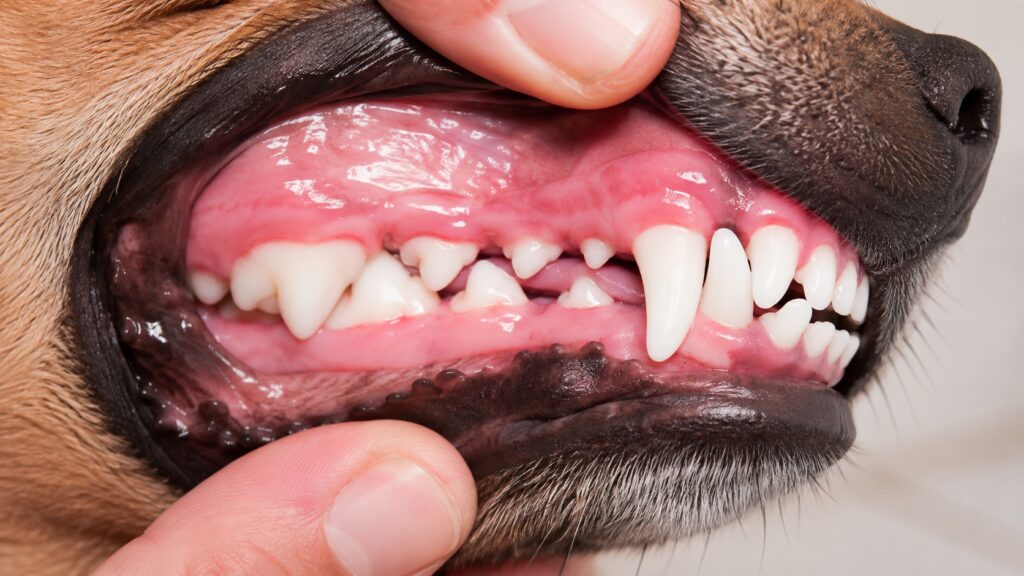
This is the sign most dog parents don’t check because they’ve never been taught to look at their dog’s gums. Start now, before an emergency, so you know your dog’s normal.
Healthy dog gums are pink and moist, roughly the color of bubblegum. When you press on the gum and release, color should return within 2 seconds. In heatstroke, gums change:
- Bright red or brick red: early heatstroke, blood vessels dilating as the body tries to release heat
- Pale, white, or grayish: circulation is failing, this is severe
- Blue or purple: oxygen is not reaching the tissues, this is critical
Any gum color other than normal pink during or after heat exposure is an emergency sign. Go straight to a vet, don’t wait to see if it resolves.
Sign 4: Lethargy, Weakness, or Reluctance to Move
A dog who was playing 20 minutes ago and is now flopped down, slow to respond to their name, and not interested in moving is showing a real warning sign. This kind of quiet withdrawal is exactly the type of silent pain signal that’s easy to miss in a dog who’s normally stoic. If you’re not sure what subtle distress looks like in your dog, my post on signs your dog is in pain but not limping covers the full list, and heat distress checks several of those same boxes.
This is different from a dog who’s tired after exercise. Heatstroke-related weakness:
- Comes on faster than normal fatigue
- Doesn’t improve with a few minutes of rest
- May show as stumbling, difficulty standing, or the back legs giving out
- The dog may seem confused or “not all there” when you talk to them
Weakness paired with panting and recent heat exposure means Stage 2 at minimum. Start cooling immediately and call your vet on the way.
Sign 5: Vomiting or Diarrhea
If your dog vomits or has diarrhea during or after significant heat exposure, this is the body responding to internal temperature stress. The GI tract is sensitive to hyperthermia, and these symptoms indicate things are escalating.
Blood in either is a severe sign. It indicates damage to the intestinal lining from heat and means emergency vet care immediately.
Sign 6: Disorientation, Stumbling, or Confusion
A dog who doesn’t respond normally to their name, walks into things, stumbles, or seems genuinely confused about where they are is showing neurological involvement. The brain is being affected by elevated temperature.
This is not a “let’s see how they do” moment. This is heatstroke Stage 3.
Other neurological signs to watch for:
- Eyes that seem glassy or unfocused
- Head tilting to one side
- Muscle tremors
- Seizures
Any of these during or after heat exposure: emergency vet, right now.
Sign 7: Collapse or Loss of Consciousness
The end stage. Your dog can no longer stand. They may be unresponsive.
Start cooling immediately (see first aid section below), call the nearest emergency vet while you’re in the car, and drive. Do not wait. According to the AKC’s chief veterinarian, the degree of damage in heatstroke is determined by how high the temperature climbs and how long the animal is exposed. Every minute matters at this stage.
Which Dogs Are at Highest Risk
Not every dog heats up at the same rate. These groups are most vulnerable and need extra caution in warm weather.
Brachycephalic (flat-faced) breeds: French Bulldogs, English Bulldogs, Pugs, Boxers, Boston Terriers, Shih Tzus. Their shortened airways make panting less efficient, which means their primary cooling mechanism is compromised. These dogs can overheat faster than any other group, even in conditions that feel mild to you.
Senior dogs: Heat regulation becomes less efficient with age. An 11 year old Lab in summer heat needs to be watched more carefully than a 3 year old Lab in the same conditions. If your senior dog is also showing other signs like confusion, staring at walls, or nighttime pacing, some of that may be cognitive decline layered on top of heat sensitivity. Cornell University’s College of Veterinary Medicine confirms that senior dogs are among the highest-risk groups for heat-related illness.
Overweight dogs: Excess body fat acts as insulation and increases the metabolic heat generated by exercise. Overweight dogs overheat faster and cool down slower.
Dogs with underlying health conditions: Cardiac disease, hypothyroidism, laryngeal paralysis, and tracheal collapse all interfere with the body’s ability to manage heat load.
Puppies: Thermoregulation isn’t fully developed yet. Very young puppies especially.
Dogs not acclimated to heat: A dog who’s been inside all winter going for a run on the first 90 degree day of summer is at higher risk than a dog who’s been gradually acclimated.
Immediate First Aid: What to Do Right Now
Move them to shade or indoors immediately. Air conditioning if you have it. Fan if you don’t.
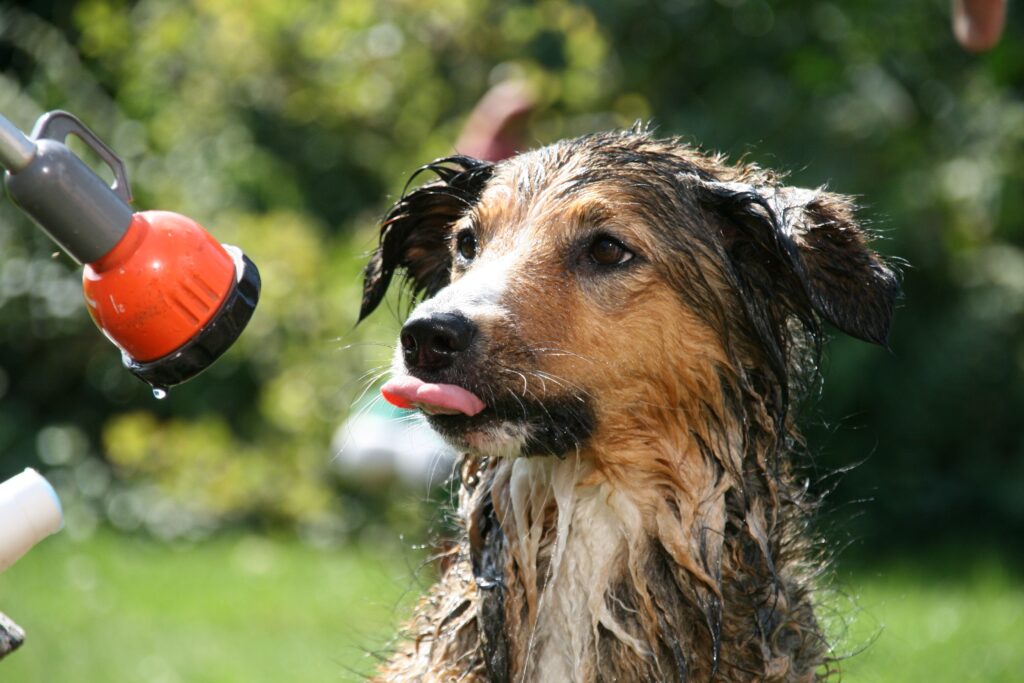
Apply cool, not cold, water. Focus on the paws, belly, armpits, and groin. These areas have the most blood flow near the surface. Pour it on, don’t just dampen them.
Use a fan or air movement to promote evaporative cooling. Wet plus airflow cools faster than wet alone.
Offer small sips of cool water if your dog is conscious and able to drink. Don’t force it.
Take their rectal temperature if you have a thermometer. 104 degrees Fahrenheit or above means heatstroke. Over 106 degrees means severe heatstroke and active organ risk.
Call your vet or an emergency clinic while you start cooling. Tell them you suspect heatstroke and give your estimated arrival time. This lets them prepare before you get there.
Keep cooling during transport. Wet towels on the body, windows cracked or AC on.
The Mistakes That Make Heatstroke Worse
This section exists because the wrong first aid during heatstroke can cause as much damage as the heat itself.
Do not use ice or ice-cold water. This causes the surface blood vessels to constrict, which actually traps heat inside the body instead of releasing it. It can also cause shivering, which generates more internal heat. Cool water, not cold. Room temperature is fine.
Do not leave wet towels sitting on the dog. A soaked towel against the skin can trap heat rather than releasing it. The water needs airflow to evaporate and actually cool. Wet the dog, then use a fan. Don’t cover them.
Do not use rubbing alcohol. Not recommended and potentially harmful. VCA specifically notes this in their heatstroke guidance.
Do not wait to see if they improve on their own. Even if your dog seems to recover after cooling, internal organ damage may be continuing. A vet visit after any heatstroke event is not optional. Kidneys, brain, and the clotting system can all sustain damage that isn’t visible from outside.
Do not muzzle your dog. They need to be able to pant. A muzzle during heatstroke can be fatal.
Do not assume it won’t happen in mild weather. A parked car on a 75 degree day can reach over 100 degrees inside within 10 minutes with the windows cracked. Humidity matters as much as temperature. High humidity at a moderate temperature is more dangerous than dry heat at a higher temperature, because evaporative cooling (panting) stops working when the air is already saturated with moisture. This is also why post-heat paw licking and skin irritation is common after humid days outside. If your dog comes in and starts obsessively licking their paws after heat exposure, that’s a separate issue worth checking into in my post on dogs licking paws at night.
When to Go Straight to an Emergency Vet
Don’t wait for your regular vet’s office hours if you see any of these:
- Gum color other than normal pink
- Collapse or inability to stand
- Vomiting with blood, or bloody diarrhea
- Seizures or muscle tremors
- Disorientation, stumbling, or failure to recognize you
- A flat-faced breed, senior, overweight, or medically compromised dog who’s been in significant heat, even without dramatic symptoms
Go ahead of time even if symptoms seem mild and have improved. The internal damage from heatstroke isn’t always visible at home.
What It Actually Costs
Heatstroke is one of the most expensive canine emergencies there is, and knowing that upfront is part of being a prepared dog parent.
- Emergency exam and stabilization: $200-$500
- IV fluids (almost always needed): $200-$400
- Bloodwork to assess organ damage: $150-$300
- Oxygen therapy if needed: $100-$300
- Hospitalization overnight for monitoring: $500-$1,500 depending on severity and location
Total for a heatstroke emergency: $800-$3,000 on the lower end. Severe cases with organ involvement can go significantly higher.
This is the single biggest argument for pet insurance I can make. Heatstroke can happen fast, even to a healthy dog, even to a careful dog parent.
Why I Tell People to Go Before They Are Sure
I want to say something honest here, because I see the opposite advice everywhere and I think it causes harm. People online will tell you to try home cooling first and “see how they do” before going to a vet. And for Stage 1, mild heat stress in a young healthy dog who bounces back quickly, that’s reasonable. But dog parents are not always good judges of which stage they’re watching. We want to believe it’s fine. We don’t want to be the person who overreacted. And dogs mask distress better than we give them credit for.
My opinion: if you are genuinely unsure whether this is heat stress or heatstroke, go to the vet while you’re cooling them in the car. The cost of an unnecessary vet visit is real but survivable. The cost of staying home when you should have gone is not.
A Real Example From My Own Experience
We had a family friend visit one summer with their 5 year old Frenchie. Healthy dog, good weight for the breed, well cared for. We were outside for maybe 30 minutes in what felt like a manageable afternoon. Not blazing sun, not a particularly dramatic day.
The dog started slowing down. Then the drool came, thicker than normal. Then the gums, which I happened to check because I’d recently read about it, were bright brick red instead of pink.
We were in the car heading to the emergency vet within 4 minutes of me noticing the gum color. The vet told us later that brachycephalic dogs can progress from Stage 2 to heatstroke faster than you’d believe, and that catching the gum color early was what made the difference in that visit.
The Frenchie was fine. IV fluids for a few hours, monitored overnight, home the next morning. But that story ends differently if we’re outside another 20 minutes before noticing, or if I hadn’t known to check the gums.
Know your dog’s normal gum color right now. Before it matters.
Heat is the fastest-moving emergency most dog parents will ever face, and it doesn’t announce itself dramatically. It looks like a dog who seems a little tired, a little slow, panting a bit more than usual. Then it’s not.
Check the gums. Know the stages. Keep the vet number saved in your phone before summer starts.
This article is for informational purposes and is not a substitute for emergency veterinary care. If you suspect your dog is experiencing heatstroke, begin cooling measures immediately and get to a vet.
Frequently Asked Questions
-
How quickly does heatstroke develop in dogs?
It can become life-threatening in 15 to 30 minutes. A parked car on a 75 degree day can exceed 100 degrees inside within 10 minutes even with windows cracked. Brachycephalic breeds can overheat even faster. Never treat heat exposure as a slow-moving situation.
-
What temperature is heatstroke in dogs?
A rectal temperature above 104 degrees Fahrenheit (40 degrees Celsius) is the clinical threshold for heatstroke. Above 106 degrees Fahrenheit (41.1 degrees Celsius) causes active organ damage. Normal dog body temperature is 101 to 102.5 degrees Fahrenheit.
-
Can a dog recover fully from heatstroke?
Yes, many dogs recover fully with prompt treatment. The key factors are how high the temperature climbed, how long it was elevated, and how quickly appropriate cooling and veterinary care were initiated. Dogs treated quickly often recover without lasting effects. Dogs who reach severe heatstroke with organ involvement may have long-term complications.
-
Is it safe to put a dog in a cold bath for heatstroke?
No. Cold or ice water causes surface blood vessels to constrict, which traps heat inside the body rather than releasing it. Use cool water, not cold, focused on the belly, paws, armpits, and groin, and combine with fan or air movement for evaporative cooling.
-
My dog seems better after cooling at home. Do I still need a vet?
Yes. Organ damage from heatstroke, particularly to the kidneys, brain, and clotting system, can continue and worsen even after the dog appears to have stabilized. A dog who seemed to recover from heatstroke can deteriorate hours later from internal damage. A vet visit after any heatstroke event is not optional.
-
Can dogs get heatstroke indoors?
Yes, if the indoor temperature is high enough. A house with no air conditioning, no ventilation, and direct sun through windows can become dangerously hot for a dog. Dog parents in hot climates sometimes assume indoors is always safe. It is safer than a parked car, but not automatically safe.

1 Comment