

 By
By If your senior dog is suddenly standing and staring at the wall, the most common cause is canine cognitive dysfunction, which is essentially dementia in dogs. Other causes include focal seizures, vision or hearing loss creating disorientation, pain-driven dissociation, or in rare cases a serious neurological condition that needs immediate attention. One of these is a same-day emergency. The rest have real management options. This post tells you how to tell the difference.
Cognitive dysfunction in dogs is the clinical term for what most dog parents are actually describing when they say their senior dog stands and stares at walls.
Type why does my senior dog stand and stare at the wall into any search bar and you will find a lot of vague reassurance. Here is what is actually going on.
I want to say this gently but clearly at the start: seeing your dog stare blankly at a wall, standing there like they’ve forgotten what they were doing or where they are, is one of the more quietly heartbreaking things about having a senior dog. It’s not always an emergency. But it’s also never nothing. It’s always information.
Table of Contents
- Why This Behavior Specifically Matters in Senior Dogs
- Why Does My Senior Dog Stand and Stare at the Wall: The 5 Real Causes
- Age Breakdown
- Home vs Vet: The Honest Checklist
- Mistakes That Slow Down the Right Answer
- Why Just Getting Old Is Not a Complete Answer
- The Assumption That Cost Three Weeks
- Frequently Asked Questions
Why This Behavior Specifically Matters in Senior Dogs
Young dogs stare at walls too. They hear something inside (a mouse, a dripping pipe, a sound your human ears can’t detect) and they investigate with their nose and eyes. That’s normal and not concerning.
What you’re asking about is different. It’s an older dog who stands in a corner or faces a wall with a blank, unfocused look. Not investigating. Not tracking a sound. Just… there. Sometimes for seconds, sometimes much longer. Sometimes they seem confused when you call their name. Sometimes they don’t respond at all.
That version is not curiosity. That’s your dog’s brain telling you something has changed.
Why Does My Senior Dog Stand and Stare at the Wall: The 5 Real Causes
1. Cognitive Dysfunction in Dogs (The Most Common Cause)
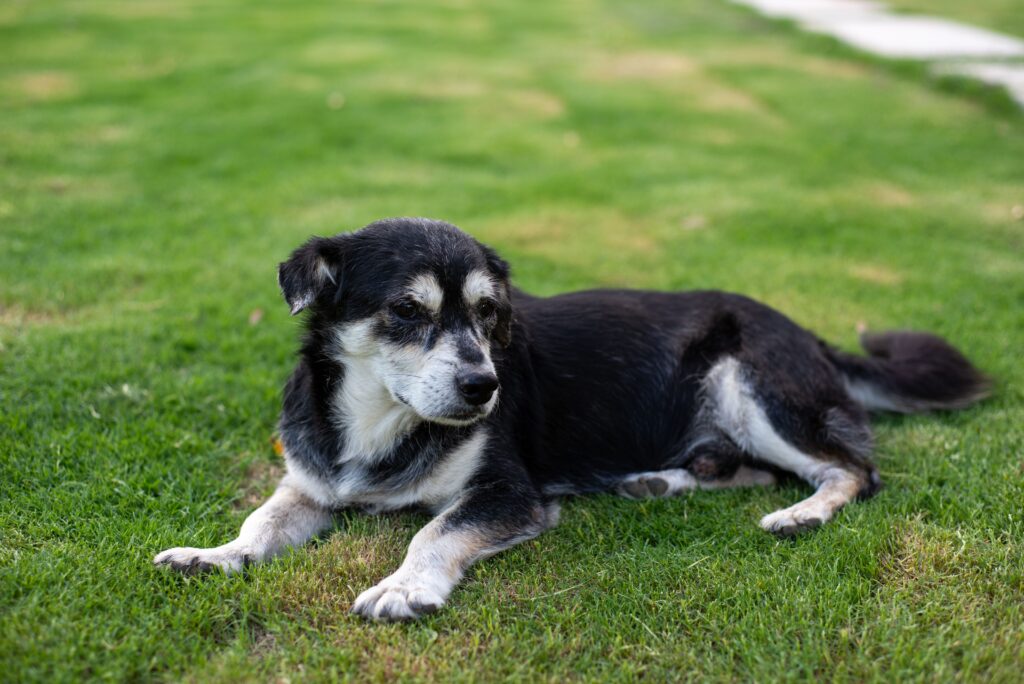
Canine Cognitive Dysfunction (CCD), often called doggy dementia, is the most common reason a senior dog stands and stares at walls, gets stuck in corners, or seems lost in their own home. It’s a progressive neurological condition caused by physical changes in the aging brain, remarkably similar to Alzheimer’s disease in humans.
Cognitive dysfunction in dogs becomes more common with age. According to the AKC, as many as 28% of dogs aged 11-12 have CCD, and that percentage rises significantly with each year after that. Many more go undiagnosed because the early signs are subtle and easy to attribute to “just getting old.”
The reason wall-staring is such a consistent CCD sign is spatial. Your dog has spent years building a mental map of their home: where the rooms are, where they sleep, which direction leads to the water bowl. CCD erodes that internal map. When the map fails, the dog gets “stuck,” often facing a wall or corner, because they’ve lost their sense of what comes next.
The DISHAA signs to know:
Vets use the acronym DISHAA to screen for CCD:
– Disorientation: getting lost in familiar spaces, staring at walls, standing at the wrong side of the door
– Interaction changes: less greeting at the door, more withdrawn, or conversely, suddenly clingy
– Sleep-wake cycle changes: sleeping more during the day, awake and pacing at night
– House soiling: accidents from a dog who’s been reliably house trained for years
– Activity level changes: less interested in play, walks, things they previously enjoyed
– Anxiety: increased restlessness, vocalizing for no obvious reason, new fears
Wall-staring alone is a disorientation sign. Combined with any of the others, it’s a strong signal to talk to your vet.
Breed and age factors: CCD can affect any dog and is primarily age-related rather than breed-specific. According to VCA Animal Hospitals, published research puts prevalence between 14-35% in dogs over 8, rising to approximately 68% in dogs aged 15-16. CCD is likely underdiagnosed because the early signs are easy to attribute to normal aging.
Cost of diagnosis: Your vet will do a physical exam, cognitive assessment, and bloodwork to rule out other conditions. Expect $150-$350 for the initial workup. There is no single test that confirms CCD. Diagnosis is done by ruling out other causes and matching the symptom pattern.
Management timeline: CCD is progressive and cannot be reversed. The goal is slowing decline and maintaining quality of life. Many dogs respond to routine reinforcement, environmental adaptations, and dietary support within 4-8 weeks of starting a management protocol. Medication (selegiline) is available and may help some dogs. Talk to your vet about what fits your dog’s specific presentation.
2. Focal Seizures
This is the one that requires immediate attention if you’re seeing it, and it’s frequently mistaken for CCD or daydreaming because it doesn’t look like the dramatic full-body seizures most people picture.
A focal seizure originates in one specific part of the brain and produces localized, often subtle signs: blank staring episodes, lip smacking, fly-biting movements (snapping at something that isn’t there), sudden chewing motions, or muscle twitches on one side of the face or body. The dog may seem unresponsive during the episode and confused afterward.
The wall-staring version of a focal seizure looks exactly like a dog zoning out at a wall. The difference is typically the duration (usually under 2 minutes), the presence of any unusual motor activity during the episode, and the post-episode confusion that follows.
If you video your dog during one of these episodes, even a 15 second clip on your phone, it gives your vet significantly more information than a verbal description.
When to call the vet today: if the episodes are new, increasing in frequency, lasting longer than 2-3 minutes, or if your dog falls or loses control of their body during the episode. Focal seizures that go unmanaged can generalize into larger seizures.
Cost of diagnosis: Neurological workup including bloodwork and urinalysis: $150-$350. MRI if neurological cause is suspected: $1,500-$3,000. Anti-seizure medication if prescribed: $30-$80/month depending on the drug.
3. Vision or Hearing Loss Creating Disorientation
Dogs who are losing their vision or hearing don’t always make it obvious. They compensate well, often relying more heavily on their other senses, and many dog parents don’t realize a dog has significant vision loss until they notice them bumping into things in low light or failing to track familiar objects.
A dog who can’t see or hear well in a familiar environment will sometimes stop mid-path and stand still. They’re orienting. Trying to figure out where they are using the information they have left. This looks like staring, but it’s more accurately described as recalibrating.
This is not dangerous in itself, but it changes how you need to manage your dog’s environment. Dogs with vision loss benefit from consistent furniture placement, lighting at night, and scent cues to help them navigate. Dogs with hearing loss need visual or tactile cues to replace verbal commands.
How to tell if vision or hearing loss is the cause: observe your dog in low light versus bright light. Vision loss often worsens in dim conditions. For hearing, make sounds from different positions without visual cues. A vet can assess both with specific tests during an exam.
Cost: Eye exam by a veterinary ophthalmologist: $100-$250. Hearing test (BAER test): $200-$400 at a specialty facility. In many cases your regular vet can do an initial assessment.
4. Pain-Driven Dissociation
A dog in chronic pain, particularly from arthritis, spinal compression, or an undiagnosed internal condition, will sometimes “check out” in ways that look like dementia or seizures. It’s the body’s response to sustained discomfort: a kind of withdrawal from engagement with the environment.
If your dog also seems stiffer in the mornings, is reluctant to climb stairs, or has been slower to get up and down, pain may be contributing to the wall-staring behavior. My post on signs your dog is in pain but not limping covers the quieter pain signals in detail, since most dogs who are hurting chronically don’t show the obvious signs you’d expect.
Pain management, whether through prescription medication, joint supplements, or orthopedic support, often produces a visible improvement in alertness and engagement. That improvement is itself diagnostic.
Cost: Vet exam and pain assessment: $50-$150. X-rays if joint or spinal involvement is suspected: $150-$400.
5. Head Pressing (This One Is Urgent)
I’ve saved this for last because it needs to be clearly distinguished from the rest. Head pressing is not wall-staring. It is when a dog pushes their head against a wall or solid surface and holds it there without pulling back, not leaning on something for comfort, but pressing.
Head pressing is a neurological red flag that can indicate a serious condition: a brain tumor, toxic exposure, liver disease causing hepatic encephalopathy, or severe head trauma. It is a same-day emergency.
If your dog is pressing their head against a wall (rather than just staring at it), go to a vet or emergency clinic now. Do not wait to see if it resolves.
The difference in practical terms: Staring at a wall: dog faces the wall, may seem blank, may or may not respond to their name. Head pressing: dog’s forehead or top of skull is in direct contact with the wall, held there with visible pressure, and the dog does not pull back normally when called.
Age Breakdown
| Age | Most Likely Cause | Urgency Level |
|---|---|---|
| Under 7 years | Curiosity, hearing something in the wall, brief focal episode | Usually low, mention at next vet visit |
| 7-10 years | Early CCD, new vision/hearing loss, emerging pain | Vet visit this week, don’t dismiss as age |
| 10-13 years | CCD most likely, focal seizures possible | Vet visit this week, cognitive assessment warranted |
| 13+ years | CCD very likely, may have multiple contributing factors | Vet visit, supportive care conversation |
Head pressing at any age: same-day emergency.
Home vs Vet: The Honest Checklist
Monitor at home if:
– It happened once or twice, the dog responded normally when called
– No other changes in behavior, sleep, appetite, or house training
– Your dog is under 8 and otherwise healthy
Call your vet this week if:
– The behavior is new and has happened more than once in the past 2 weeks
– Your dog is over 8 years old
– You’ve also noticed any DISHAA signs: sleep changes, accidents, withdrawal, anxiety
– Your dog seems confused or doesn’t respond to their name during episodes
Go to the vet today or the emergency vet immediately if:
– Your dog is pressing their head against the wall, not just staring at it
– The staring episode lasted more than 5 minutes
– Any loss of balance, collapse, or involuntary movements during the episode
– Sudden onset with other acute symptoms: vomiting, circling, loss of bladder control
Mistakes That Slow Down the Right Answer
Don’t Google “dog dementia” and assume that’s the answer without a vet visit. CCD is the most common cause of this behavior in senior dogs, but it’s a diagnosis of exclusion. Pain, vision loss, seizures, and other conditions need to be ruled out first. Some of those conditions are treatable in ways CCD is not.
Don’t dismiss this as “just getting old.” This is the most common and most costly mistake with senior dog behavior changes. Some of what looks like normal aging is actually a manageable condition. A vet who tells you “he’s just old” without any diagnostic workup is not giving you complete guidance.
Don’t change your entire home layout immediately. Dogs with CCD rely on familiar spatial maps. Major rearrangements of furniture or moving their sleeping area can increase disorientation. Small modifications (nightlights, consistent placement, scent cues) help without disrupting the familiarity they depend on.
Don’t stop taking your dog on walks or giving them stimulation. Environmental enrichment, gentle exercise, and social interaction are among the most evidence-supported interventions for slowing cognitive decline. A dog who lies in a dim corner all day will decline faster than one who has gentle daily engagement.
Why Just Getting Old Is Not a Complete Answer
There is a tendency in dog parent culture to treat everything a senior dog does as an inevitable march toward the end. Slower on walks: that’s age. Sleeping more: that’s age. Staring at the wall: that’s age. And sometimes it is. But sometimes it’s pain we could manage, or a condition we could slow, or a problem we could solve if we looked for it.
I think the most loving thing you can do for a senior dog is refuse to accept “just getting old” as a complete answer. Ask your vet what specific conditions are being considered. Ask what a diagnostic workup would involve. Ask what management looks like if the diagnosis is CCD. These are reasonable questions and good vets will welcome them.
The Assumption That Cost Three Weeks
A friend’s 13 year old Beagle started standing at the corner of the living room, facing the wall, for stretches of 5-10 minutes. Completely unresponsive to her name during these episodes. My friend had read about CCD and assumed that was the answer. She delayed the vet visit for 3 weeks because she thought she already knew what it was.
When she did go in, the vet diagnosed mild seizure activity alongside early CCD. Different conditions with some treatment overlap but also important distinctions. The seizure component was manageable with medication. If she’d waited another month or two and the episodes had gone untreated, the seizures could have become more severe.
The assumption was understandable. It was also wrong, and delaying care had consequences. Get the actual diagnosis, not just the most likely one.
Frequently Asked Questions
-
Is my dog in pain when staring at the wall?
Not necessarily. CCD-related staring is disorientation rather than pain. However, chronic pain can contribute to disconnected behavior. A vet exam including a pain assessment will help determine whether pain is a factor.
-
What is the difference between staring at the wall and head pressing?
Staring: dog faces the wall and may seem blank. Head pressing: the skull is in direct contact with the wall, held there with pressure, and the dog does not pull back normally. Head pressing is a neurological emergency. Staring is not, though it still warrants a vet visit.
-
How long do dogs live after a CCD diagnosis?
CCD is progressive, but the timeline varies widely. Some dogs live comfortably for 2-3 years after diagnosis with appropriate management. Quality of life, not just duration, is the focus.
-
Can diet help with canine cognitive dysfunction?
Some research supports diets rich in medium chain triglycerides (MCTs) and antioxidants for dogs with CCD. Purina’s Neurocare diet is specifically formulated for this. Ask your vet whether a dietary change is appropriate for your dog’s situation.
-
My dog was diagnosed with CCD. What should I do first?
Maintain a consistent daily routine. Keep their sleeping area, feeding spot, and furniture placement the same. Add nightlights if they seem more confused after dark. Discuss medication options with your vet. And continue gentle daily exercise and social interaction, these are among the most evidence-based interventions available.
Cognitive dysfunction in dogs is manageable, not curable, and catching it early makes the biggest difference to how much quality time you have left together.
Your senior dog is not being dramatic. They’re not “just old.” They’re navigating a world that has gotten a little harder to read, with a brain that doesn’t work exactly the way it used to. What they need from you is the same thing they’ve always needed: someone paying attention.
If the wall-staring is new, get it checked. If it’s been happening for a while and you’ve been quietly hoping it would stop, that’s the most important sign to make the appointment.
This article is for informational purposes and is not a substitute for veterinary care. If you notice sudden behavior changes in your senior dog, please consult your veterinarian.
