

 By
How much do puppies sleep? A lot more than most new dog parents expect. An 8 to 12 week old puppy sleeps about 18 to 20 hours a day, usually in naps of 30 minutes to 2 hours with short bursts of chaos in between. That drops to roughly 16 to 18 hours between 3 and 6 months, and 14 to 16 hours between 6 and 12 months. Adult dogs settle at around 13 to 15 hours. So if your puppy plays hard for an hour and then face plants into the nearest blanket, that’s not laziness. That’s the job.
Table of Contents
- What Puppy Sleep Really Looks Like in the First Few Weeks
- How Much Do Puppies Sleep by Age? The Chart
- Why Puppies Need So Much Sleep
- How Long Can a Puppy Stay Awake? Signs of an Overtired Puppy
- A 5 Step Puppy Sleep Routine for Bedtime
- When Do Puppies Sleep Through the Night?
- Too Much Sleep, Too Little Sleep, and What Doesn’t Work
- Puppy Sleep FAQ
- Puppy Sleep by Age: The Quick Recap
What Puppy Sleep Really Looks Like in the First Few Weeks
Certified dog trainer Cathy Madson wrote about her own puppy, Fozzie, on Preventive Vet. By 10 weeks he was sleeping more peacefully at night. Even so, she was still getting up for nighttime potty breaks until he was 15 weeks old.
That’s the honest shape of puppy sleep. Days are a string of naps. Nights are broken for a while. Then somewhere around 4 months, it mostly clicks. A certified trainer still did the 2am potty shuffle, so if you’re doing it too, you’re not doing anything wrong.
Below are the real numbers by age, why your puppy goes feral right before a nap, and a bedtime routine that gets the whole house sleeping sooner.
How Much Do Puppies Sleep by Age? The Chart
| Age | Sleep per day | What it looks like |
|---|---|---|
| Birth to 8 weeks | About 22 hours | Eat, sleep, repeat |
| 8 to 12 weeks | 18 to 20 hours | A nap every hour or so |
| 3 to 6 months | 16 to 18 hours | Longer play, fewer naps |
| 6 to 12 months | 14 to 16 hours | Closer to an adult rhythm |
| Adult dog | About 13 to 15 hours | Nights plus lazy naps |
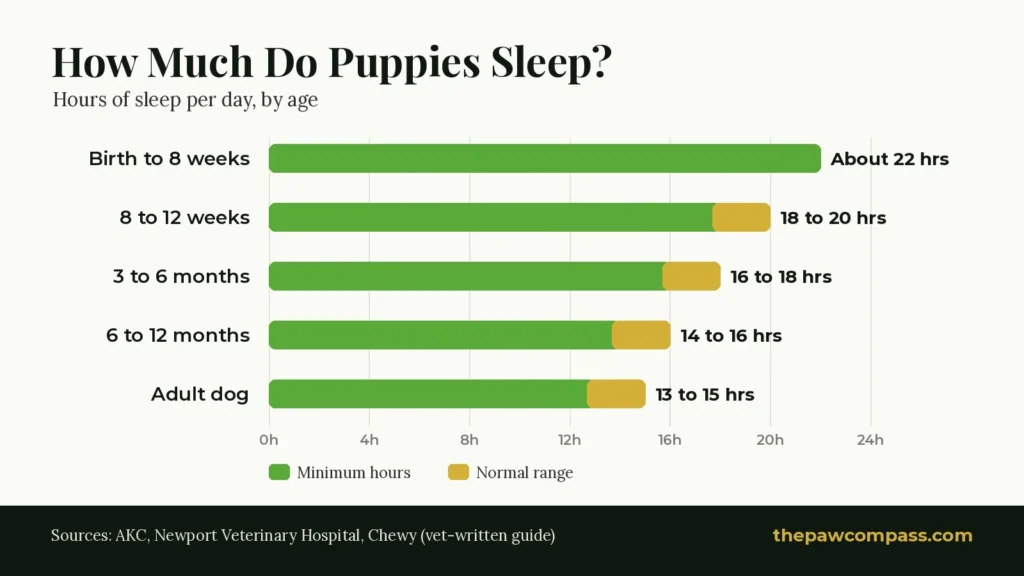
The 18 to 20 hour figure comes from the American Kennel Club, which also notes young puppies may nap every hour or so, for anywhere from 30 minutes to 2 hours. The 3 to 6 month and 6 to 12 month ranges come from Newport Veterinary Hospital’s puppy sleep guide. A Chewy guide written by veterinarian Dr. Laci Schaible puts newborns at about 22 hours a day and adult dogs at around 13 to 15.
Why the Numbers Online Don’t Match
If you’ve seen different numbers elsewhere, you’re not imagining it. For a 12 to 16 week old puppy, one humane society guide says 12 to 16 hours, while the vet hospital guide above says 16 to 18. Breed, size and how busy the day was all move the number, and nobody is following your puppy around with a stopwatch. Treat the chart as a range, then watch your own puppy. A puppy who wakes up happy, eats well and plays hard is getting enough.
Why Puppies Need So Much Sleep
All that snoozing is busy work. The AKC says sleep supports the development of a puppy’s central nervous system, brain, immune system and muscles, and helps them get through growth spurts. Every new smell, sound and person they met today gets processed while they’re out cold.
Skipping sleep shows up fast, and not in a cute way. Chewy’s vet-written guide says an under-rested puppy gets cranky and destructive. Newport Veterinary Hospital lists more biting and chewing, trouble with training and getting easily stressed. If your sweet puppy turns into a land shark every evening, sleep is the first thing to look at.
How Long Can a Puppy Stay Awake? Signs of an Overtired Puppy
Young puppies run on short batteries. For an 8 to 12 week old, the AKC’s “nap every hour or so” is a good working rule: roughly an hour of being awake (potty, food, play, a little training), then a nap. As your puppy grows, those awake stretches get longer and the naps get fewer.
Here’s the catch. Puppies are terrible at putting themselves to bed. The world is too interesting, so they keep going until they crash, and right before the crash comes the chaos. Watch for these signs:
- Biting harder or more often, especially at hands, ankles and sleeves
- Chewing things they normally leave alone
- Sudden bursts of hyper energy (hello, zoomies)
- Ignoring cues they know perfectly well
- Bouncing around but never settling down
When you see them, don’t try to play it out of your puppy. Guide them to the crate or their quiet spot with something to chew, keep things dull, and let them wind down. The AKC is clear on this one: don’t let a puppy get too tired, because exhaustion and overstimulation lead to unfortunate behavior.
A 5 Step Puppy Sleep Routine for Bedtime
Puppies love predictable. Newport Veterinary Hospital’s advice is to keep wake up time, meals and bedtime similar every day, and to favor consistency over perfection. Here’s a simple puppy sleep routine that pulls together what the AKC, a vet hospital and a certified trainer all recommend.
- Play early in the evening, then wind down. Preventive Vet’s trainer suggests 10 to 20 minutes of play a couple of times in the evening. Keep rough games and chasing well before bed, not right before it.
- Finish food and big drinks early. The AKC suggests limiting food and water for several hours before bedtime. Chewy’s vet says a small drink is fine but to stop big drinks about an hour before bed. Don’t cut water off completely without checking with your vet first.
- Last potty break right before bed. Calm and boring, no play session afterwards.
- Same spot, quiet and dim. Many dog parents start with the crate in the bedroom so the puppy can feel their family close by. A crate cover over a wire crate makes it darker and more den like. A cheap felt blanket beats a fancy bed, which a puppy will likely chew. Avoid wool blankets that can be chewed into long strings.
- Make night wake ups boring. If your puppy needs to go, the AKC’s advice is to carry them out calmly, praise quietly when they go, and put them straight back in the crate. Lights low, voice low, no games.
If your puppy cries and doesn’t settle within a minute or two, Preventive Vet’s trainer suggests taking them out for a potty break.
Heads up: ThePawCompass uses affiliate links. If you buy something through a link on this page, I may earn a small commission at no extra cost to you. I only recommend products I’d genuinely suggest to a friend.
A pet camera helps with those first nights too. Instead of opening the door every time you hear a squeak, you can check from your phone whether your puppy is settling or really needs to go out. The one on my Shop page is the eufy Indoor Cam E30. It has no monthly fee and saves video to a microSD card, so you are not paying for a subscription just to watch your puppy sleep.
Sample Day for a 4 Month Old Puppy
This is an example, not a rulebook. It adds up to about 16 hours of sleep, which sits inside the 3 to 6 month range. Shift the times to fit your household. For a younger puppy, my 8 week puppy schedule has a full hour by hour version with overnight potty breaks.
| Time | What happens |
|---|---|
| 6:30 AM | Wake, potty, breakfast, play |
| 7:30 AM | Nap (about 2 hours) |
| 9:30 AM | Potty, play, short training |
| 11:00 AM | Nap (about 2 hours) |
| 1:00 PM | Potty, lunch, play |
| 2:00 PM | Nap (about 2 hours) |
| 4:00 PM | Potty, play, chew time |
| 5:00 PM | Dinner, potty, calm time |
| 6:00 PM | Nap (about 1 hour) |
| 7:00 PM | Evening play, then wind down |
| 9:30 PM | Last potty, bed |
If you want to see your own puppy’s pattern, jot down nap times for three or four days. It shows up faster than you’d think. If you’re using my First 30 Days Puppy OS Notion template, the Daily Log is a good home for this, and the Problem Tracker’s Crying Log helps you spot which rough nights have a pattern.
When Do Puppies Sleep Through the Night?
According to Preventive Vet, most puppies sleep through the night by about 4 months (16 weeks) old. Before that, at least one wake up for a potty break is completely normal, and some pups need more.
So how long do puppies sleep at night? Newport Veterinary Hospital says most puppies sleep 8 to 10 hours at night, with potty breaks depending on age. Here’s the rough timeline:
| Age | What nights usually look like |
|---|---|
| 8 to 10 weeks | Crying while they adjust, potty trips |
| 10 to 15 weeks | Settling better, may still need to go |
| About 16 weeks | Most sleep through the night |
| After 16 weeks | A wake up usually has a cause |
When an older puppy suddenly starts waking again, look for a simple cause: a change in routine, a late dinner, too little exercise, or not feeling well. If it comes with accidents, peeing more often or any sign of illness, check in with your vet.
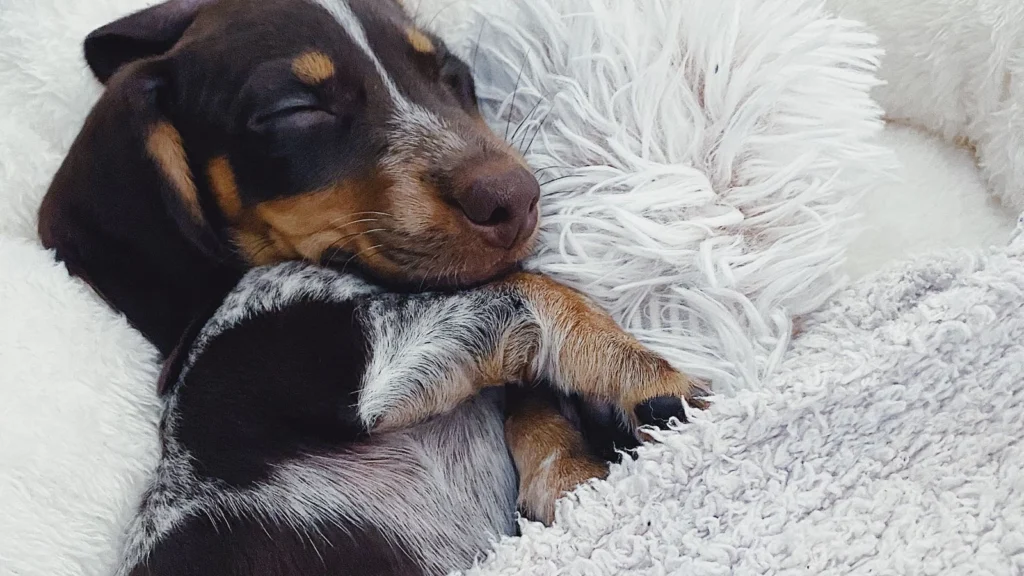
Too Much Sleep, Too Little Sleep, and What Doesn’t Work
When Sleepiness Is a Reason to Call the Vet
Lots of sleep on its own is normal, especially during growth spurts. What matters is how your puppy is when they’re awake. Chewy’s vet-written guide notes that too much sleep can point to problems like anemia (look for pale gums) or intestinal parasites such as hookworms or roundworms (look for diarrhea or vomiting).
Call your vet if sleepiness comes with any of these:
- Pale gums
- Vomiting or diarrhea
- Not eating or drinking
- Weakness, or little interest in play even after a nap
- A sudden change from their normal pattern that lasts more than a day
Too little sleep is the more common problem in busy homes. Kids, visitors and a new puppy’s curiosity can keep them going all day. Chewy’s guide also points out that a puppy may need extra quiet rest, sooner than usual, after an outing or a new experience. Protect those naps the way you’d protect a baby’s.
What Doesn’t Work (and What to Do Instead)
- Waking a sleeping puppy to play or show visitors. The AKC’s advice is to leave a sleeping puppy alone.
- Letting every nap happen on your lap. It’s lovely, but you don’t want a puppy who can only fall asleep on you. Mix in crate naps.
- Rough play right before bed. Chasing games and loud noises make it harder to settle.
- An expensive fluffy bed for a teething puppy. It will likely get chewed. Start with a cheap blanket.
- Cutting water off early in the evening without asking your vet.
- Making night wake ups fun. Keep them short, calm and boring, or your puppy will start asking for 3am parties.
If you’re still pulling together your puppy supplies, my new puppy checklist covers the crate, bedding and everything else a good night needs.
Puppy Sleep FAQ
-
How many hours a day should a puppy sleep?
About 18 to 20 hours a day at 8 to 12 weeks old, according to the AKC. Newport Veterinary Hospital puts it at roughly 16 to 18 hours from 3 to 6 months and 14 to 16 hours from 6 to 12 months. Adult dogs settle at around 13 to 15 hours.
-
Is it normal for my puppy to sleep all day?
Yes, for most puppies. Young puppies nap every hour or so for 30 minutes to 2 hours. Call your vet if the sleepiness comes with pale gums, vomiting, diarrhea, not eating, or weakness when awake.
-
When do puppies sleep through the night?
Most puppies sleep through the night by about 4 months, or 16 weeks, according to Preventive Vet. Before that, one or more potty breaks a night is normal.
-
How long should a puppy nap?
Anywhere from 30 minutes to 2 hours is normal for a young puppy, according to the AKC. Naps usually come right after play, a walk or a meal.
-
Why does my puppy go crazy before bed?
Usually because they’re overtired. Puppies don’t put themselves to bed, so they get bitey, zoomy and wild right before they crash. Plan a nap before the evening rush and keep the last hour before bed calm.
-
Where should my puppy sleep at night?
Many dog parents start with the crate in their bedroom so the puppy feels close to family and they can hear when the puppy needs to go out. Once nights are settled, you can move the crate gradually to its permanent spot.
-
What time should a puppy go to bed?
Pick a bedtime that matches your own, then keep it about the same every night. Do the last potty break right before bed, and keep wake up time and meals consistent too.
Puppy Sleep by Age: The Quick Recap
Young puppies sleep 18 to 20 hours a day, in lots of short naps. By 6 to 12 months it’s closer to 14 to 16, and most puppies sleep through the night by about 4 months. Protect the naps, keep bedtime boring, and the evening land shark gets a lot smaller.
Now tell me in the comments: what’s the strangest position your puppy has fallen asleep in? Upside down on the stairs counts.

1 Comment