


 By
By Is your dog struggling to get up after lying down? Here are the 7 real causes, what each one looks like, and exactly what to do, from home care to when you need a vet today.
If your dog is struggling to get up after lying down, the most common cause is joint pain from arthritis or another musculoskeletal issue, especially in dogs over age 7. Up to 80% of dogs over 8 show signs of osteoarthritis, even before they ever limp. But it can also signal something more urgent, like a spinal problem, an injury, or in rare cases, a neurological emergency. The fix depends entirely on which one you’re dealing with, and I’m going to walk you through how to tell the difference.
I am a dog parent myself, and the first time I watched my own dog hesitate before standing up, my stomach dropped. It is one of those moments where you go from “maybe it’s nothing” to googling everything in under ten seconds. I have been there. This guide exists because when I looked for real answers, most of what I found was either too vague to be useful or written by someone who clearly hadn’t sat on the floor at 11 pm watching their dog struggle to stand.
So let’s get into exactly what’s going on, what it costs to fix, how long recovery actually takes, and when this is a “call the vet right now” situation versus a “manage it at home” situation.
Table of Contents
Why Is My Dog Struggling to Get Up After Lying Down? The 7 Real Causes
1. Osteoarthritis (the most common cause by far)
Arthritis is the number one reason dogs hesitate or struggle when getting up from lying down, particularly after resting for a while. The joint stiffens during rest, inflammation builds up around the joint capsule, and that first movement after getting comfortable is the hardest one.
What it looks like:
- Slow, stiff first few steps that “loosen up” after a minute of walking
- Worse in the morning or after naps, better once your dog has moved around
- Reluctance to jump on the couch or into the car
- More common in dogs over age 7, but I’ve seen it in large breeds as young as 3-4
Breed risk breakdown:
- Higher risk: Labrador Retrievers, German Shepherds, Golden Retrievers, Rottweilers, Great Danes, Bernese Mountain Dogs
- Moderate risk: Most medium and large mixed breeds
- Lower risk but not immune: Small breeds, though obesity raises their risk significantly
Cost of treatment:
- Vet diagnosis (exam + X-rays): $150-$400
- Joint supplements (ongoing): $20-$60/month
- Prescription pain management: $30-$80/month
- Surgery for severe cases: $1,500-$6,000
Recovery timeline: Not curable, but very manageable. Most dog parents see improvement within 3-6 weeks of starting a joint supplement and weight management plan.
For more on managing this long-term, AKC’s guide on canine arthritis is a solid resource.
2. Hip Dysplasia
This is a structural issue where the hip joint doesn’t form correctly, and it’s genetic. It often shows up earlier than arthritis, sometimes in dogs as young as 1-2 years old, especially in larger breeds.
What it looks like:
- A “bunny hop” gait when running, with both back legs moving together
- Difficulty getting up specifically from the back end first
- Looser, more bowed appearance to the hind legs
- Muscle loss in the thighs over time
Breed risk: German Shepherds, Labradors, Golden Retrievers, Saint Bernards, and other large breeds.
Cost of treatment:
- Diagnosis (X-ray): $150-$300
- Conservative management (weight control, supplements, physical therapy): $50-$150/month
- Surgical correction: $1,700-$7,000 per hip
Recovery timeline: Years of good quality of life with conservative management. 8-12 weeks to return to normal activity after surgery.
3. Degenerative Myelopathy or Spinal Issues
This one scares dog parents the most, and I want to be straightforward with you here rather than soften it. Degenerative myelopathy is a progressive spinal cord disease that affects the back legs first, and it’s different from a simple slipped disc or pinched nerve, which can sometimes resolve with treatment.
What it looks like:
- Dragging of the back paws, sometimes with visible scuffing on the top of the nails
- Knuckling over of the back feet without your dog seeming to notice
- Gradual weakness, not sudden, over weeks to months
- No apparent pain (this is a key difference from arthritis, which often does hurt)
Breed risk: German Shepherds, Boxers, Corgis, Welsh Terriers.
Cost of treatment:
- Diagnosis (MRI + specialist exam): $1,500-$3,500
- No cure exists. Supportive care (physical therapy, mobility carts): $100-$300/month
Recovery timeline: Progressive, does not reverse. Goal shifts to comfort and mobility support. Most dogs maintain good quality of life for 1-3 years with supportive care.
This is one where I’d urge you not to wait. If your dog’s back legs are weak with no clear pain response, get a vet evaluation rather than assuming it’s “just getting older.”
4. Soft Tissue Injury or Strain
Sometimes the cause is simpler than a chronic condition. A pulled muscle, a strained ligament, or a minor sprain from an awkward jump or a rough play session can make standing up genuinely painful for a few days.
What it looks like:
- Sudden onset, often tied to a specific activity you can remember (a hard landing, rough play, a slip)
- Limping on one specific leg rather than general stiffness
- Improvement day over day rather than staying flat or worsening
- Your dog may yelp when touched in a specific spot
Cost of treatment:
- Vet exam (rule out fracture/tear): $100-$250
- Rest + anti-inflammatories: $30-$60
Recovery timeline: 1-2 weeks with rest. No improvement after 5-7 days means it’s worth a recheck could be a more serious tear.
5. Cruciate Ligament Tear (CCL/ACL Injury)
This is one of the most common orthopedic injuries in dogs, and it’s often confused with simple soft tissue strain at first because the early symptoms look similar.
What it looks like:
- Sudden lameness in one back leg, often non-weight-bearing initially
- Sitting with one back leg held out to the side
- Swelling around the knee
- Symptoms that don’t improve, or worsen, after a few days of rest
Breed risk: Labradors, Rottweilers, Newfoundlands, and overweight dogs of any breed.
Cost of treatment:
- Diagnosis: $150-$300
- Surgical repair (TPLO, gold standard): $3,500-$6,500 per knee
- Conservative management: lower upfront cost, higher long-term complication risk in larger dogs
Recovery timeline: 8-16 weeks post-surgery with strict activity restriction. Skipping the recovery protocol raises re-injury risk significantly.
6. Lyme Disease or Other Tick-Borne Illness
If your dog has had recent tick exposure and is suddenly reluctant to get up, this deserves a look. Lyme disease can cause joint inflammation that shifts from leg to leg, sometimes called “shifting lameness.”
What it looks like:
- Fever, lethargy, and reduced appetite alongside the mobility issue
- Lameness that seems to move between legs over days
- Swollen joints
- History of tick exposure in the past few weeks to months
Cost of treatment:
- Tick-borne disease panel: $80-$200
- Antibiotics (full course): $30-$80
Recovery timeline: Most dogs improve within 24-72 hours of starting antibiotics. Full joint inflammation can take 1-2 weeks to fully resolve.
7. Neurological Emergency (Less Common, but Urgent)
This is the one I want you to be able to recognize immediately, because it’s the genuine emergency on this list. Conditions like intervertebral disc disease (IVDD) with spinal cord compression, or in rare cases a stroke-like event, can cause sudden, severe difficulty standing.
What it looks like:
- Sudden collapse or inability to use the back legs at all
- Visible pain when picked up or touched along the spine
- Loss of bladder or bowel control
- Dragging of paws with knuckles turned under, and the dog doesn’t correct it
This is a same-day vet or emergency vet situation. Do not wait until morning if you see these signs.
Cost of treatment:
- Emergency diagnosis (MRI): $1,500-$4,000
- Emergency spinal surgery (if needed): $3,000-$10,000
Recovery timeline: Depends heavily on speed of treatment. Dogs treated within 24 hours of losing deep pain sensation have meaningfully better outcomes.
Home vs Vet: A Clear Checklist
Manage at home and monitor if:
- Your dog is slow to rise but walks normally once up
- No yelping, no swelling, no off-balance walking
- It’s been happening gradually over weeks or months
- Your dog is still eating, drinking, and going to the bathroom normally
Call your vet this week if:
- The stiffness is new within the past month
- One leg seems more affected than others
- You notice muscle loss on one side
- Your dog seems to be slowing down faster than expected for their age
Go to the vet today or tonight if:
- Sudden inability to stand or use the back legs
- Visible pain when touched along the back or hips
- Loss of bladder or bowel control
- Dragging paws with no awareness of foot position
- Your dog cries out when trying to move
Step-by-Step Home Care Routine
If your vet has ruled out anything urgent and you’re managing a chronic issue like arthritis at home, here’s the routine I’d put in place:
- Get your dog to a healthy weight first. Extra weight is the single most controllable factor in joint pain. Even 10% over ideal weight measurably increases joint stress.
- Add a joint supplement with glucosamine, chondroitin, and omega-3s. Look for one with third party testing, since the supplement industry isn’t tightly regulated. VCA Hospitals has good research on these.
- Improve traction at home. Hardwood and tile floors are genuinely difficult for dogs with weak hips. Rugs or runners along main walking paths make a real difference.
- Use ramps instead of stairs for the car and any elevated furniture your dog uses.
- Keep movement gentle and consistent. Short, frequent walks beat long, infrequent ones for joint health. If the discomfort is also causing your dog to pace or get restless at night, that’s the same joint pain showing up after dark. Here’s exactly why dogs suddenly pace at night and what it means. at night and what it means].
- Consider a mobility harness for dogs with significant hind leg weakness, especially helpful for getting up and down stairs safely.
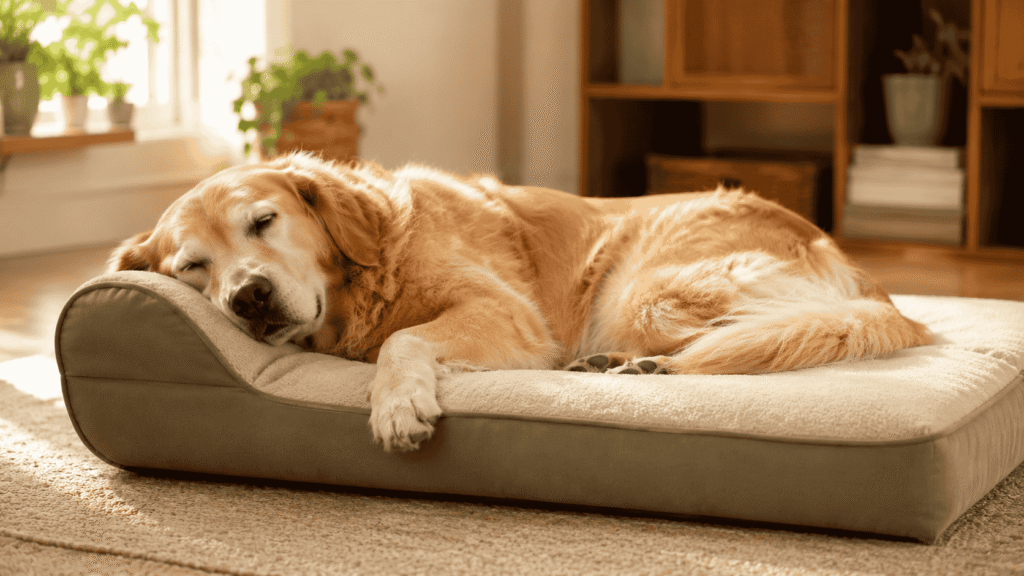
- Provide an orthopedic bed. Standard cushioning doesn’t offer enough support for aging or arthritic joints, and a supportive bed reduces the stiffness that builds up overnight.
Two product categories worth knowing about:
- Joint supplements: Look for glucosamine, chondroitin, MSM, and omega-3 fatty acids with exact dosages listed. Avoid labels that just say “proprietary blend” that usually means underdosed.
- Mobility harnesses: Front and rear handles give you real control helping a dog upstairs or into the car. Much easier than lifting a 70-pound dog by the collar.
Paw licking can also signal the same joint pain behind mobility issues. Here’s the full breakdown of why dogs lick their paws at night.
Prevention Tips for the Future
- Keep your dog at a lean, healthy body weight throughout their life, not just after symptoms appear
- Start joint supplements proactively in large breed dogs around age 5-6, before symptoms show up
- Avoid repetitive high-impact activity like excessive jumping for dogs prone to joint issues
- Schedule annual vet checkups that specifically include a gait and joint assessment once your dog passes age 7
- Keep nails trimmed, since overly long nails change how weight distributes through the paw and leg
Cost Comparison: All 7 Causes at a Glance
Most articles on this topic skip the money question entirely. Here’s the full picture:
| Cause | Diagnosis Cost | Monthly Management | Recovery Timeline |
|---|---|---|---|
| Osteoarthritis | $150-$400 | $20-$60 | Ongoing, improvement in 3-6 weeks |
| Hip Dysplasia | $150-$300 | $50-$150 | Years with care, 8-12 weeks post-surgery |
| Degenerative Myelopathy | $1,500-$3,500 | $100-$300 | Progressive, 1-3 years supportive care |
| Soft Tissue Strain | $100-$250 | $30-$60 | 1-2 weeks |
| Cruciate Ligament Tear | $150-$300 | Surgery $3,500-$6,500 | 8-16 weeks post-surgery |
| Lyme Disease | $80-$200 | $30-$80 | 24-72 hours to improve |
| Neurological Emergency | $1,500-$4,000 | Surgery $3,000-$10,000 | Hours to days matter |
What I Want You to Take Away from This
If your dog is struggling to get up after lying down, you’re not imagining it. Most of the time this points to arthritis or a manageable joint issue, especially in a dog over 7. Sometimes it’s something that needs attention today, not next week.
Use the checklist above to figure out which situation you’re in. A vet visit costs less than the worry of not knowing. Your dog can’t tell you in words what hurts, but the way they move is telling you something anyway. Trust it, and trust yourself enough to act on it.
We’re building ThePawCompass one honest, thoroughly researched post at a time, for dog parents who want real answers instead of generic advice.
You might also want to read about the signs your dog is in pain but not limping, since those quieter signals often show up before the struggle to rise ever does.
FAQ
If you’re wondering why your dog is struggling to get up after lying down, these are the questions most dog parents ask next
-
Is it normal for older dogs to struggle getting up?
Some slowdown is normal. But “normal aging” and “untreated arthritis” look identical from the outside. Consistent hesitation when rising = worth a vet visit, not just age
-
What is silent pain in dogs?
Discomfort your dog doesn’t show through yelping or limping. Dogs mask pain as a survival instinct. Watch for:
-Reluctance to jump
-Slower on stairs
-Shorter walks -
Why does my dog suddenly struggle going up the stairs?
Sudden = more likely an acute injury (strain, ligament tear, disc issue), not chronic arthritis. See a vet within a few days, sooner if there’s pain or favoring one leg
-
Can a joint supplement actually help, or is it just marketing?
Yes, if it has clinically studied ingredients (glucosamine, chondroitin, omega-3s). Works best paired with weight management, not as a standalone fix.
-
How long can a dog live with hind leg weakness?
Depends on the cause:
-Early arthritis: years of good quality of life with treatment
-Degenerative myelopathy: typically, 1-3 years with supportive care
A vet diagnosis is the only way to know which one you’re dealing with -
Should I carry my dog if they’re struggling to stand?
-One concerning episode: yes, support them gently
-Ongoing mobility issues: a mobility harness is better long term, it lets your dog keep some independence and muscle use while still getting support
This article is for informational purposes and isn’t a substitute for veterinary care. If you’re concerned about your dog’s mobility or notice sudden changes, please consult your veterinarian.

3 Comments